KOHIMA, AUGUST 5 (MExN): The Nagaland Department of Health & Family Welfare has issued an advisory to all residential schools, hostels and educational institutions across the state following a suspected case of invasive meningococcal disease involving a 14-year-old boy.
In an advisory addressed to Chief Medical Officers and Medical Superintendents of Peren and Dimapur, the department stated that the child was admitted to the Paediatric Intensive Care Unit (PICU) at CHISR Hospital on August 2 after developing fever, vomiting, hypotension, altered sensorium and abnormal posturing, which later progressed to extensive rapidly developing skin lesions.
The department informed that the child remains critically ill and is receiving invasive mechanical ventilation, vasoactive support and intensive care. "Based on the clinical presentation, the child is currently being managed as septic shock with purpura fulminans, with a clinical suspicion of invasive meningococcal disease (meningococcaemia)," it stated, adding that microbiological confirmation is awaited.
In view of the case, the department has advised all residential schools, hostels, educational institutions and school authorities to remain vigilant for symptoms of meningococcal disease.
"Although uncommon, meningococcal disease can spread rapidly among individuals living in close quarters such as hostels and dormitories. Early recognition, prompt reporting, and immediate public health action are essential to prevent outbreaks," the advisory stated.
According to the department, meningococcal disease is caused by the bacterium *Neisseria meningitidis* and can present as meningitis, an infection of the membranes surrounding the brain and spinal cord, or septicaemia, a bloodstream infection. Both conditions can become life-threatening if not treated promptly.
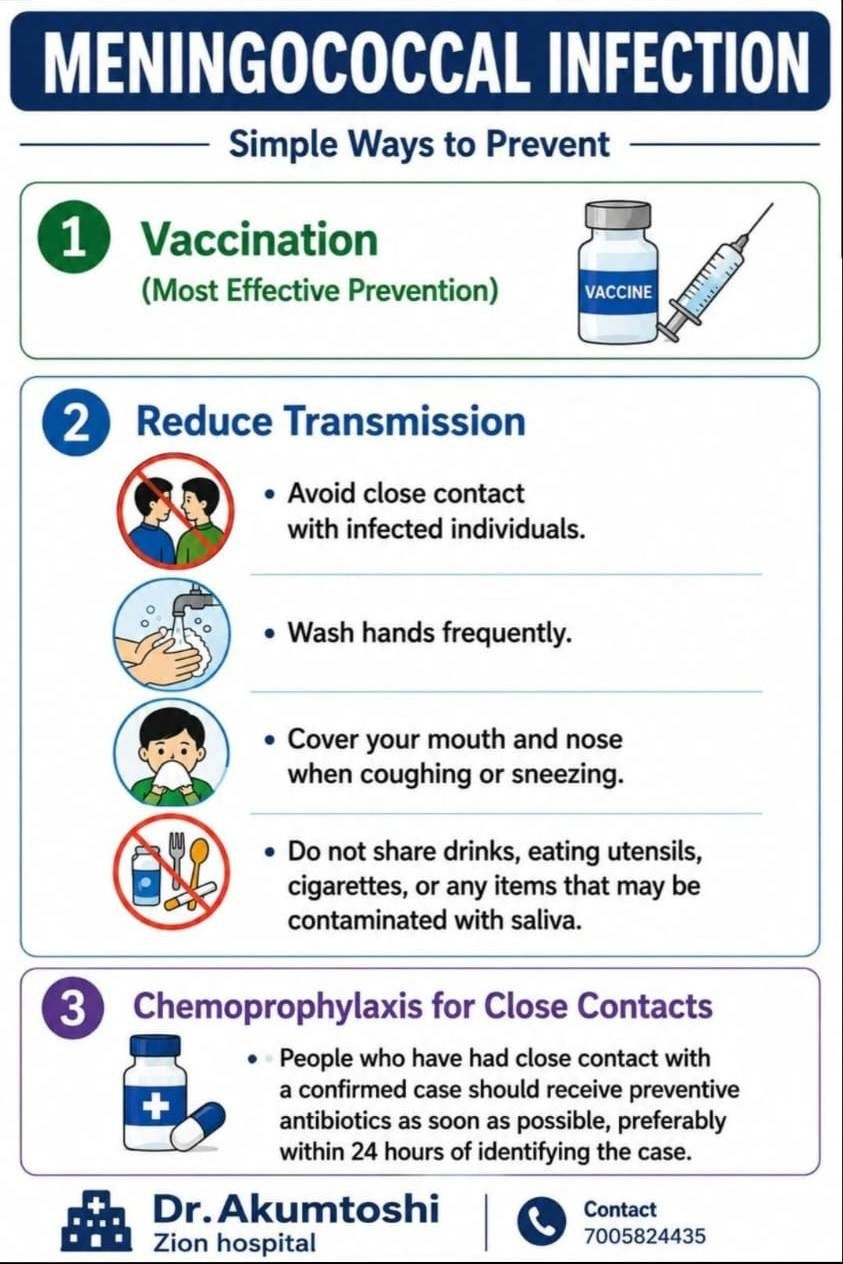
The disease spreads through respiratory droplets and prolonged close contact, including coughing, sneezing, kissing or sharing eating utensils, water bottles and cigarettes.
The advisory urged students, staff, hostel wardens and healthcare providers to watch for symptoms including sudden onset of fever, severe headache, neck stiffness, vomiting, sensitivity to light, drowsiness or confusion, seizures, a reddish-purple rash that does not fade when pressed, and cold hands and feet or signs of shock in severe cases.
It further directed that "any person with these symptoms should be referred immediately to the nearest health facility" for urgent medical evaluation and treatment.