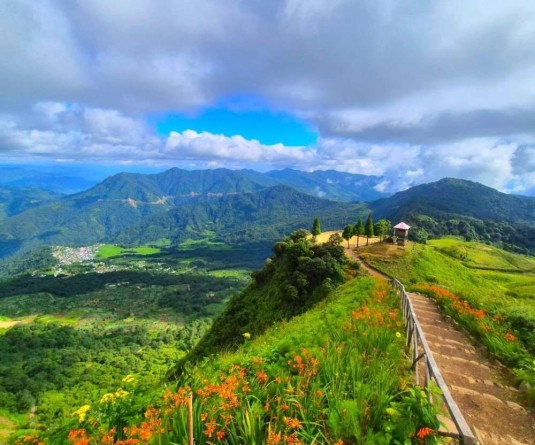
Photo Courtesy: Image by Htc Erl from Pixabay | For representational purpose only

Morung Express News
Kohima | June 1
For years, cancer patients in Nagaland have had little choice but to leave the state in search of specialised treatment. For many families, that has meant draining savings, travelling hundreds of kilometres, and coping with the physical and emotional strain of long stays away from home.
The proposed Tertiary Care Cancer Centre at the Naga Hospital Authority Kohima (NHAK) was envisioned as more than just another healthcare facility. It represented hope, the possibility of receiving advanced cancer treatment closer to home, surrounded by family and community, while easing the financial burden that often comes with seeking care in distant cities. Yet, despite that promise, significant hurdles remain before the centre can become fully operational.
Treatment Closer to Home
Speaking to The Morung Express, Dr Vinotsolie (Tina) Khamo said the project was conceived to address one of the biggest challenges faced by cancer patients in Nagaland.
“The hope was that treatment would finally come closer to home,” she said. According to Dr Khamo, the centre would spare patients the need to make repeated journeys outside the state for treatment, which often requires families to spend weeks or even months away from their homes.
“For cancer patients, time matters. When treatment centres are far away, many patients delay therapy, miss follow-up appointments or discontinue treatment altogether,” she explained.
She noted that chemotherapy usually involves six to eight cycles of treatment, while radiation therapy often requires daily sessions for nearly a month. For many families, the combined costs of travel, accommodation, food and lost income quickly become overwhelming.
“Many families spend their entire savings even when they are covered under Ayushman Bharat. Local treatment could reduce those expenses by as much as 60 to 70%,” she said.
Dr Khamo added that patients had hoped the centre would eventually be empanelled under Ayushman Bharat, allowing them to access affordable treatment and generic chemotherapy drugs at Jan Aushadhi rates.
Beyond the financial relief, she said, many patients simply want the comfort of undergoing treatment close to their loved ones. “When cancer treatment begins, patients often become weak and lose their appetite. Being able to stay at home, eat familiar food and receive support from family members makes a tremendous difference,” she said.
Cancer, she pointed out, often affects entire households, not just the person diagnosed with the disease.
“When one family member develops cancer, sometimes the whole family suffers. Children may have to stop going to school, people lose their jobs, farmers leave their fields, and many families fall into debt,” she said. “Cancer is a disease that should be fought medically, not by forcing families to sell their property and still risk losing loved ones while waiting for treatment.”
A local cancer centre would also improve access to pain management services and allow patients to communicate with healthcare professionals in their own language.
“Patients will have local doctors and nurses they can speak to comfortably, who can explain treatments and side effects in a way they understand,” she added.
The human cost of delay
Dr Khamo said the prolonged delay in completing the project has come at a heavy cost. “Many poor patients could not afford treatment outside the state and died in their villages,” she said.
Those facing financial hardship, language barriers and logistical challenges have been among the worst affected. Delayed treatment, missed investigations and poor treatment compliance have become common realities for patients forced to seek care far from home.
When asked about the possible reasons behind the delay, Dr Khamo described the situation as “multi-factorial.”
“There were administrative delays in the initial stages, and because of the site conditions, piling work had to be undertaken for the foundation, which took additional time. Then the COVID-19 pandemic slowed everything down even further,” she explained.
A facility that could transform Cancer Care
Despite the setbacks, Dr Khamo remains optimistic about the impact the centre could have once it becomes operational.
She believes the facility will strengthen cancer awareness and screening programmes across the state, leading to earlier diagnoses and improving the chances of detecting cancers at Stage 1 and Stage 2, when treatment outcomes are generally much better.
The centre is also expected to improve survival rates among children diagnosed with cancer. “Many childhood cancers are curable, but families often cannot afford to relocate to metropolitan cities for long-term treatment. With a local centre, cure rates for children could improve significantly,” she said.
In addition to treatment services, the facility will provide palliative care for terminally ill patients, create specialised employment opportunities and strengthen training programmes for healthcare professionals across district hospitals.
Dr Khamo said the centre would allow oncologists, pathologists and radiologists to work within a dedicated cancer care system instead of being diverted to other programmes or postings.
She also highlighted the importance of multidisciplinary tumour board meetings, where specialists from different fields jointly review cases and develop treatment plans tailored to individual patients.
Questions over priority
Asked whether the project had received the urgency it deserved, Dr Khamo acknowledged that the Central Government had shown considerable interest in the initiative but felt that the same level of commitment was not always reflected within the state.
“From our side, the project did not receive sufficient attention both at the political and administrative levels,” she said.
Looking back, she believes stronger political will and administrative focus could have accelerated progress.
“There should have been greater seriousness and commitment towards addressing the growing cancer burden in Nagaland,” she added.
This is the last of a two-part series.