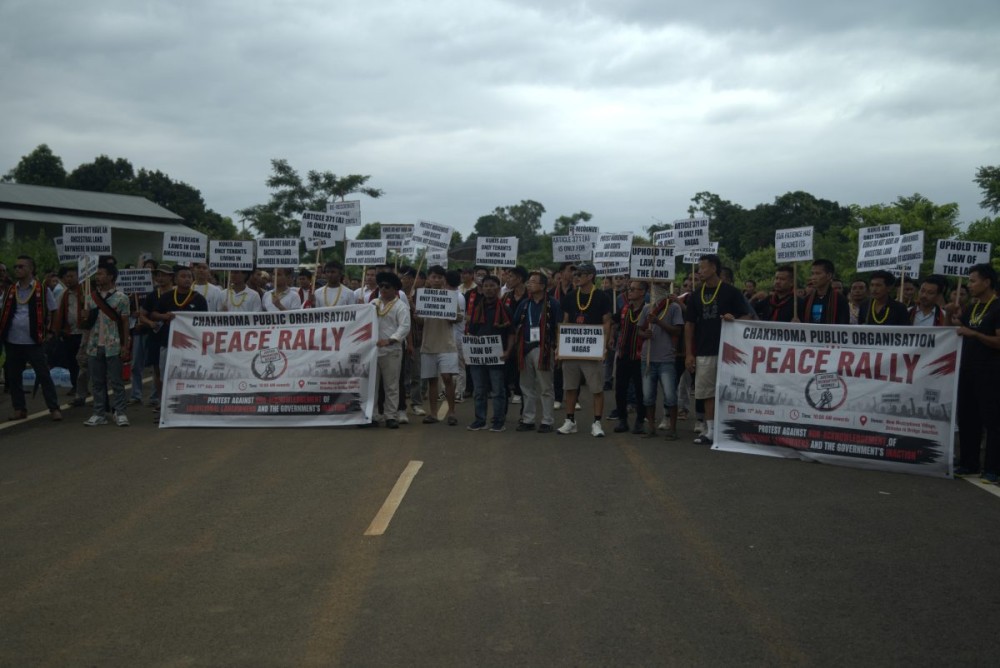
Members of Chakhroma Public Organisation during a protest rally held at New Medziphema on July 17 in connection to the unresolved Maova village issue. The CPO later submitted an 8-point charter of demands to the State Government. (Morung Photo)
Morung Express News
Dimapur | July 17
The Chakhroma Public Organisation (CPO) submitted a representation to the State Government demanding, among others, the de-recognition of Maova village. The representation, containing an 8-point charter of demands, was addressed to the Chief Secretary. It was submitted to the ADC, Medziphema, following a protest rally at New Medziphema on July 17.
The memorandum asked the State Government to ensure Maova village adhere “to the historical orders/decrees of the Government and pay the nominal token tax in recognition of traditional land ownership.” It also demanded the “immediate derecognition of Maova Village” and the suspension of official residency certificates unless verified against the “1963 electoral roll.”
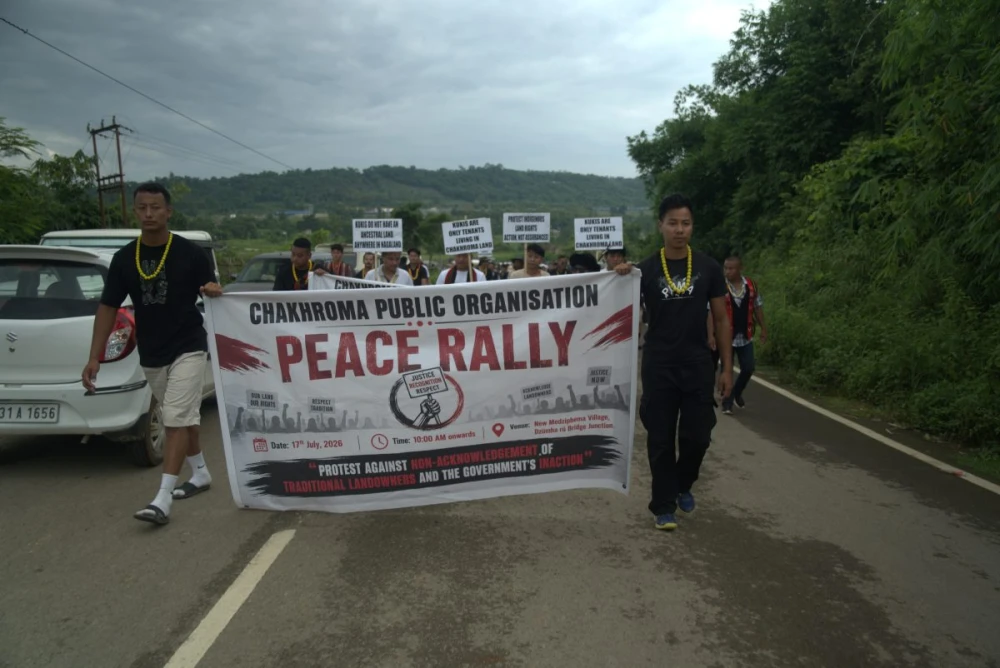
The rally was organised in connection to the unresolved dispute over traditional land rights between the CPO and Maova, a Kuki-inhabited village.
The stalemated dispute escalated following an incident on February 13, 2026, and compounded by what the CPO alleged has been government inaction and the refusal of Maova villagers to abide by past administrative rulings.
The Organisation aslo cited government orders from 1979, 1980, 2001, and a 30-day ultimatum, dating to 2010, by the Deputy Commissioner of Dimapur, directing Maova to pay annual taxes to Tsüüma village.
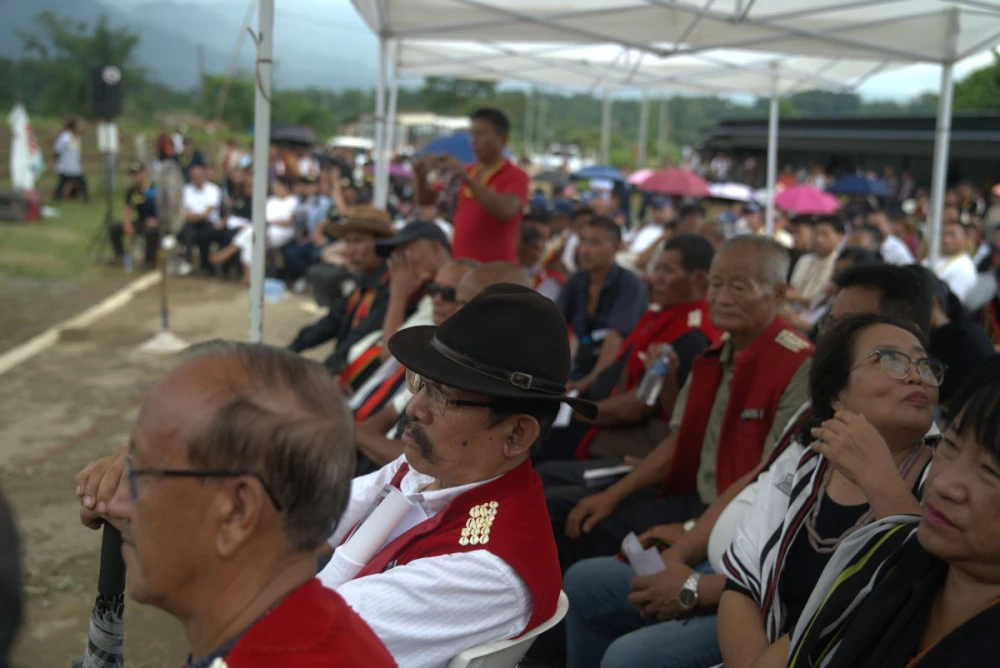
The charter also called for the “immediate termination” of the Head GB of Maova, and the discontinuation of hereditary chieftainship. It held that the practice lacks statutory backing under the Nagaland Village and Area Councils Act, 1978.
The memorandum, signed by CPO President Zhato Kimho and Vice President Sebastian Zumvü, reiterated that the rally was organised to press the State Government to act on the said resolutions.
Addressing the rally, CPO President Kimho questioned the State Government recognising Kuki villages in Chakhroma territory without their consent.
While appealing the Naga Political Groups against sheltering or training then, he urged the Government of India and the security forces to avoid what was described as replicating policies from Manipur in Nagaland.
He added that any perceived partiality would not only affect peaceful co-existence but also result in the Chakhroma opposing the presence of security forces in their territory.
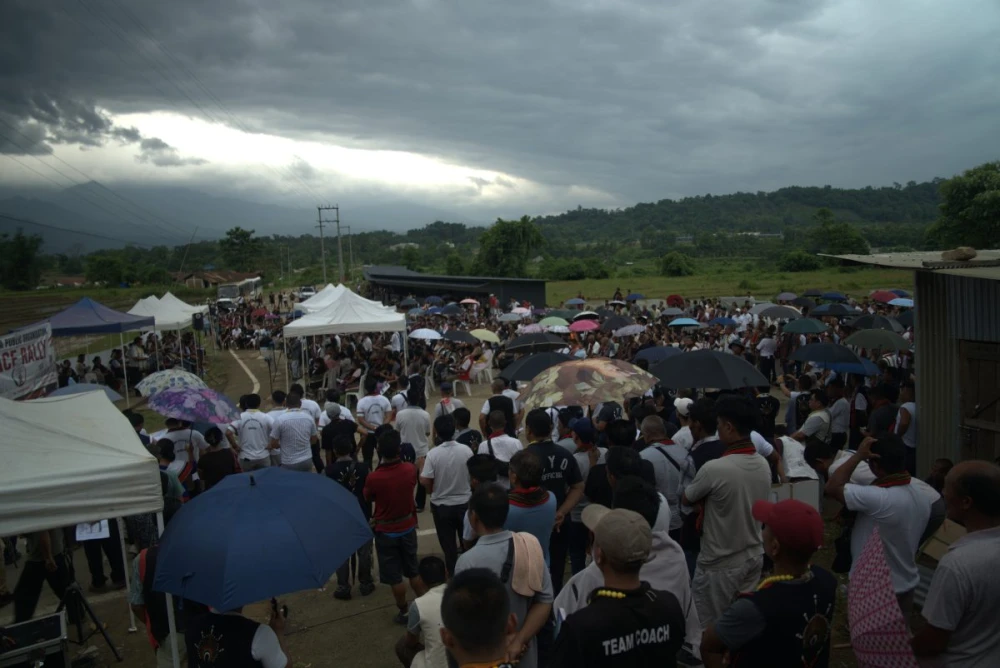
Angami Public Organisation (APO) President Thejao Vihienuo held that the Bengal Eastern Frontier Regulation, 1873, and Article 371 (A) apply only to indigenous Nagas of Nagaland.
Chakhroma Youth Organisation (CYO) President Medochüzo Medoze alleged there has been growing frustration among the youth since the February 13 incident.
He criticised the state's failure to enforce administrative decisions, stating, “Our patience is finished from today.”
He added that allowing the issue to fester would compel the youth to take independent protective measures.
Neithono R Sothu, President of the Angami Women Organisation said that their ancestors historically permitted settlers to live in peace. However, she alleged that the traditional land-owners today are facing threats and intimidation.
She called for respecting traditional practices and “not to plant alien cultures in our society, in our land.”