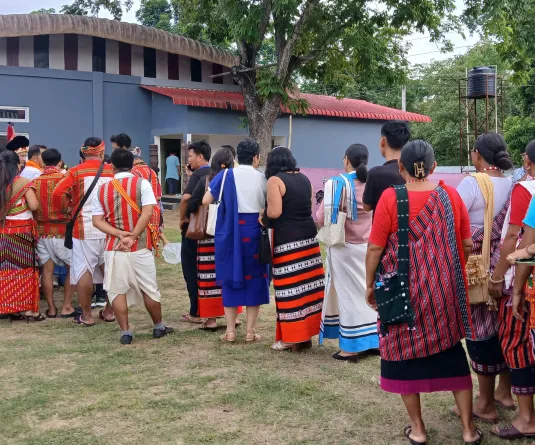
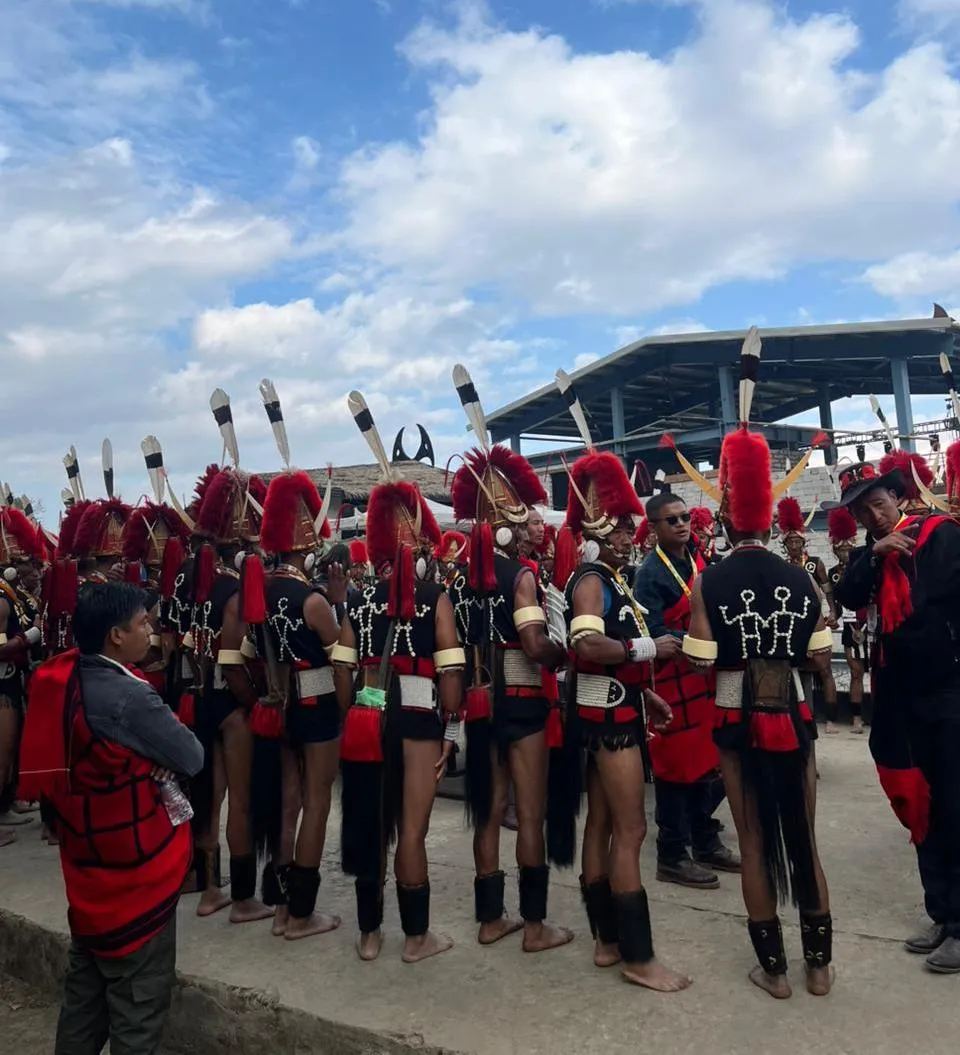
Clad in traditional attire adorned with feathers, beads and bold patterns, performers gathered at Kisama on December 1 for the inaugural day of the Hornbill Festival 2025. (Morung file Photo)
Morung Express News
Dimapur | November 21
“Naga culture is not something we should sell,” said one respondent in a weekly reader poll by The Morung Express on the Hornbill Festival, even as another called the event “a great platform to keep the traditional spirit alive.”
The poll asked whether the festival offers a meaningful platform for preserving and promoting the indigenous languages, customs and culture of Naga communities. It drew sharply divided responses, with 45% respondents voting “No”, 43 voting “Yes” and 12% choosing “Other”.
The narrow margin reflects a persistent public debate in Nagaland over the festival’s cultural value versus its commercial and developmental costs, with many respondents on both sides calling for better regulation and a rebalancing of priorities.
Those who backed the festival said it brings together Naga tribes on one stage and helps the younger generation connect with their heritage. “The festival brings together different Naga tribes and allows them to showcase their traditional dances, folk songs, traditional dresses, food, handicrafts and rituals,” one respondent said, adding that it also raises awareness of Naga diversity among tourists.
Another participant described the festival as “not just a fest where we showcase our culture but also a platform where we get to revive and re-live our long lost cultural traditions.”
One respondent said preparations for the festival had pushed some communities to revisit practices, food and folk songs they were losing touch with. The festival, the respondent added, may also serve as a reminder of community and heritage for Nagas who live outside the state. The respondent noted that mini-Hornbill celebrations held at tribal centres offer a more intimate cultural experience.
Respondents who voted against the proposition pointed mainly to commercialisation. One said “extreme unregulated commercial activities” had eroded the originality and authenticity of Naga culture, which was being “selected, packaged and modified” to suit tourists. The respondent called for the festival to be stopped or realigned with its original objective.
Another argued that culture should not be treated as a commodity, saying visitors often arrive with a mindset that they have “discovered” Nagaland.
Some respondents said tribes already have their own platforms to preserve customs and customary laws, and that the festival mainly serves to attract tourists. Others alleged that funds were misused, with one claiming that “normally funds go to pocket in the name of hornbill funds.”
Another respondent said that while the government earns from the limelight, no meaningful preservation or promotion work is happening at the grassroots level.
A recurring idea among critics was the allocation of resources. One suggested holding the festival every alternate year and using the funds for road connectivity, electricity and basic amenities, rather than “wasting all the resources on a 10 days program.”
Among those who chose “Other”, several acknowledged the festival’s cultural potential while flagging concerns over regulation. One respondent said the event promotes local talent, craftsmanship and cuisine, but warned that without regulation of prices and clearly enforced rules, it risks becoming “more of a commercial business event than a meaningful cultural celebration.” The respondent called for collective effort by policymakers, civil society organisations and church leaders.
Another respondent questioned whether the festival has any platform for promoting indigenous languages at all, saying there was little beyond some displays of custom and culture.
Some respondents compared Nagaland unfavourably with Meghalaya, saying well-maintained infrastructure there sustains year-round tourism, while one cautioned against Nagaland becoming a “next Meghalaya (ruins) in making.”
Others took a pro-tourism stance. “Infrastructure should grow with tourism, not be used as an excuse to reject it,” one said, arguing that tourism would create employment and boost the local economy. Another suggested inviting international artists to draw global audiences, while noting that the state lacks the infrastructure to handle a large influx of tourists.
One respondent said the outcome depends on the visitor’s intent. “If you attend Hornbill for enjoyment you’ll get it. If you attend with motive for understanding our culture and practice, you’ll definitely experience it,” the respondent said.
Another cautioned that the festival could turn into a “Sodom and Gomorrah” for those who attend only to party, and said its potential depends on the government striking a balance.