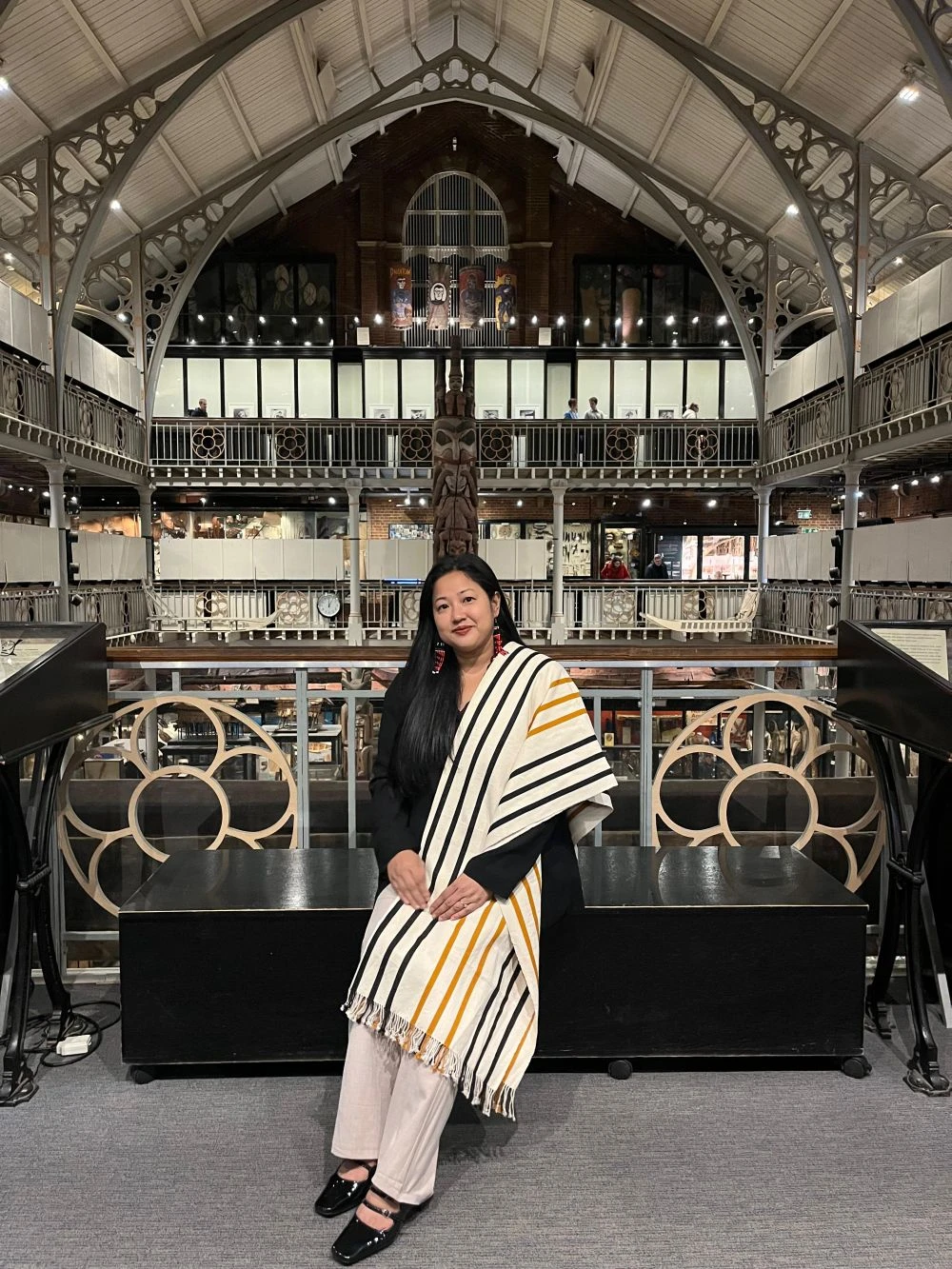
The Viüphüm Ashak on display at the Pitt Rivers Museum, Oxford.
Yongshei village revives Viüphüm Ashak
Rebecca Kits Jakhalu
Kohima | November 26
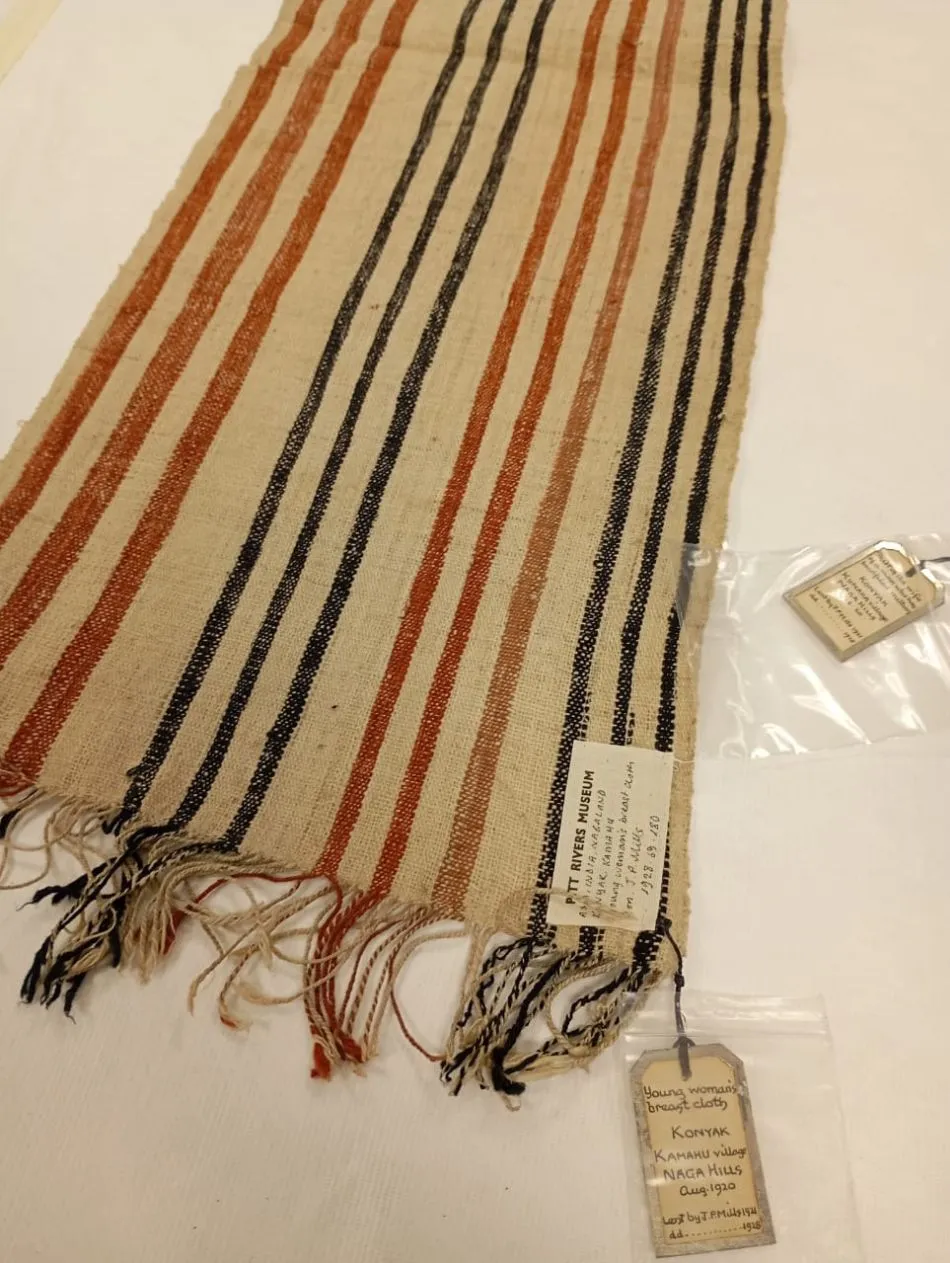
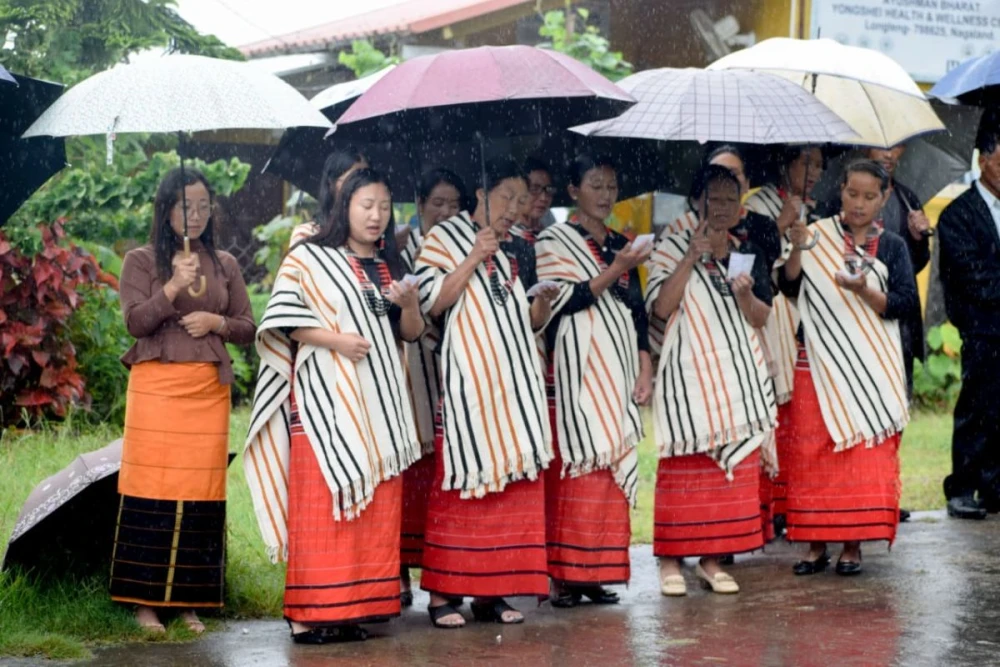
Viüphüm Ashak, a traditional Phom Naga shawl from Yongshei village, which had long disappeared from the community’s weaving traditions, has found its way back to the looms of the village.
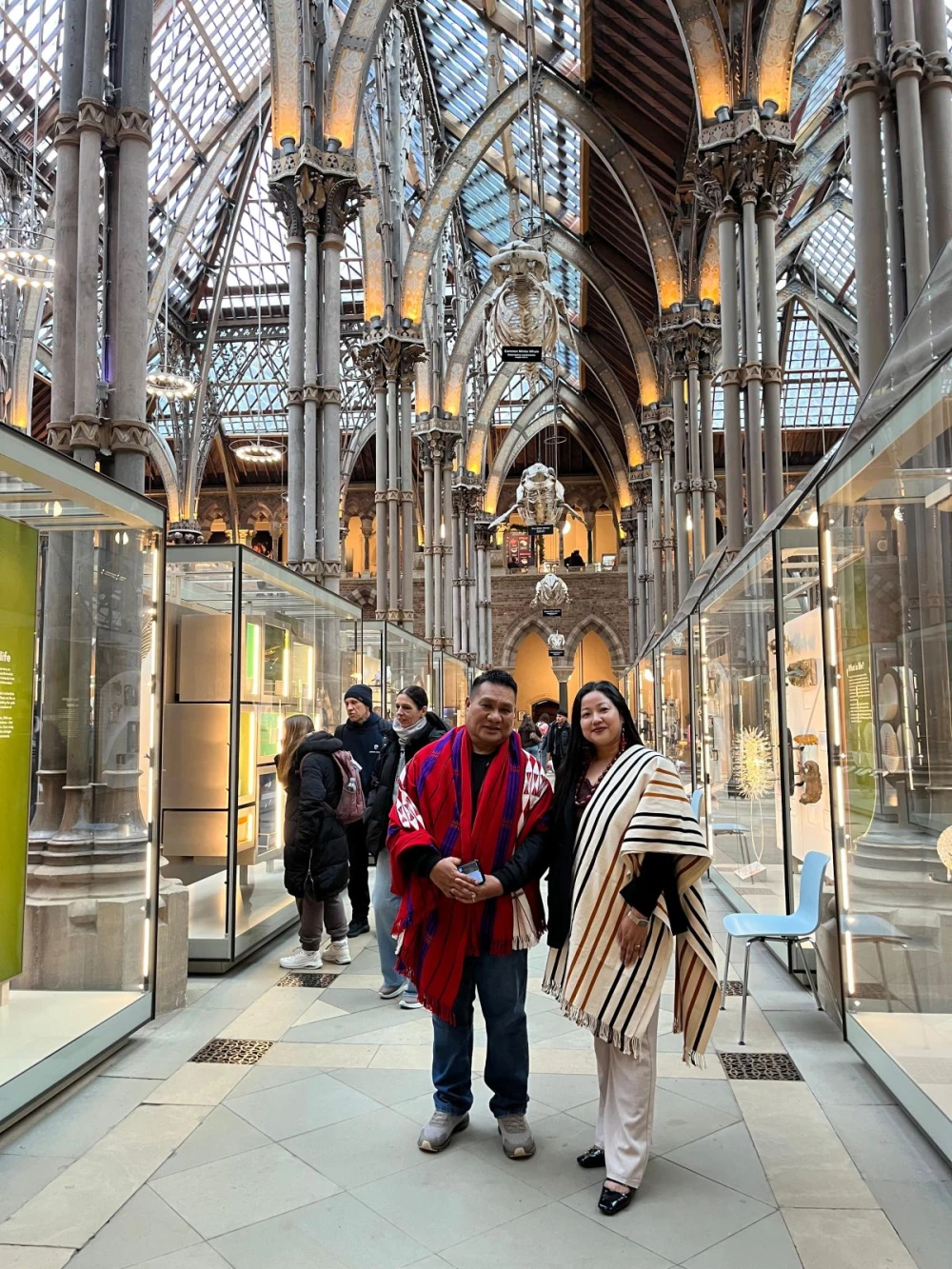
The shawl was rediscovered among the collections of the Pitt Rivers Museum (PRM) in Oxford, United Kingdom, and what began as an optional visit to the museum’s textile section during a Naga delegation’s visit became an important moment of cultural revival.
The museum label on the shawl describes it as a “young woman’s breast cloth” from Kamahu village in the Naga Hills, and dates back to August 1920.
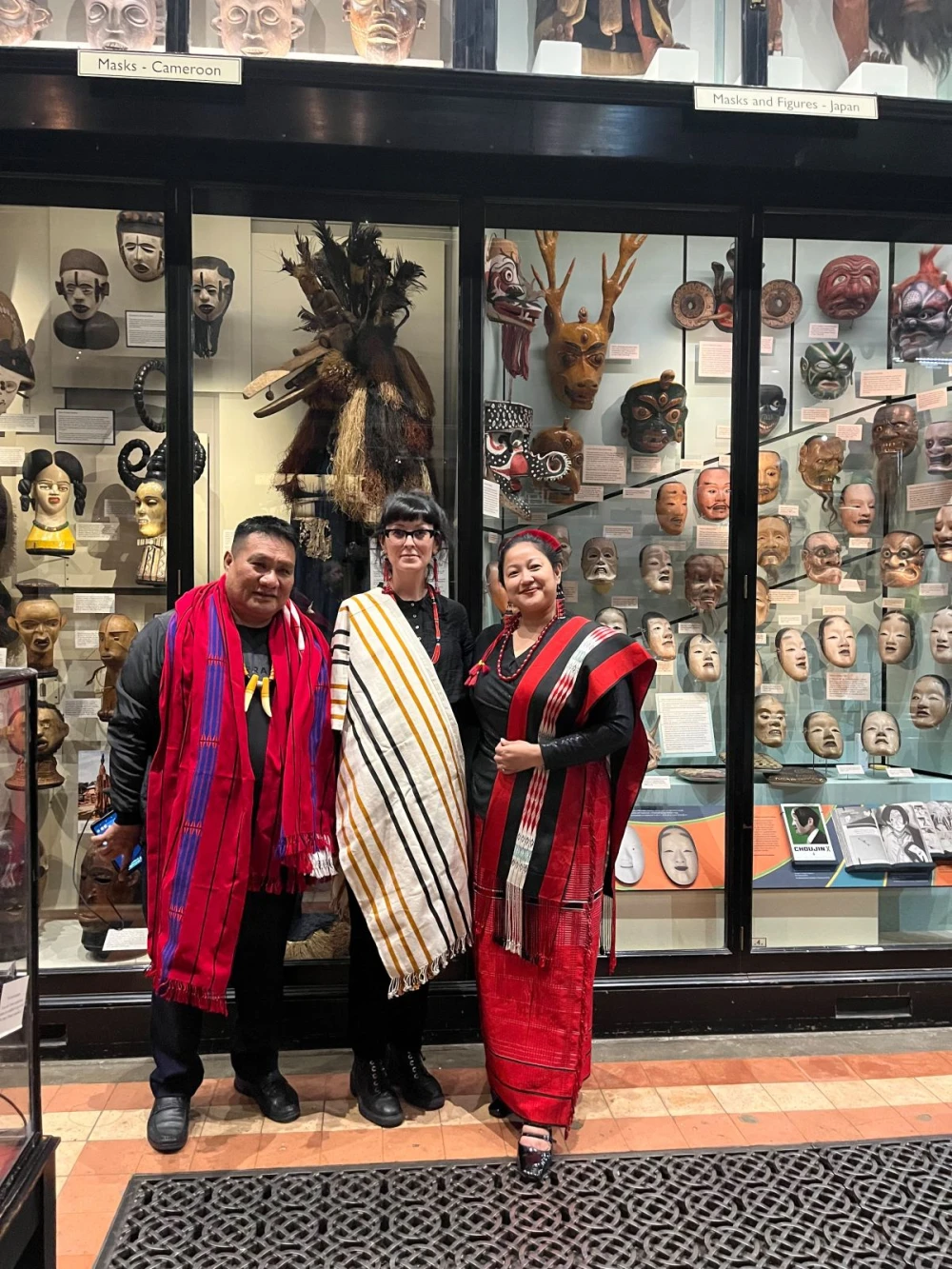
NT Thamlong Phom, Vice President of the Phom People’s Council (PPC), first came across the shawl surviving as part of a historical collection thousands of miles from home. In an exclusive interview with The Morung Express, Thamlong shared that the encounter was both a personal and collective journey into the past.
He shared that his involvement in the Naga repatriation journey began in 2024, when the Forum for Naga Reconciliation (FNR) and Recover, Restore and Decolonise (RRaD) convened a meeting of the different Naga tribal hohos. Representing the Phom People’s Council at the meeting, he gradually became involved in the wider process of reconnecting Naga communities with their ancestral heritage.
According to him, the unexpected discovery came during the delegation’s visit to the Pitt Rivers Museum. “The museum’s textile section was not initially included in the delegation’s planned programme. The visit was primarily organised around the museum’s artefact collections, but the Oxford authorities offered members an opportunity to explore the textiles as well,” he recounted. Accompanied by their guide, Ellie, Thamlong decided to visit the section.
There, he encountered approximately 30 textiles belonging to the Phom community, although several had been classified under other Naga tribal identities, including Konyak and Ao.
‘This was because the Phom and Konyak communities had been regarded as one tribe until the 1950s, while many of the objects had been collected around 1914 and 1918’, he explained. Examining the village names and other details, he recognised that several pieces actually belonged to the Phom community. Among these pieces was the Viüphüm Ashak. Thamlong photographed the shawls and shared the images with the villages identified in the museum records, which included Yongshei.
The women of Yongshei, then, took the initiative to recreate their shawl.
For P Bongthü Phom, a former women pastor at Yongshei Village, the revival has been deeply emotional as she recalled watching her mother weave the shawl. According to her, the cloth also served as a baby carrier. Although she herself was never carried in it, she recalled her siblings being cradled in it as infants. She expressed happiness that the shawl, which holds such personal and cultural significance, is finally being brought back to life.
In the Phom language, Viü means thread and Phüm means cotton. Together, Viüphüm refers to cotton thread, while Ashak means shawl. The name therefore describes a shawl made from cotton thread, a material commonly used in those days.
Providing further insight into the shawl’s cultural significance, Dr Moishen M Phom, Literature Secretary of the Phom Baptist Christian Association shared that in the past, the garment was not restricted to any particular social group or category of wearer. Its colours, however, carried symbolic meanings. “The colours in the shawl - black represents the dark phase, white represents peace, and the other colours represent prosperity and the way people moved forward,” she shared.
“Sadly, the story of who actually wove it first is still debated. However, I was told that whenever women during those days went to the jungle to collect the cotton, they would abstain from any sexual contact to maintain purity, as collecting cotton for weaving was considered to be very sacred,” she added.
Although the precise circumstances surrounding the shawl’s disappearance remain unknown, its return has reportedly revived interest, especially among young women. Last year, the church held its 75-year jubilee, and it was used by most women during that time although this shawl is not regarded as the main shawl. We do have other women shawls used commonly. Most young women love the colour of the shawl,” Dr Moishen shared.
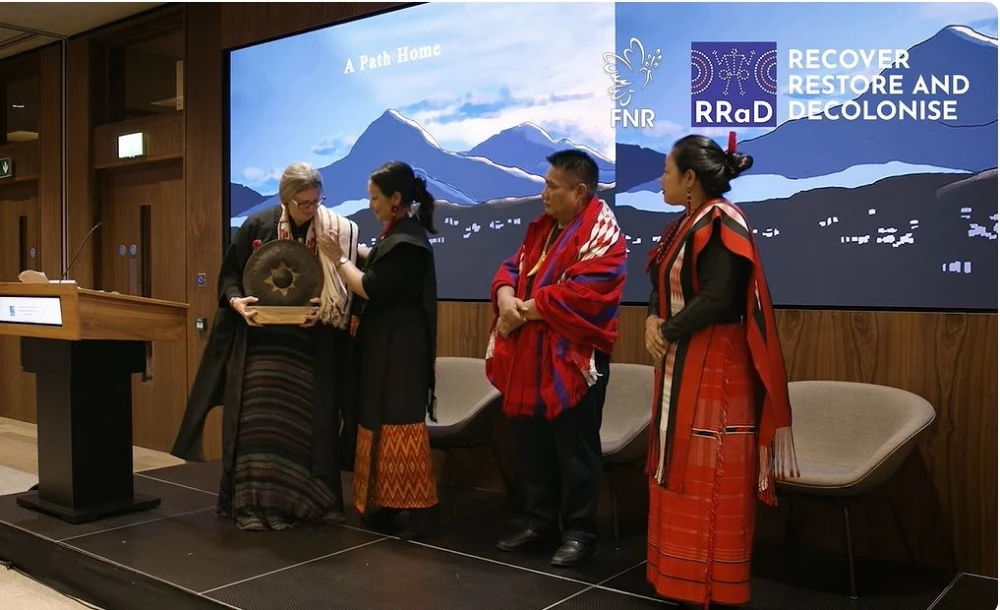
Bringing the textile’s journey full circle, Thamlong mentioned that the newly recreated Viüphüm Ashak was presented to the Pitt Rivers Museum in 2026 by the Naga delegation.
“For the Nagas, traditional attire carries a lot of history, so for our village, getting back a shawl is something that we believe to hold dear,” she added.
Linking the revival of the shawl to the broader Naga repatriation initiative, Dr Moishen emphasised the collective significance of the journey, stating that bringing ancestral belongings home from distant lands was a testament to what the Naga people could achieve through unity. “We should take pride in what we have achieved and approach one another with understanding, rather than allowing unnecessary speculation or controversy to divide us,” she urged.
Dr Moishen noted that the revival of the shawl was just one example of the deep connection the community shares with its traditional attire, culture and ancestral roots. She expressed hope that many other traditional garments would also be revived, ensuring that more aspects of their cultural heritage are preserved for future generations.
Echoing similar thoughts, Thamlong also hoped that the rediscovery of the museum collections would inspire similar initiatives across Phom villages, allowing traditional tools, textiles and practices to be remembered, recreated and passed on to future generations.