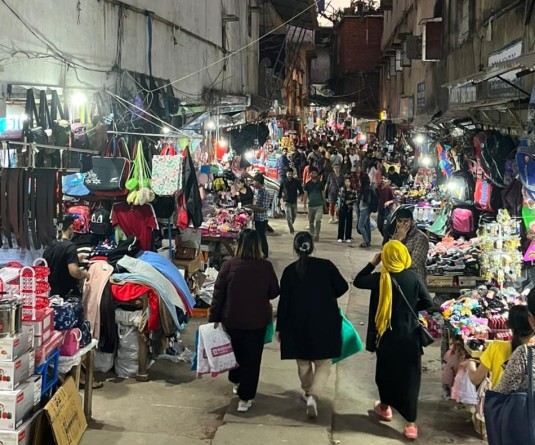
Photo Courtesy: Image by Gerd Altmann from Pixabay | For representational purpose only

Morung Suggestion Platform flooded with calls for accountability
Morung Express News
Dimapur | August 3
Citizens have called for sweeping governance reforms, including stricter accountability measures, decentralised development and an end to nepotism, according to responses submitted to the Morung Express’s public suggestion platform on achieving inclusive development in Nagaland state.
One respondent stated, “For holistic development in Nagaland, there must be honest assessment of the ground situation. Besides the issues of infrastructure (or lack of it), the main obstacle is trust. The public just does not trust the government and administration because both these machineries have failed the public.” Another asserted, “Inclusive and holistic development begins with transparent governance, merit-based appointments, strict accountability, and zero tolerance for corruption. Public funds should serve the people and not personal interests.”
Citizens proposed specific, actionable measures to tackle administrative inefficiency and corruption. A major suggestion involved restructuring the financial leadership, with one respondent declaring, “1st and foremost, the finance portfolio should not be held by the CM or Dy CM but should be assigned to other capable MLA, you all know what I mean.” To enforce discipline, the same respondent proposed, “CCTV should be installed in every HOD offices and the biometric attendance for signing in and out, that way the subordinates will automatically fall in line if the boss himself/herself is present on time everyday regularly.” The call for a “360° appraisal system in all the offices” was also made to ensure performance is measured comprehensively.
Several contributors pointed to the need for a cultural and political shift. This included a radical suggestion to “Dissolve students’ bodies, including NSF, that are affiliated with political parties, and form better ones. Have a minimum requirement of Masters for any political candidate.” Others criticised the culture of nepotism and favoritism, with one respondent stating, “What is really affecting governance is the current culture where politicians’ appoint their own children or kin, or individuals endorsed by villages who supported them as their personal advisors... with no qualification but only to promote and safeguard their own interest is very concerning.”
The responses also stressed a shift towards performance over credentials. “Please don’t judge candidates only by experience certificates. Give freshers a fair opportunity to gain the experience they need at the same time, performance and commitment should always remain the standard,” one participant urged. Another added, “It is time to move beyond every form of 'ism.' Let merit, integrity and unity guide us instead.”
On the economic and infrastructure front, a citizen wrote, “Improve road and railway connectivity, economic growth highly depends on proper public transportation and good road infrastructure,” while also calling for “stricter rules on corruption- (applicable to both leaders and public) where one who reports regarding corruption to a police gets rewarded and not punished.” The need to develop regions beyond the state capital and Dimapur was a critical point, with one respondent asking, “How long will these two districts sustain us?” Another suggested a phased approach, stating, “Instead of spreading resources, it would be much better to develop cities or districts one by one.”
The need for basic amenities was summed up succinctly: “Provide- 1. Good roads 2. Good electricity 3. Good health care 4. Good educational centres and citizens will do the development.” The education sector also received attention, with a call to “Include deserving private colleges under government aided colleges... It will open doors to Ministry of Education for external funding akin to previous UGC Funding to higher education institutions. Our state is losing.”
Several responses highlighted the need for systemic research and accountability. “Our state need think tanks and policy research to hold the government accountable and also to guide policy makers,” one citizen stated, adding, “Just depending on politicians and bureaucrats will not help at all.”
However, skepticism about the political class and the youth remained. A particularly submission read, “Sorry to say this government lacks vision. What is even more worrisome is that there are no emerging alternative leaders. The young ones have been a disappointment because they are all trying to ape and replace the ones in the seat. They will only follow the same agenda with the same style. Change is not coming.”
The fundamental driver of the status quo was also dissected. One respondent argued, “In Nagaland 76% of the government servant apply for government jobs for 'stable income and financial security' only and not because to work for government and brings/create innovation... Until and unless our people STOPS opting for government job 'just' for financial stability than nothing will ever change.”
“The Naga people should tell the government what to do and government should act accordingly not vice versa,” a citizen insisted and that “Resources must serve the Naga people only and not government or outsider businessmen.”