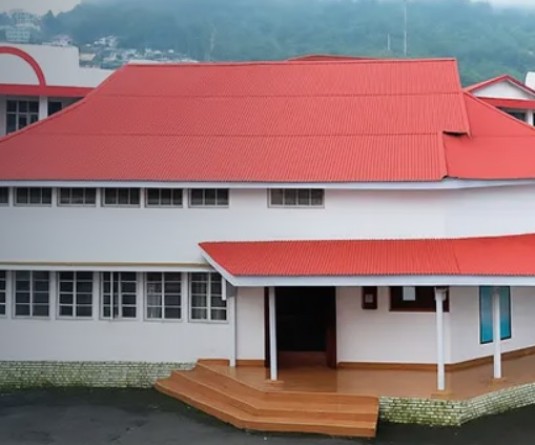
Public assistance and registration kiosks at the Seva Setu Abhiyan launch event at the Deputy Commissioner's Office, Chümoukedima, on October 14. (Morung Photo)
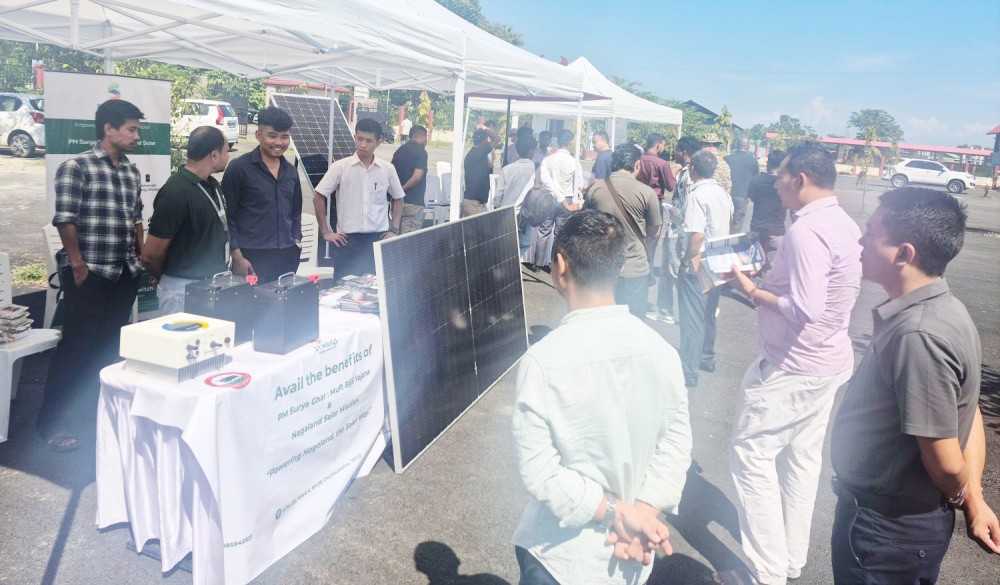
Only 800 installed out of 10k target under rooftop solar push
Morung Express News
Dimapur | October 14
Nagaland has recorded only about 800 rooftop solar installations against its target of 10,000 households under the Prime Minister Surya Ghar Muft Bijli Yojana, while neighbouring Assam has already met its target of one lakh units. The poor public response is despite the scheme coming with a subsidy.
“Out of the 10,000 consumers which we have earmarked, we have hardly reached around 800 consumers only till now,” said Albert Ovung, Executive Engineer, Chümoukedima Electrical Division, at the launch of the two-day Seva Setu Abhiyan at the Deputy Commissioner’s Office in Chümoukedima on October 14.
The Nagaland state government reportedly provides the highest subsidy, among the states, under the scheme, in the country. Yet public response to the subsidised solar energy initiative remains poor for reasons unknown.
Meanwhile, Nagaland struggles to meet its energy requirement, primarily sourced from external conventional sources like hydro and thermal plants. According to Ovung, the state’s power demand stands at 200 MW at present, and is projected to reach 300 MW by 2030.
At the current energy cost, he projected that Nagaland would need around Rs 450 crore, annually, to meet the deficit of 100 MW from the energy market.
“When the power cost goes up, our tariff also will go up,” Ovung said, projecting that the energy tariff could reach Rs 15 per unit within five years.
The state has hydro energy potential but he said that building hydel dams is held back by land acquisition hurdles – while taking years, and lots of investment – making solar a relatively quick, cost-effective and reliable alternative.
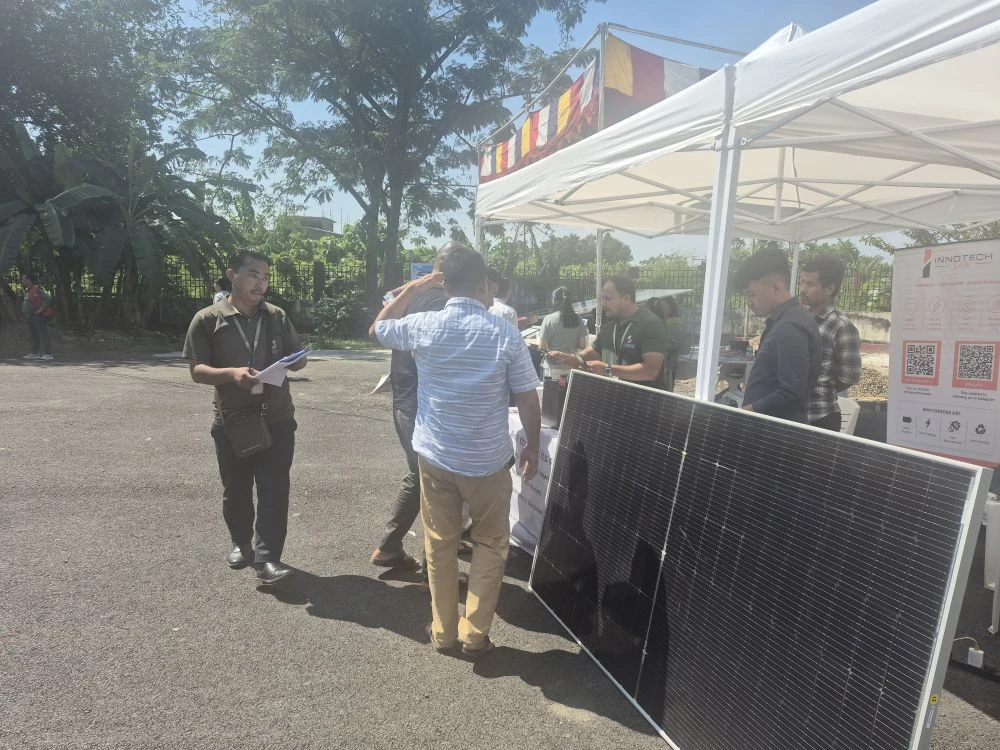
He said that the PM Surya Ghar Muft Bijli Yojana and Nagaland's very own Chief Minister's Community Solar Partnership initiative are “a good opportunity” to become energy-independent. The former is for individual households, while the latter is for community spaces and assets.
Under the state’s Chief Minister’s programme, solar units have already been installed across community halls in 14 of the 24 selected villages in Chümoukedima.
He appealed to residents to bring electricity bills, identity cards, and bank details to the Seva Setu camp for on-the-spot registration. The Prime Minister’s solar scheme can also be availed through soft loans.
Later asked the probable reasons for the poor response, Ovung surmised it could be linked to consumers accustomed to paying minimum electricity charges, adding that the eventual consolidation of smart meters and rising tariffs would push households toward rooftop solar.
He stated that Dimapur leads the state with over 200 installations under the scheme, while Chümoukedima holds the largest overall solar capacity at nearly 800 kW through private and community installations.
A beneficiary, at the event today, said that he installed a 3 kW unit by securing a low-interest bank loan. He added that residents can avail banking assistance at the Seva Setu camp as well.
PHED Minister Jacob Zhimomi, who was the special guest, said that growing urbanisation has driven up power consumption, turning electricity bills into a household strain. He encouraged residents to use the scheme to lower their expenses.
“When we purchase power with hard cash, we only recover around 40 percent in revenue; it is running at a deficit, with no recovery,” Zhimomi said.
The Minister observed that the 10,000-household target covers only a fraction of Nagaland’s 1487 villages. He also cautioned empanelled vendors against installing substandard equipment, warning that the public would hold them accountable.
Zhimomi, who received a 3 kW solar unit donated by empanelled vendors during the event, handed the system over to the Sovima Village Council for installation at its community hall. He insisted that Chümoukedima, Dimapur, and Niuland should work towards becoming model districts in the transition to solar energy.