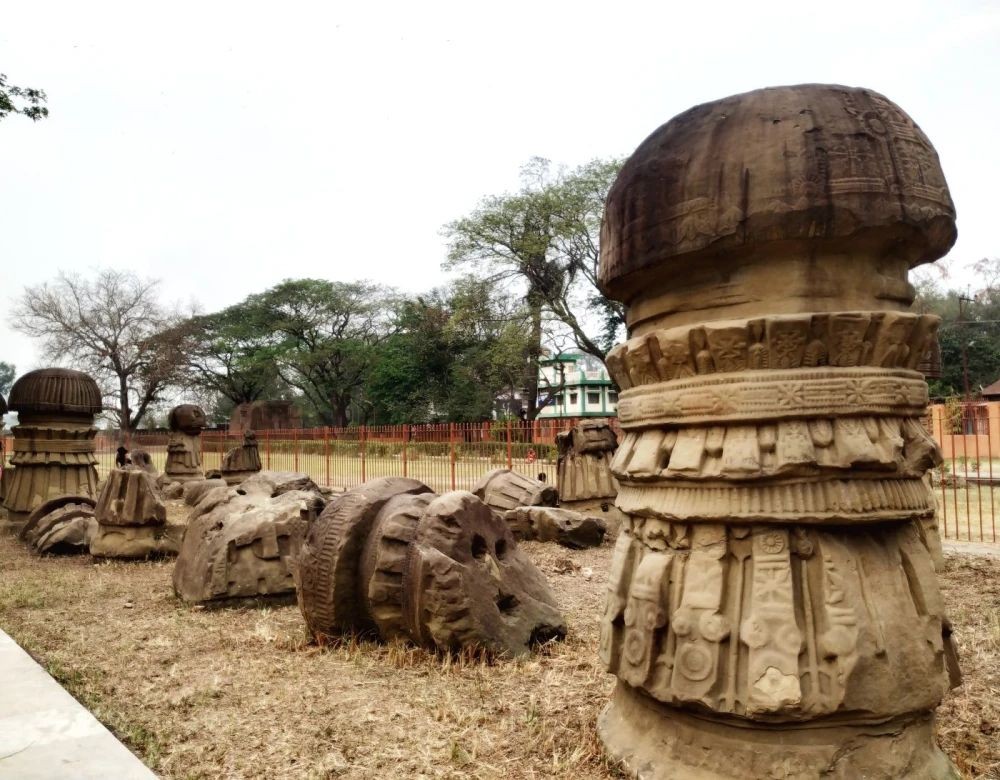
Kachari Ruins or The Dimasa Kachari Ruins located in the town of Dimapur, Nagaland. (Morung Photo)
Morung Express News
Patna | March 20
A seven-member media delegation from Nagaland, on a press tour to Bihar organised by the Press Information Bureau, visited the historic Nalanda Archaeological Site on March 19, gaining first-hand insight into one of the world’s oldest residential universities and its model of heritage preservation.
Nalanda Mahavihara, a UNESCO World Heritage Site, was established in the 5th century CE and flourished under Gupta, Harshavardhana, and Pala rulers. Chinese pilgrim Xuanzang recorded it hosting 10,000 students and 1,500 teachers with free residential education supported by royal patronage.
The delegation was guided by Anil Kumar, a licensed guide since 1995, who explained the monastery layouts, temples, and meditation platforms. He noted that the site draws many international visitors, especially from Southeast Asia and Japan, with peak tourist season from October to March.
ASI excavations reveal a planned campus with monasteries and temples along a central corridor, including Temple No. 3 and Sariputra's stupa. The site features pathways, preserved structures, signage and guided tours for accessible and informative visits.
Nagaland has richness, now needs structure
The visit highlighted practical measures that can strengthen heritage tourism in Nagaland. Speaking to The Morung Express, Nzano Humstoe, a journalist with Nagaland Post, said that after visiting the site, one key learning for Nagaland is that Heritage gains value through interpretation, storytelling, and infrastructure, not just preservation.
“Nagaland can definitely develop similar heritage tourism, though in its own way, by focusing on living cultural traditions, improving infrastructure, creating heritage circuits and promoting festivals like the Hornbill Festival as global attractions,” Humstoe said.
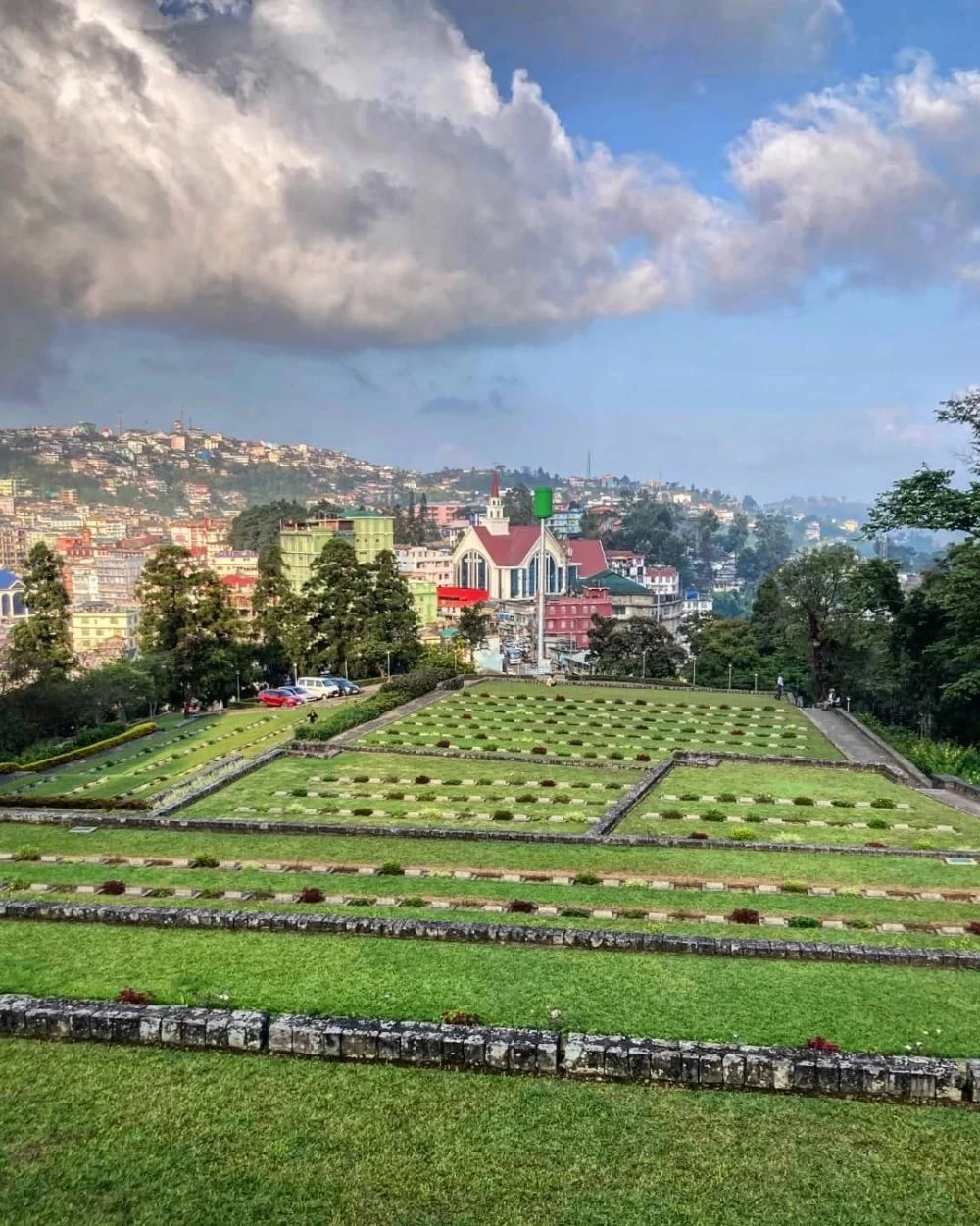
She added that places such as the Kohima War Cemetery, Khonoma Village, Dzükou Valley and especially the Kachari Ruins need better preservation, promotion and storytelling to unlock their full tourism potential.
Another delegate suggested that Nagaland should focus more on detailed documentation in the form of books, digital archives, or audio-visual recording.
“This will ensure that ancestral stories remain alive for generations to come. Many sites in Nagaland lack detailed on-site information. Installing interpretive signage, QR codes linking to digital archives and small site museums can enhance heritage tourism in Nagaland,” the delegate said.
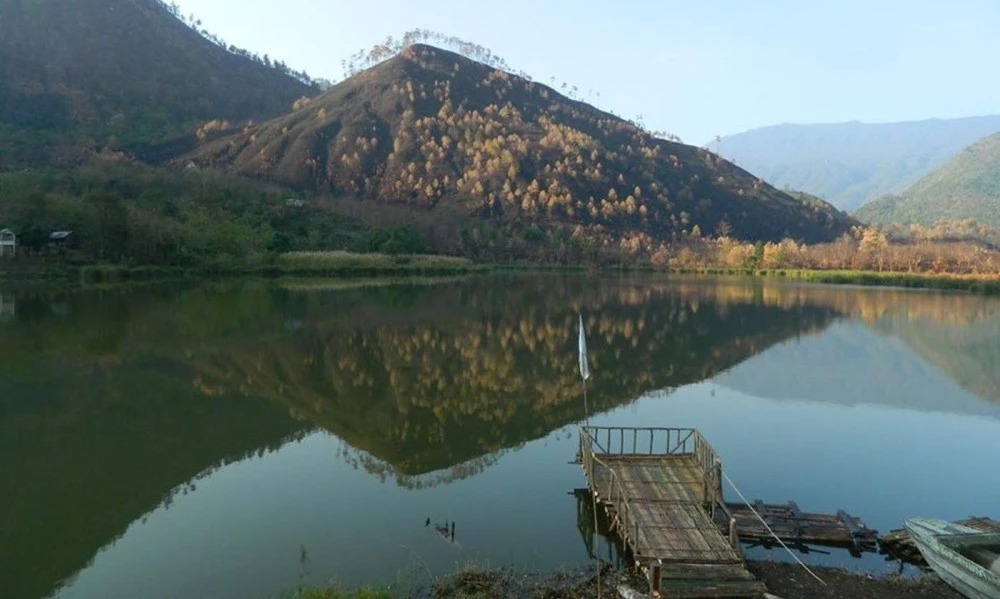
Observing that Nagaland state has tourism potential across all districts, another member noted that sites such as the Kachari Ruins and the Kohima War Cemetery already draw visitors. Natural attractions like the Doyang River in Wokha and Shilloi Lake in Meluri further highlight its appeal, while Mon showcases unique tribal heritage.
“Visiting the Nalanda Archaeological Site offered a powerful lesson in how heritage, when preserved with vision, can transcend time and place. Nalanda is presented not merely as ruins, but as a global symbol of knowledge that continues to attract both scholars and tourists from all over the world,” the delegate said.
“A key takeaway for me is the importance of structured conservation combined with a strong narrative. For Nagaland, this highlights the need for documenting, interpreting, and presenting our own rich heritage in a more organised, systematic and accessible manner,” the delegate added.
The delegation observed that several practical steps, such as proper documentation of sites, installation of informative signage, training of local guides, and basic visitor facilities can improve the overall tourism experience. Creating district-level tourism circuits linking historical, cultural and natural sites can also help visitors explore more areas in a structured manner.
Ketouvilie Kire from Capi, a vernacular newspaper base in Kohima praised the preservation and management of the university, describing it as a well-maintained heritage site that successfully balances cultural conservation with monetisation.
Kire commended the site’s staff for their professionalism, adding that any historically significant location intertwined with collective culture deserves such attention.
While noting that Nagaland currently lacks similar large-scale historical sites, he expressed optimism about ongoing archaeological excavations, including at Mimi Caves in Kiphire district and Phor village in Meluri. Kire stressed the need for systematic preservation and accuracy in tracing historical roots.
Temjennaro Longchar, a reporter from Nagaland Tribune, said, “…one key learning aspect for Nagaland is that our State can learn the importance of systematic documentation and storytelling.” She added, “Nalanda, as we can see, is not just a collection of bricks, but it is presented as a global centre of learning that once attracted scholars from across Asia and the world. Every structure is backed by research, interpretation and a clear narrative.”
“While in Nagaland, our traditions are rich, but most of our history still exists in oral forms only. Only if we can convert these into well-researched, documented and publicly accessible narratives,” she added.
Responding to whether Nagaland can develop similar heritage tourism, Longchar said, “Yes, but we should build our own uniqueness. Our state’s strength lies in its living culture, unlike Nalanda's archaeological remains. Nalanda teaches us structured preservation. Villages in Nagaland offer living, breathing heritage.”
She noted that across many villages, the gap is not the heritage itself but its presentation and preservation. “Nagaland already has the richness; it now needs structure, documentation, and vision to turn that into sustainable heritage tourism.”
She suggested prioritising available heritage sites, including ancestral and spiritual heritage (forefathers’ worship sites, ritual grounds), headhunting-era history (morungs, warrior stones, log drums, oral accounts), and living culture (festivals, crafts, food, daily life), which can be connected into tourism circuits.
With coordinated efforts in preservation, promotion and infrastructure, Nagaland can further strengthen its tourism sector while safeguarding its cultural and historical assets, the delegates noted.