New Delhi: Union Minister of Commerce and Industry Piyush Goyal addresses a press conference on the state visit of the Presidents of the European Council and the European Commission and the India–EU Free Trade Agreement in New Delhi on Tuesday, January 27, 2026. (Photo: IANS/Prem Nath Pandey)
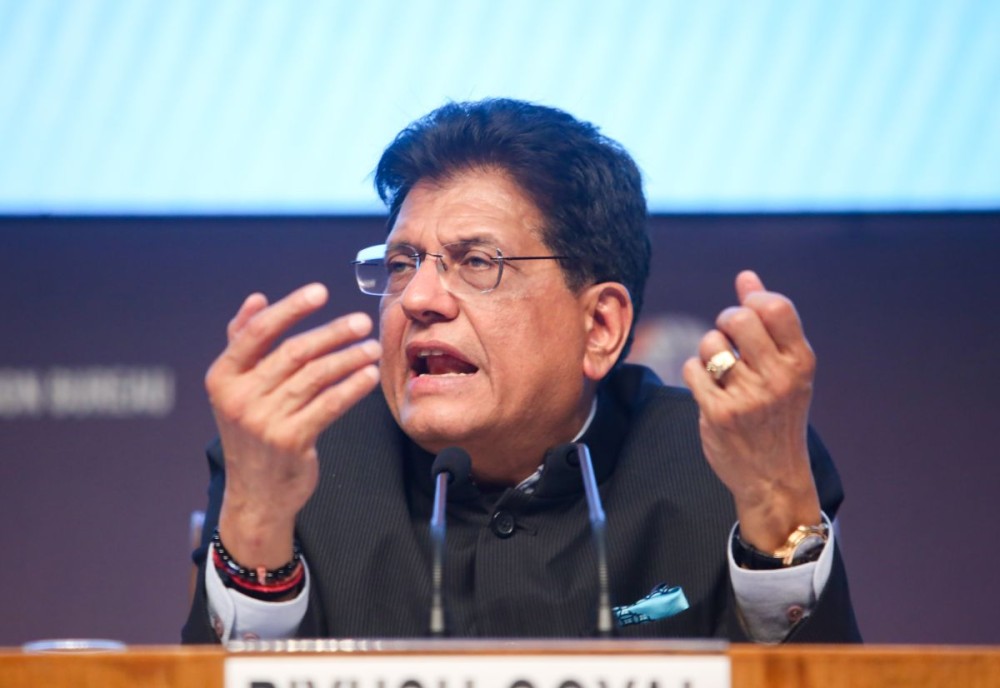
New Delhi, January 29 (IANS) Commerce and Industry Minister Piyush Goyal has strongly countered the Congress’ criticism of the India-European Union free trade agreement, asserting that the deal is not a zero-sum pact but a mutually beneficial one that will fuel India’s economic growth and open up large opportunities for businesses and citizens.
The Congress party had earlier raised objections after the India-EU free trade agreement was finalised, questioning the Modi government’s handling of negotiations.
The party flagged concerns over the absence of an exemption for Indian aluminium and steel producers from the EU’s Carbon Border Adjustment Mechanism, and also criticised the reduction or relief of tariffs on more than 96 per cent of the bloc’s exports to India.
Congress General Secretary Jairam Ramesh said the agreement also raises issues related to the EU’s stringent health and product safety norms, which will continue to apply to Indian exports even after the free trade agreement comes into force.
He further highlighted concerns regarding India’s largest export segment to the EU, refined fuels.
Responding to Ramesh’s remarks, Goyal took to social media and said it was ironic that those who failed to make decisions when they were in power are now attempting to justify inaction. He remarked that such leaders lacked a connection with realities on the ground.
The Union Minister said the country has paid a heavy price for such missed opportunities in the past, losing employment, income and growth. He added that the people of India have repeatedly expressed their disapproval of this indecision.
In a post on X, Goyal said, “I only hope my friend will shed this negative and pessimistic approach, which is unable to see our aspirational people raring to go out and do business with the world. Let’s work to open opportunities for them, rather than act as roadblocks in their quest for prosperity.”
In a detailed rebuttal, Goyal said it “puzzles” him that while the global community is describing the agreement as the “mother of all deals”, his “friend” Ramesh has labelled it as “hugely hyped”.
“Is the combined GDP of $25 trillion, combined global trade of $11 trillion and common market of 2 billion people, $33 billion of India’s labour-intensive exports going to zero on day 1 a hype? What is also unfortunate is that my friend missed a basic fact that we are both largely complementary economies,” he said.
Goyal reiterated that the agreement does not come at the cost of India’s interests. “This is not a zero-sum deal. It is a win-win agreement that will accelerate our economic growth and create numerous opportunities for Indian businesses and people,” he added.
Addressing concerns over the Carbon Border Adjustment Mechanism, the minister said India has actively taken up the issue to protect the interests of domestic exporters in steel, aluminium and other sectors, and has identified workable solutions.
“We have found creative ways of handling these complex and sensitive subjects through dialogue, trust and support with our partners rather than 'my way or highway only' kind of immature, illogical and rigid positions,” Goyal said.
He further said the agreement represents a long-term strategic partnership built on mutual trust and respect, which will strengthen global trade linkages.
“I hope that my friend can devote more time to understand the auto sector and what we are intending to do. Our quota-based, premium segment-focused and phased auto offer (with a time lag of 5 years for EVs from EIF) is with an intent to boost Make in India,” he said.
Goyal explained that easing norms for completely knocked down imports would encourage European original equipment manufacturers to set up assembly units in India.
This, he said, would gradually move foreign companies from importing vehicles to assembling them locally and eventually towards full localisation through domestic supply chains.
“This brings high-end manufacturing processes, quality standards, and advanced R&D practices into the Indian ecosystem. It will also create new demand, and benefits consumers by expanding choice with faster access to global models. It also enhances safety and tech standards,” the Union Minister said.
The India-EU agreement was announced this week in New Delhi. Leaders on both sides have described it as the largest trade pact in India’s history. European Commission President Ursula von der Leyen called it “the mother of all deals.”
She said the pact creates “a free-trade zone of 2 billion people, with both sides set to benefit.”
The agreement links two of the world’s largest economies at a time of global trade tensions and geopolitical uncertainty.