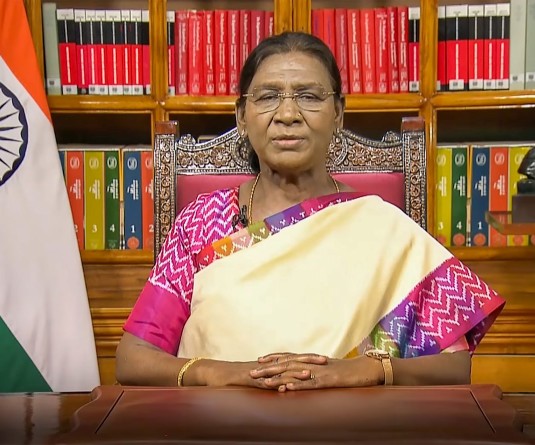
New Delhi: Prime Minister Narendra Modi interacts with Assistant Secretaries of the IAS 2024 batch in New Delhi on Tuesday, June 23, 2026. (Photo: IANS/PMO)
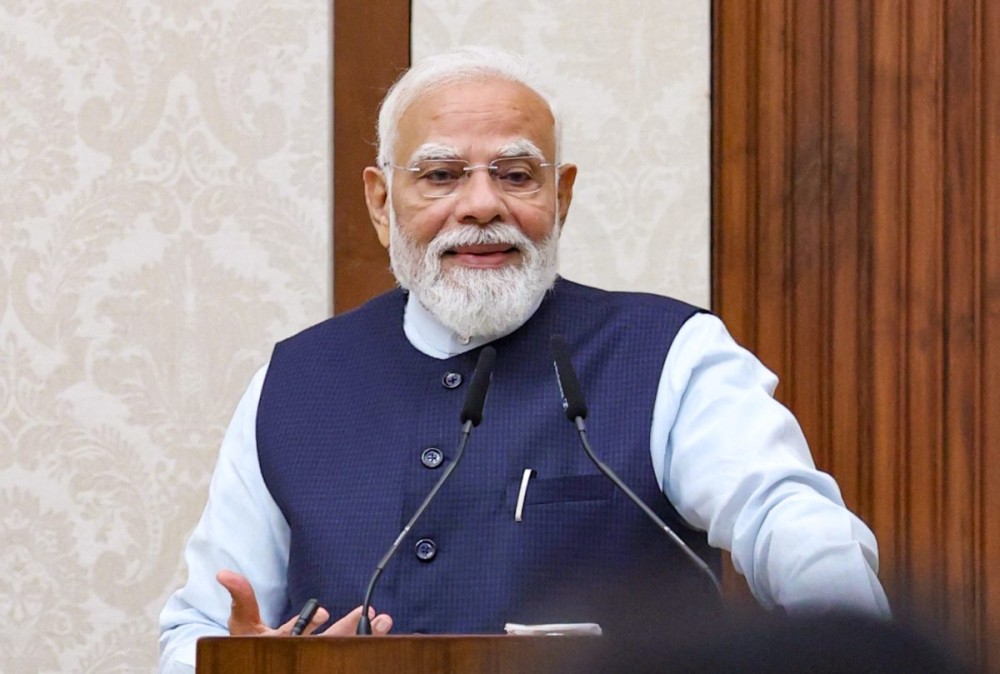
New Delhi, June 30 (IANS) Prime Minister Narendra Modi chaired a high-level meeting with Secretaries of all Central government ministries and departments at the Seva Teerth on Tuesday, with a focus on a comprehensive discussion on the reform agenda, as the government pushes for next-generation administrative and economic reforms.
This was one of the first full-Secretary-level interactions with the PM in the current fiscal (FY27), seen as a signal to align the bureaucracy with key policy priorities for the second half of 2026.
At the meeting also attended by the Cabinet Secretary and the two Principal Secretaries to the PM, P.K. Mishra and Shaktikanta Das, two main themes were discussed.
The first was "deregulation and other reforms", which aim to make "doing business easier" and also make living easier for people.
The second theme was promoting "Aatmanirbharta" and making India self-reliant.
During the interaction, the Secretaries briefed the Prime Minister on the major steps being taken by their Ministries and Departments in line with the two key themes, and the ongoing efforts to translate the Prime Minister's vision into actionable outcomes.
They also acquainted him with sector-specific challenges while outlining their future strategies to enhance governance and service delivery.
In his remarks on the occasion, the Prime Minister impressed on them the need to foster teamwork to adopt a whole-of-government approach and break departmental silos.
Highlighting the importance of integrated planning, decision-making, and coordination, he encouraged the wider utilisation of the PM GatiShakti as an effective platform for this purpose.
Prime Minister Modi also told the Secretaries to focus on real results and the requirement to see the tangible impact of government schemes, intended to improve the lives of common people.
He motivated the officers to work hard to ensure quick and visible benefits for citizens. S
The meeting marked the Prime Minister’s second comprehensive interaction with the country’s top civil servants.
It assumes added significance as the Centre has recently launched the ambitious “52 Reforms in 52 Weeks” initiative across several ministries, including Railways, with clearly defined implementation timelines. Prime Minister Modi has consistently emphasised the importance of achieving measurable outcomes within stipulated deadlines, making periodic reviews a crucial component of the government’s governance.
The PM-chaired review sought to provide an opportunity for ministries to assess progress, address implementation challenges, and strengthen coordination to accelerate reforms that improve public service delivery, reduce regulatory burdens, and enhance the ease of doing business for industries, as well as the ease of living for citizens.
India’s global influence backed by diplomacy, defence and development: Report
India's growing global influence is becoming increasingly evident as it emerges as a significant voice for developing nations through platforms such as the G20, BRICS and Global South initiatives. Its ability to engage simultaneously with Western powers, Gulf nations, Africa and Southeast Asia has further strengthened its diplomatic reach and strategic relevance, according to a report.
Recent geopolitical developments have further highlighted India's expanding global stature. As major powers compete for influence across regions such as Africa and the Indian Ocean, India has increasingly emphasised long-term partnerships anchored in development cooperation, capacity building, infrastructure, healthcare and technology, a report in Maldivian media outlet Byline.mv stated.
“For countries in the Indian Ocean region, including the Maldives, India’s progress carries particular significance. India remains one of the Maldives’ closest development partners, contributing to healthcare, education, infrastructure development, emergency assistance and capacity-building programmes. As India’s economic and technological capabilities continue to expand, its ability to support regional development and stability is also likely to grow,” the report detailed.
According to the report, recent developments indicate that India's rise is no longer driven by economic growth alone but by a broader combination of military modernisation, industrial expansion, social progress, technological advancement and increasing global influence.
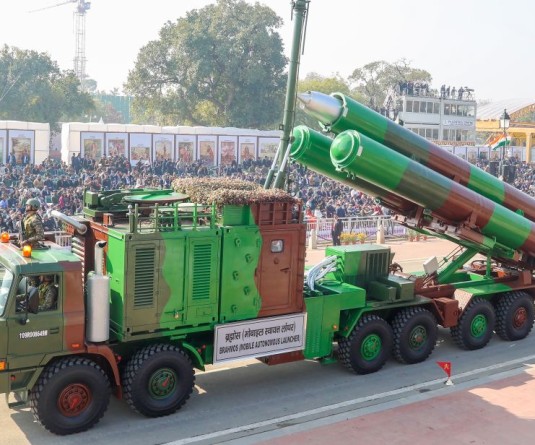
The report highlighted that one of the clearest examples of India's transformation can be seen in its defence sector. Citing the Indian Ministry of Defence, it stated that the country's defence production reached a record Rs 1.78 lakh crore (approximately USD 20.7 billion) in the 2025-26 financial year, marking a 15.6 per cent increase over the previous year and more than double the level compared to FY 2020-21.
Defence exports also climbed to a record Rs 38,424 crore (approximately USD 4.5 billion), underscoring India's expanding footprint in the global defence market.
“These achievements are closely linked to the government’s emphasis on indigenous manufacturing and the ‘Atmanirbhar Bharat’ (Self-Reliant India) initiative. A decade ago, India was largely viewed as one of the world's largest importers of defence equipment. Today, it is increasingly positioning itself as a producer and exporter of military technology,” the report noted.
It stressed that the shift towards self-reliance in defence production was symbolically reinforced by Prime Minister Narendra Modi’s commissioning of three indigenous naval platforms into the Indian Navy in June 2026.
“The induction of these vessels reflects India's growing capability to design, build and deploy advanced maritime assets domestically. In a region where maritime security and freedom of navigation are becoming increasingly important, such developments strengthen India’s role as a key security actor in the Indian Ocean," the report stated.
The report argued that the significance of India stems not only from any single statistic or achievement but also from the convergence of multiple forms of progress unfolding simultaneously.
"For years, the world discussed whether India would emerge as a major global power. Increasingly, the evidence suggests that the process is already underway,” it noted.