Security crackdown in Northeast drives demand for Nepal marijuana. (IANS Photo)
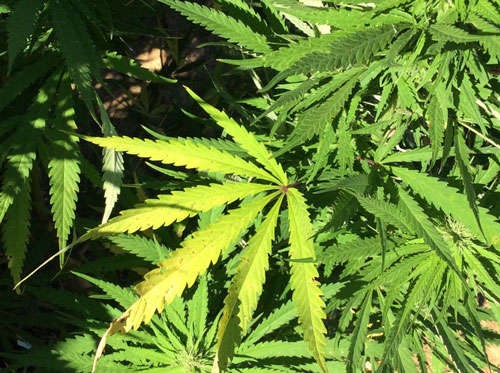
New Delhi, July 2 (IANS): When Narendra Modi first took over as Prime Minister in 2014, there was extensive focus on the northeastern states. While developmental works were sanctioned, plenty of emphasis was given to security considering that these were bordering states. The tightening of security in these states not only kept the borders secure, but also led to a collapse in the cultivation of marijuana. Now, this security crackdown in the Northeast drives demand for marijuana from Nepal.
The marijuana cultivated in these states is in high demand in the American and European markets. Experts explain that marijuana that is cultivated in the hilly region is of better quality and hence the demand is high.
When the cultivation in Assam, Tripura, Manipur, Meghalaya and Mizoram declined, the focus then shifted to the marijuana in Nepal.
Huge quantities are being cultivated in Nepal, following which the contraband makes its way into India through Bihar.
The marijuana is then moved through roads into the South Indian states. From there it makes its way into Sri Lanka before being pushed into the international markets.
This extensive network is now under the scanner of the central agencies and agencies such as the Narcotics Control Bureau (NCB) have extensively focussed on the the India-Pakistan border and northeastern states.
An official said that the northeastern states are a major cause for concern due to the Golden Triangle. This region marks the confluence of the Myanmar, Laos and Thailand borders with Myanmar’s Shan State.
This region has become one of the world’s largest drug production hubs. Once known for heroin, the region now only produces synthetic drugs.
Officials say that drug syndicates are now largely focussing on the India-Nepal border owing to the high demand for marijuana.
The agencies have identified Sunsari in Nepal to be the main point for smuggling of marijuana. From there the marijuana is brought in through the borders along Araria and Supaul districts in Bihar.
A majority of the marijuana comes into India using this route, officials say. Another official said that the open border remains a challenge and this is being taken advantage of by the smugglers.
The drugs are smuggled in private cars, motorcycles and trucks. An Intelligence Bureau official said that there are touts who help these smugglers.
There are many such persons who charge a fee to safely transport persons from Nepal into Bihar by avoiding detection. These are the same touts who have in the past brought in terrorists who land in Nepal from Pakistan into India.
The Indian Mujahideen in fact used this network extensively, the official said. Another official said that the quantities of drugs smuggled through the Nepal-India border is smaller when compared to the ones produced in Pakistan or at the Golden Triangle.
The smugglers from Nepal bring in the marijuana into India in smaller quantity, but the frequency is higher. The Narendra Modi government has set a road map to make India drug free. As a result of this, the busts are higher and the agencies have their eyes at all major transit points.
The biggest concern remains the drugs that come in from Pakistan into India using drones. India and Nepal share a 1,751 kilometre border and the Indo-Nepal Treaty of Peace and Friendship provides for an open border.
The United Nations had said that it is critical to note that this border is vulnerable to threats such as trafficking of persons, drugs, fake currency and arms.
Officials say that while the borders with Uttar Pradesh, too, have been used by smugglers, the Bihar route remains the most preferred.
Bihar was the main market for marijuana even before Nepal banned its cultivation in 1976. Although there has been demand to lift the ban, the rationale of the Nepal government is that if it does so, then it could bring in other players into the market.
The Indian agencies have acknowledged that this route is being extensively used to smuggle marijuana. The problem does not end in India, but the same drugs that are brought in are also meant for the international market and this makes the country a transit point, an official said.
Recently the NCB dismantled an international drug trafficking network operating across Nepal, India and Sri Lanka. During this bust the NCB learnt that charas and hashish oil were smuggled into India from Kathmandu through the Sonauli Indo-Nepal border.