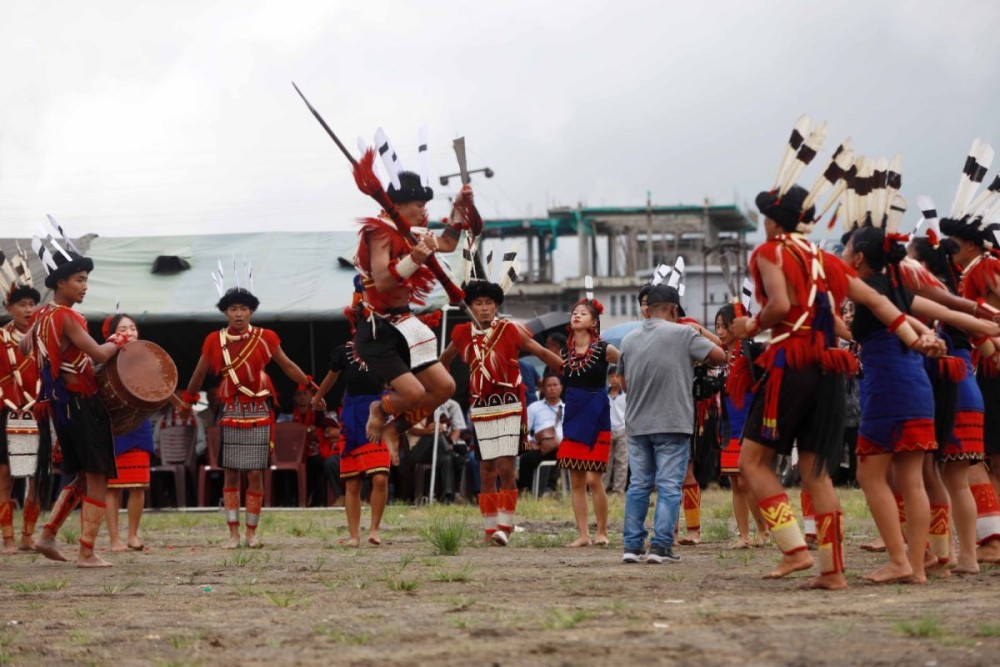
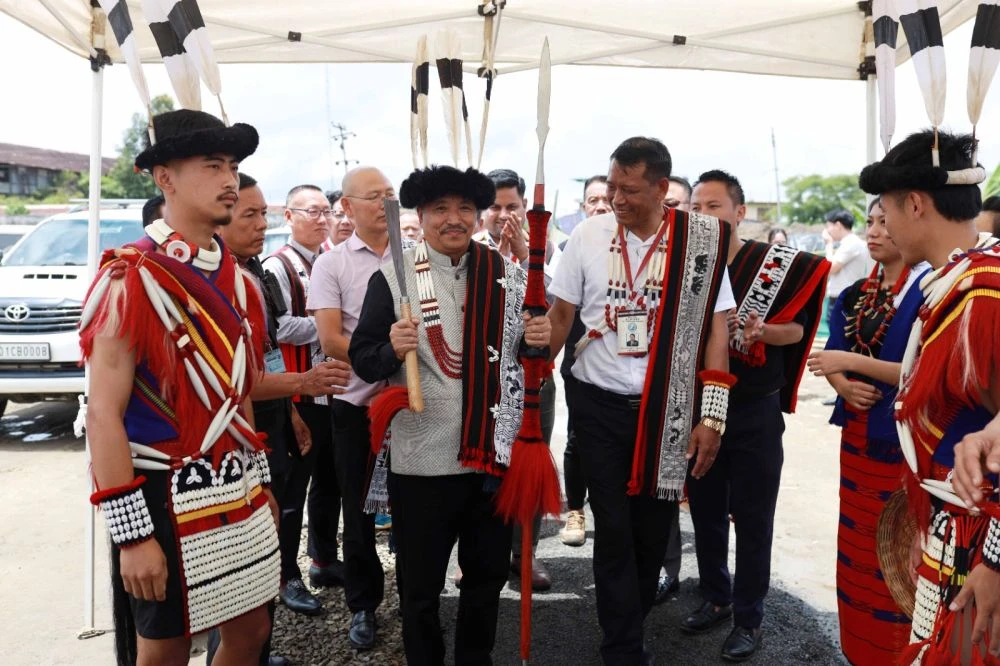
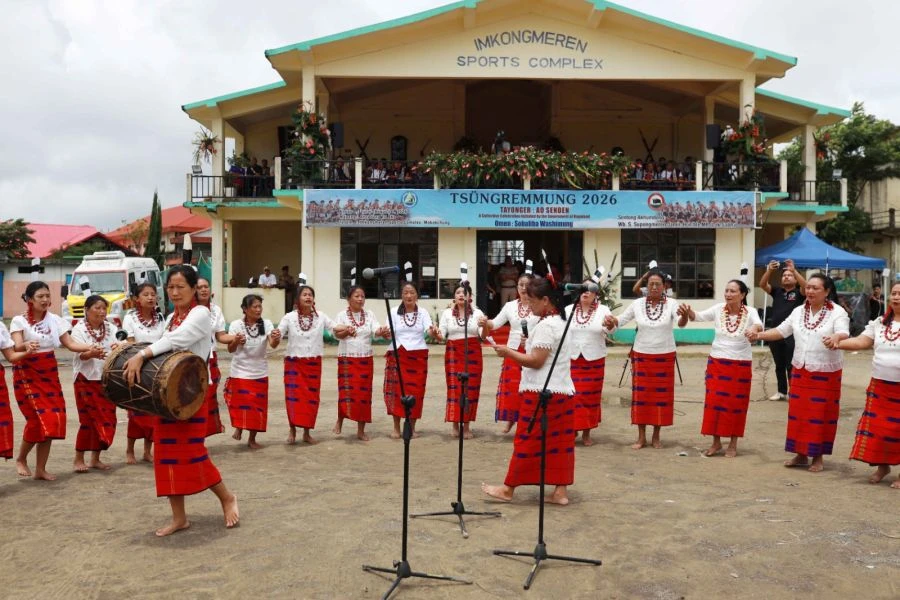
A glimpse of the Tsüngremmung 2026 celebration organised by Ao Senden at Imkongmeren Sports Complex in Mokokchung on August 1.
Morung Express News
Mokokchung | August 2
Lok Sabha MP S Supongmeren Jamir has called upon the Ao community to strengthen electoral responsibility, choose upright leaders and overcome divisions to build a progressive and stable society.
Addressing the Tsüngremmung 2026 celebration organised by Ao Senden at Imkongmeren Sports Complex here on Saturday as the guest of honour, Jamir said the festival should not be viewed merely as an occasion for celebration but as a time for thanksgiving, self-reflection and prayers for the welfare of individuals, villages and farmlands.
He urged people to seek God's blessings for good leaders, responsible political representatives and good citizens, adding that celebrations centred only on worldly pleasure would lose their true meaning.
Referring to the traditional account of Tsüngremsang and Merangsang, Jamir said the festival symbolises the values of sharing, mutual support and the rejection of jealousy. He urged the community to draw inspiration from these values to work collectively for social transformation.
Expressing concern over the implementation of the Clean Election campaign initiated by the Ao Baptist Arogo Mungdang (ABAM), the MP said that although the initiative had received widespread public support, it had not been fully embraced in practice. He said the movement was not directed against any individual but aimed at ensuring the election of honest, capable and upright leaders.
Jamir said the process of clean elections must begin with responsible voters at the grassroots. He also voiced concern over controversies and excessive expenditure associated with appointments and local-level selections, including Village Development Board secretaries and village council members, saying such practices undermined good leadership and social stability.
Appealing to voters to elect candidates they could respect and support, he urged people not to allow money or temporary interests to influence their choices. He also called for a grassroots campaign to improve the selection of public representatives, including MLAs.
On development, Jamir said Mokokchung must introspect on why development works had not adequately reached the district. He said people should make effective use of the responsibilities and opportunities already available to them before blaming others.
Deputy Commissioner Ajit Kumar Verma and Mokokchung Municipal Council Chairperson Imkongchuba A also extended Tsüngremmung greetings.
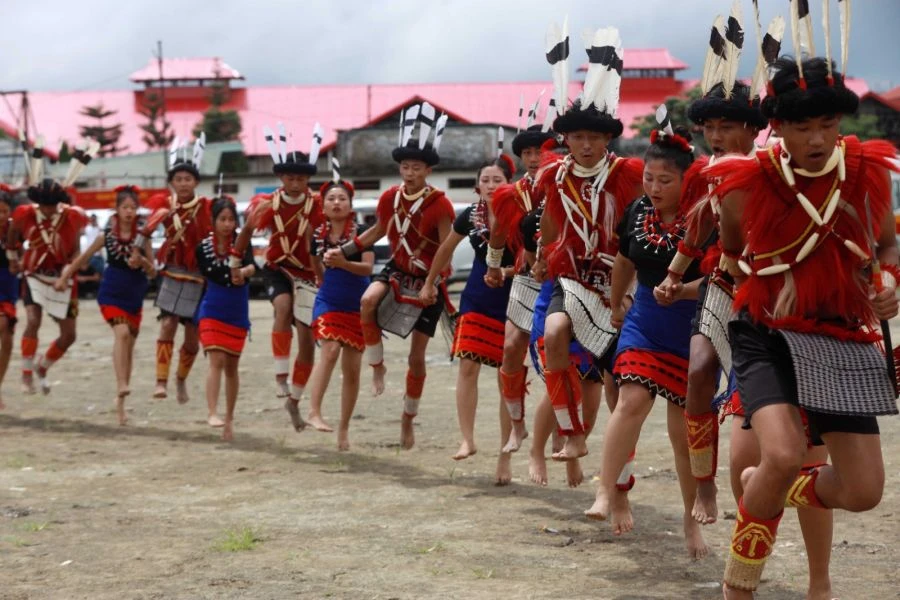
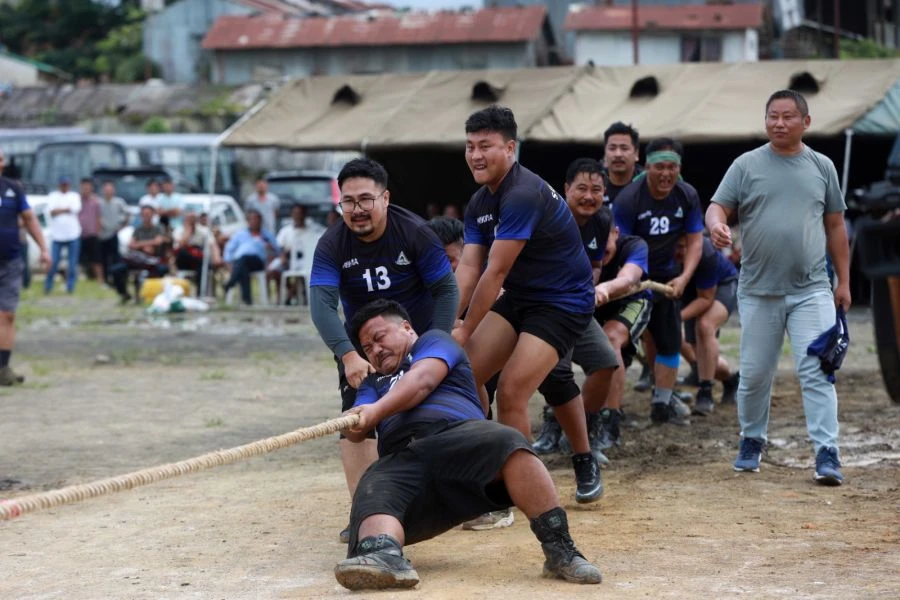
Held under the theme "Sobaliba Washimung," the programme featured cultural performances by Watsü Mungdang, Ao Lanur Telungjem and Watemdong Cultural Club, Ungma. Alempang Ward defeated Salangtem Ward in the final of the traditional Arr Atsütep (tug-of-war) competition, followed by a community feast.
Speaking on the significance of the festival, Khensa Village Council Chairman I Alemmeren Longchar traced the history of Tsüngremmung, describing it as an agricultural festival rooted in thanksgiving for the harvest and prayers for the well-being of the land and community.
He recounted the Ao folklore of Tsüngremsang and Merangsang, whose story symbolises faith, thanksgiving, sharing and collective well-being. According to the tradition, Tsüngremsang observed the prescribed rituals and was blessed with an abundant harvest, prompting Merangsang to join him in observing the festival the following year, after which both received plentiful harvests.
Longchar also explained that the traditional Arr Atsütep tug-of-war evolved from the practice of pulling vines during the early observance of Tsüngremmung and later became an integral part of the festival.
He said that after the migration of Ao villages from Chungliyimti, different villages observed Tsüngremmung and Moatsü on varying dates because of the evolution of distinct dialects, songs and customs, creating difficulties such as in the declaration of school holidays.
To bring uniformity, discussions began in 1940, and at the Ao Students' Conference held at Longjang in 1944, the matter was entrusted to the Ao Tribal Council. The council decided that Moatsü would be observed from May 1 to 3 and Tsüngremmung from August 1 to 3. The common observance began in 1946 and continues across Ao villages today.
Longchar added that while Tsüngremmung was traditionally celebrated for six days, it is now generally observed over three days.