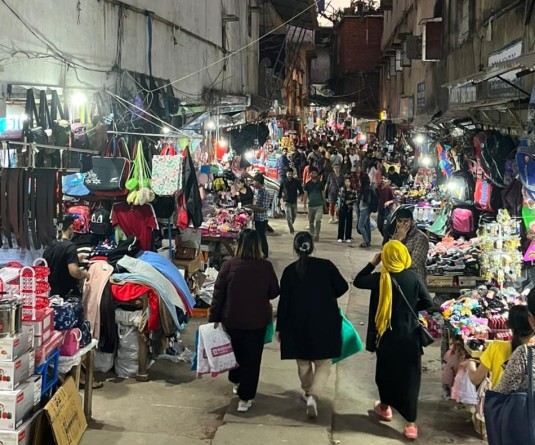
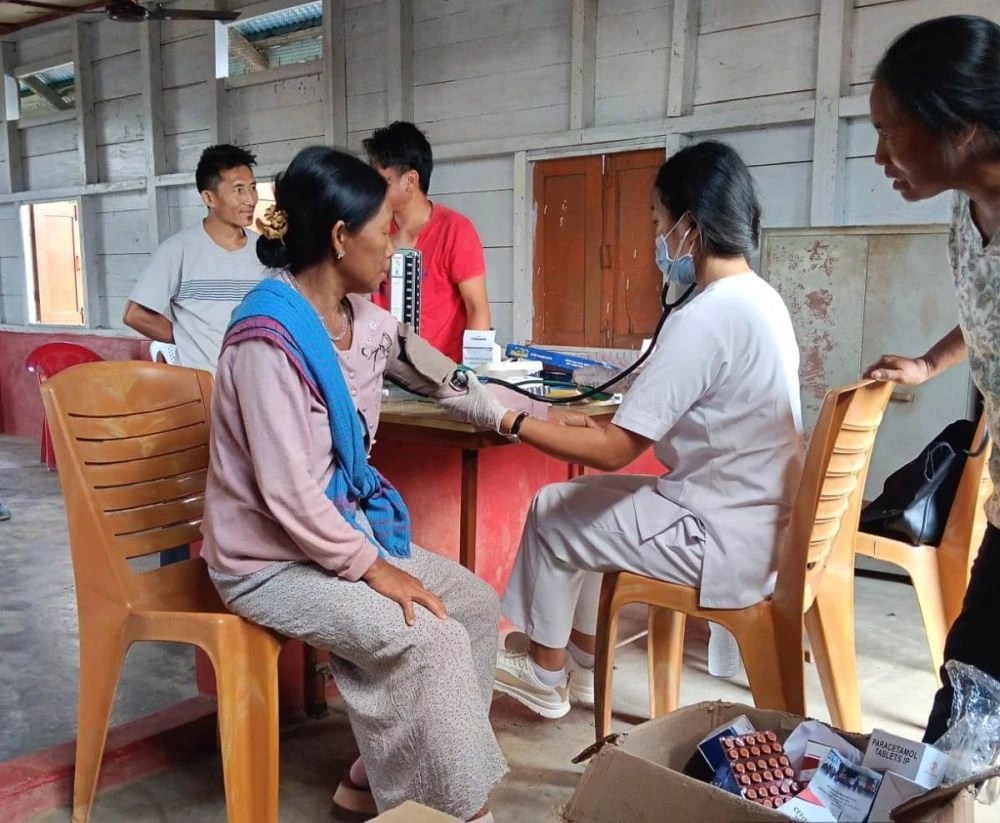
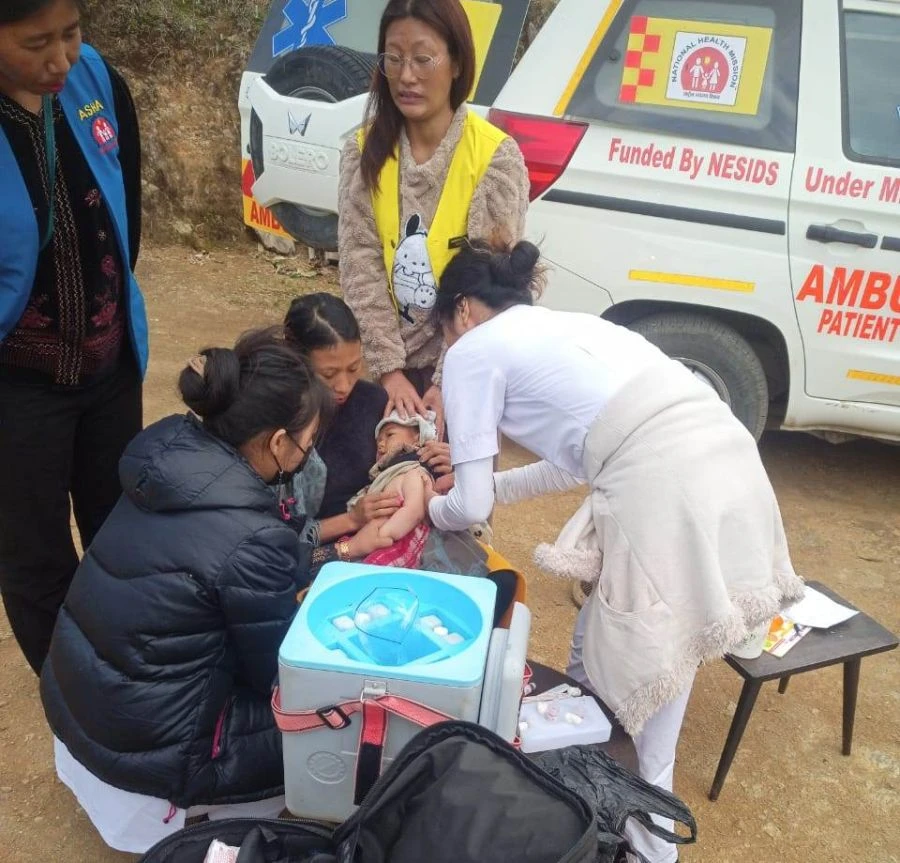
Locals availing health care services in different part of Nagaland. (Photo Courtesy: tEA)
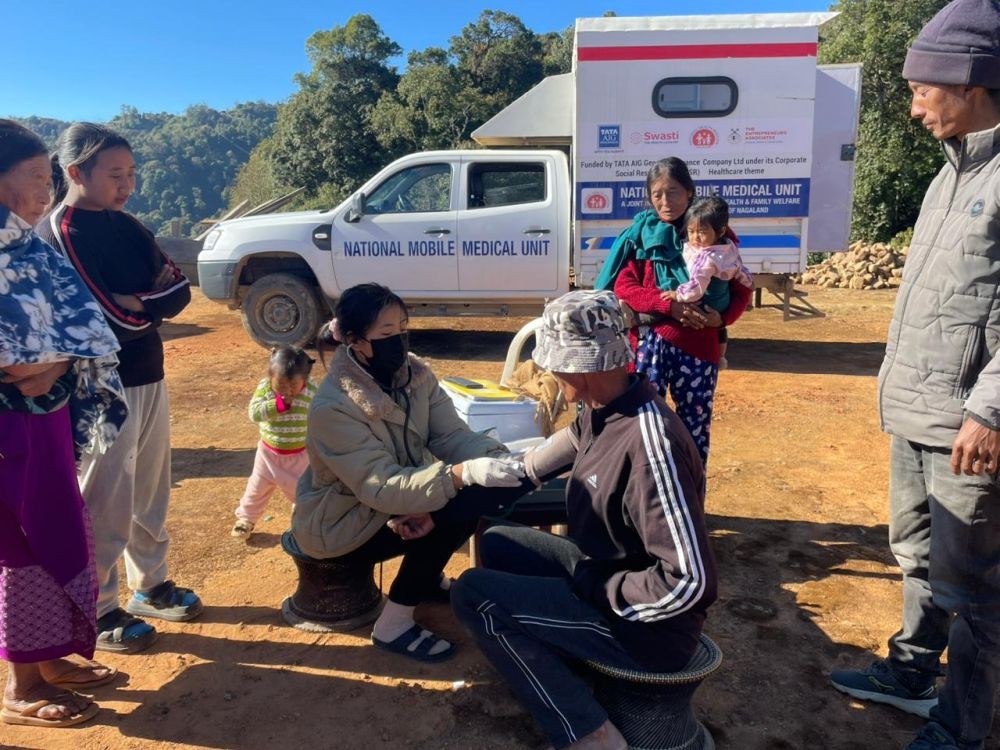
Kohima, August 1 (MExN): In the rugged, hard-to-reach terrains of Nagaland where healthcare machinery is scarce, reaching a doctor can mean a journey of hours, if not days.
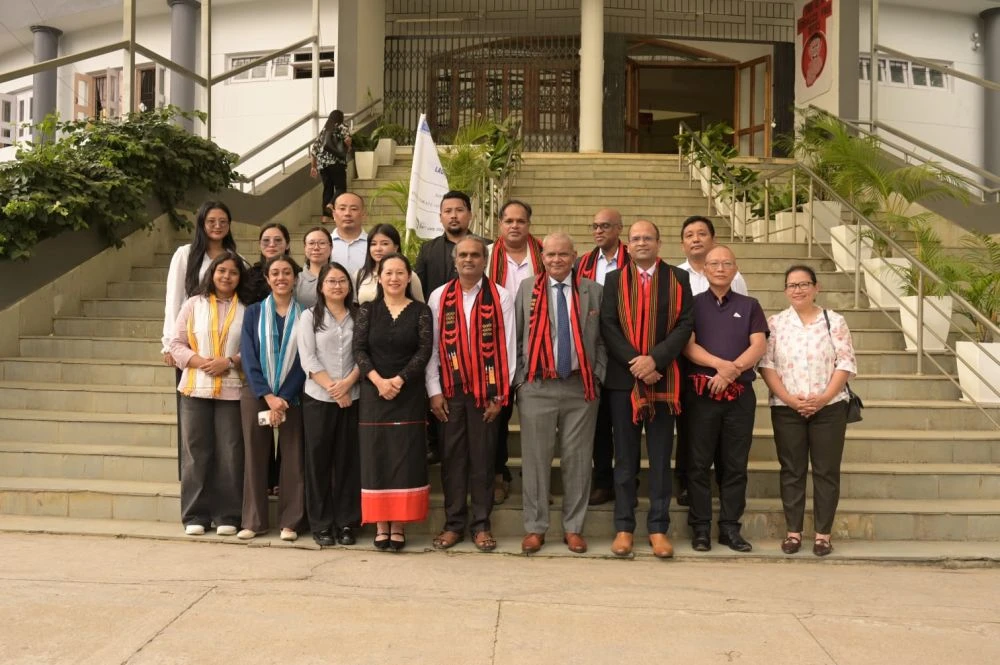
On July 24, 2026, a new Mobile Medical Unit (MMU) for Noklak district, especially targeting the Thonoknyu aspirational block, was flagged off and launched at Kohima.
This innovative initiative, funded by TATA AIG CSR, supported by the Swasti of the Catalyst Group, and implemented on the ground by the Entrepreneurs Associates (tEA), is one of the most unique models for a collaborative health intervention with the active support of the Health Department, particularly the Nagaland Health Mission (NHM).
The 3rd MMU to be launched in Nagaland, with the first in 2024, launched in Zunheboto targeting the Akuhaito Aspirational Block and the 2nd in Aspirational District of Kiphire in 2025, the TATA AIG-funded project has transformed health interventions in the most unreached locations.
The MMUs are equipped with a nurse, lab technician, and outreach workers who help villagers with the screening of non-communicable diseases (NCDs), suggest required interventions, and, if necessary, refer them for further treatment in district hospitals.
In 2024, the first MMU reached out to 15002 individuals, while in the 2nd year, 10882 individuals received NCD screening services.
In early 2026, after the completion of two years of the project, the Zunheboto MMU was handed over to the district hospital after the execution of the project. A similar plan is designed for all the other locations.
The project is an initiative showcasing the synergy between private players and the government department. The local NGO partner, tEA works closely with the medical officers in the project locations and aligns the work with the needs of the local community, stated an update received here.
Delivering care where roadways end
tEA shared that since the project targets the most unreached members of society where health care machinery is unavailable, the task has been challenging. The tEA team has been working at odd hours to facilitate better services, such as early in the day and late into the night, to ensure that last-mile citizens are provided with care.
In Kiphire and Zunheboto’s Akuhaito blocks, logistics has been a nightmare for the team, requiring pure dedication and commitment from the local workers.
The MMU project has been very successful in Nagaland, leading to the replication of the model and expansion of the work in Meghalaya, Tripura and Assam. The initiative is also being considered for Arunachal Pradesh, where talks are currently underway.
Speaking about the new MMU for Noklak, Neikule Doulo, Executive Director, tEA said, “We never thought that this kind of a working model would be possible with the participation of multiple stakeholders; however, it is highly motivating to see that we are now here with the 3rd MMU.”
The project has been successful owing to the close coordination and monitoring of the technical partners, SWASTI and the ground implementation by the tEA supported by the local CMO office.
The tEA team also shared that despite the challenges faced on the ground, the support from the funders and partners has made the work easier. The TATA AIG group has taken a very proactive interest in the project under the leadership of Madhukar Sinha, President, Government & Rural Business, TATA AIG General Insurance Company Ltd and the committed dedication of Devang Pandya, Vice President & Lead, CSR. Both the TATA AIG leaders have been an active presence in the state overseeing the project.
Swasti, an entity of the Catalyst Foundation based out of Bangalore, has been a pivotal partner of the MMU initiative in the state. The group began its work in the state with an initiative to provide social protection to communities through enrollment in various health schemes, which paved the way for the MMU project. Nagaland was the group’s first initiative in the northeast and paved the way for them, as they now operate in multiple other states.
The Swasti team, led by Joseph Julian, Senior Director; P Bhoopathy, Director, Social Protection; and Neerisetti Rambabu, Partnership Engagement Specialist, charted the path for this unique project for the Northeast, clearly proving their expertise in this domain. A leader in the health sector for the last two decades, Swasti brings its wealth of experience and insights to this project.
“The MMU project, which has been extremely successful in impacting rural communities, follows a rigorous and meticulous data entry process maintained by the Swasti team outside the state, post the visits to the villages and screening camps,” the update stated. To further improve the operations of the project, the tEA team shared that further alignments with the various health schemes for the state will be sought in the days to come.
As the new MMU will be operationalised at Noklak from August 1, it is hoped that this will not be the last but will lead to further scaling of this initiative, even to other remotest parts of the state.