(Photo source: IANS)
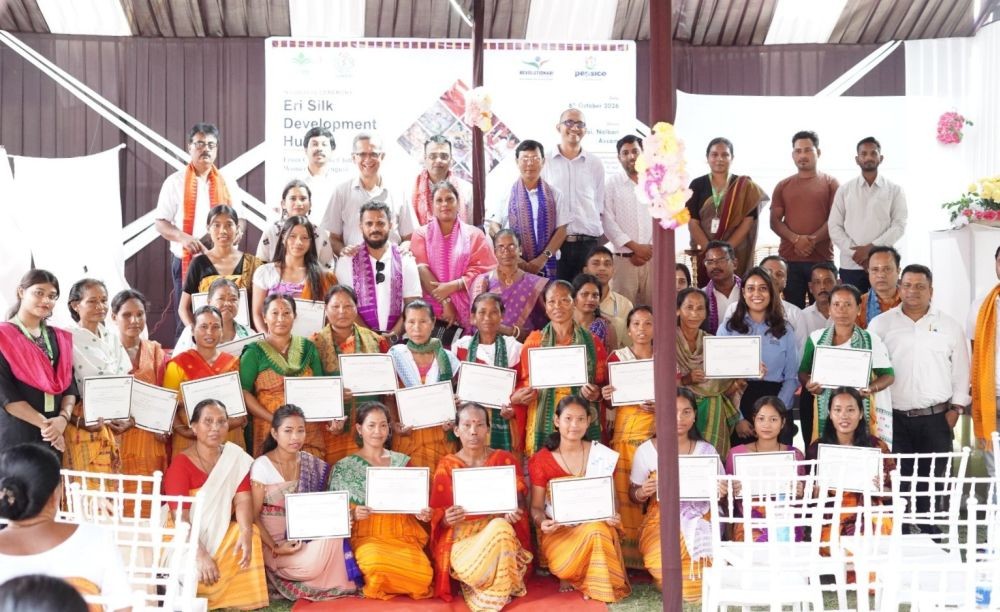
Guwahati, October 15 (IANS) Assam’s traditional Eri silk industry is receiving a boost with the inauguration of an Eri Silk Development Hub at Chengnoi in Nalbari district, an initiative aimed at preserving the state’s rich handloom heritage while expanding livelihood opportunities for rural women, state Minister Jayanta Mallabaruah said on Thursday.
Highlighting the initiative in a post on X handle, Mallabaruah said the hub would strengthen the traditional silk value chain through skill development, modern technology, product diversification and improved market access for local artisans.
The initiative comes at a time when Nalbari is also attracting attention for industrial development, including the announcement of the Rs 800-crore food manufacturing project in the district.
Together, the developments reflect efforts to promote economic opportunities through industrial investment as well as community-based livelihood initiatives.
According to the minister, the Eri Silk Development Hub has reached more than 3,510 women through awareness and community mobilisation programmes. Over 100 women have received training across five livelihood trades, including 30 women who have been trained in different stages of the Eri silk value chain.
Participation in Eri silk production has also expanded significantly, with around 25 to 30 households now connected to the value chain, compared with just two households previously, the minister said.
The hub has installed 10 solar-powered spinning machines and two looms to improve production capacity and efficiency.
The intervention has helped increase yarn output by 2.5 times, said Mallabaruah.
In addition to improving production, the initiative is seeking to create commercially viable opportunities for artisans. Three product lines have been developed to explore wider commercial markets, while 25 households have been enrolled in formal handloom systems through Pehchan Cards and Yarn Passbooks.
These measures are expected to help artisans improve production practices, access organised handloom support systems and establish stronger connections with markets.
Eri silk, also known as peace silk, occupies an important place in Assam’s traditional textile heritage. The craft has deep cultural roots in Nalbari district, including among members of the Bodo community, and has traditionally provided supplementary income to rural households.
The development hub seeks to combine this inherited knowledge with improved techniques and product development to enhance the economic potential of the sector. By strengthening the entire value chain, from spinning and weaving to product development and market access, the initiative aims to help women artisans participate more effectively in local enterprise.
The use of solar-powered machinery is also expected to support more efficient production while improving the operational capacity of participating households.
The expansion of the Eri silk sector comes amid growing attention to the economic potential of Assam’s traditional industries. Handloom and handicraft activities remain important sources of livelihood in rural areas, particularly for women, although artisans often face challenges related to production efficiency, market access and the commercialisation of traditional products.
The initiative in Chengnoi seeks to address some of these challenges by linking traditional skills with technology, structured training and opportunities for commercial growth.
Mallabaruah said, “As Nalbari pursues industrial development alongside efforts to strengthen traditional livelihoods, the focus is on ensuring that economic growth also benefits local communities. Expanding opportunities for women artisans while preserving Assam’s cultural heritage could help create a more inclusive and sustainable rural economy.”
.jpg)