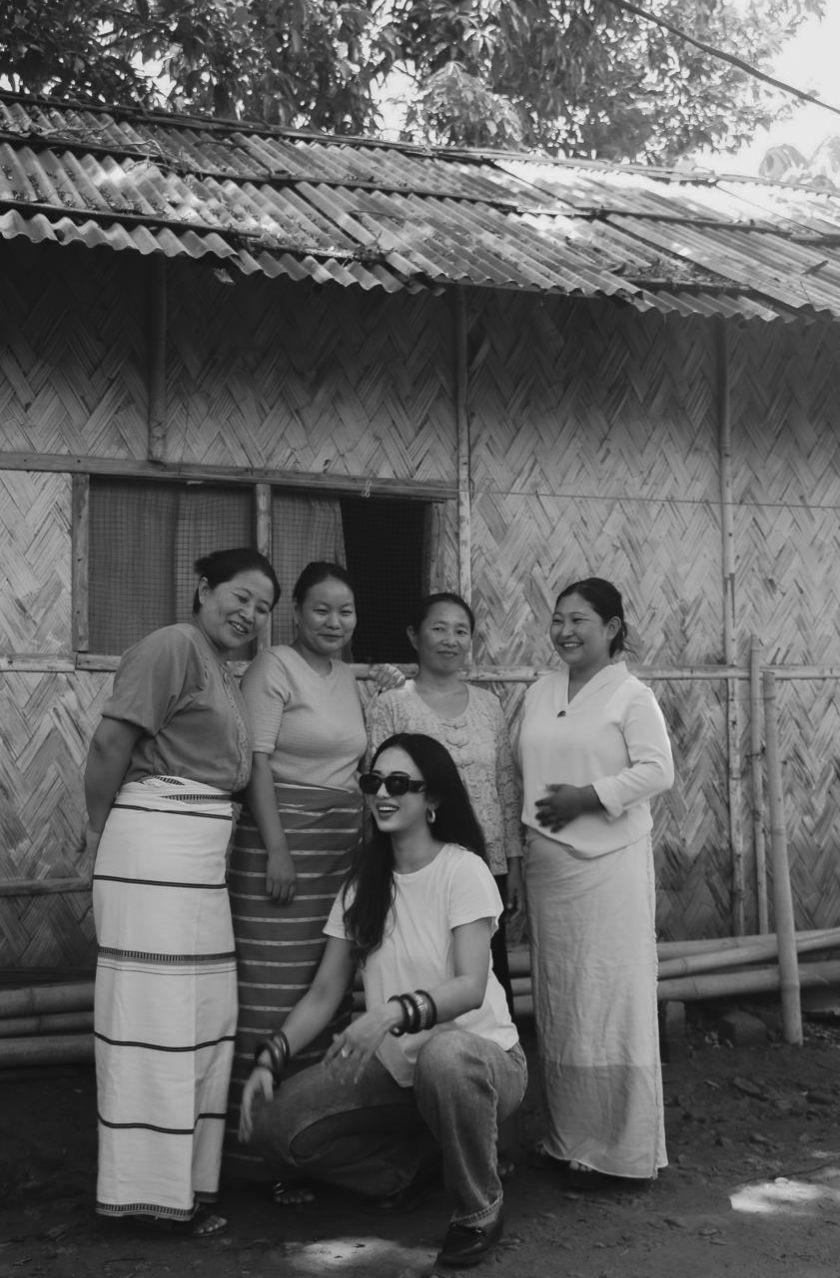
Otsü Clothing Co. founder Asenla Jamir with Naga artisans whose works she documented, combining research, storytelling, and craftsmanship in her creative process. Behind every Otsü collection is extensive documentation and collaboration with Naga artisans, whose knowledge and craftsmanship inspire the brand's contemporary designs.
Surotsa Anar
Dimapur | July 5
“Rooted, intentional, evolving.” This is how Asenla Jamir described her fashion brand, Otsü Clothing Co., in an interview with The Morung Express.
Otsü Clothing Co. is a fashion brand founded by Asenla Jamir, a National Institute of Fashion Technology (NIFT) Mumbai alumna and stylist, in 2020. Otsü, meaning “stories” in the Ao language, was a name she chose because, as she explained, “I chose the name because that's exactly what I wanted the brand to become - a platform for storytelling.” For Otsü, every textile, every garment, and every collection carries a story, whether it is about culture, memory, craftsmanship, or identity. It is not just about making clothes; it is about telling the stories of our people in ways that feel contemporary, authentic, and accessible to a wider audience.
She stated, “At its heart, Otsü is a storytelling platform as much as it is a fashion brand. It creates clothing, but we also build conversations around identity, culture, and representation.” Her inspiration for Otsü came from a very personal place. Growing up, she rarely saw contemporary fashion that reflected the Naga identity. Even though Nagaland has an incredible wealth of craftsmanship, textiles, and stories, they were often viewed only through a traditional perspective. Thus, Otsü was born out of the desire to tell Naga stories that felt current through design, while creating a space where Northeast India could be seen beyond stereotypes.
“It goes far beyond simply using traditional textiles. Every collection begins with research, understanding stories, craftsmanship, colours, symbolism, and the communities behind them,” stated Asenla. She incorporates Naga culture into her pieces through woven textiles, handcrafted details, silhouettes, storytelling, collaborations, and the overall narrative of a collection. She believes it is important to understand the history and significance behind these elements. Rather than recreating traditional attire, she focuses on interpreting certain textiles, motifs, colours, and stories in a way that feels contemporary and wearable. She stated, “The aim is to celebrate our heritage thoughtfully rather than use it as an aesthetic reference.”
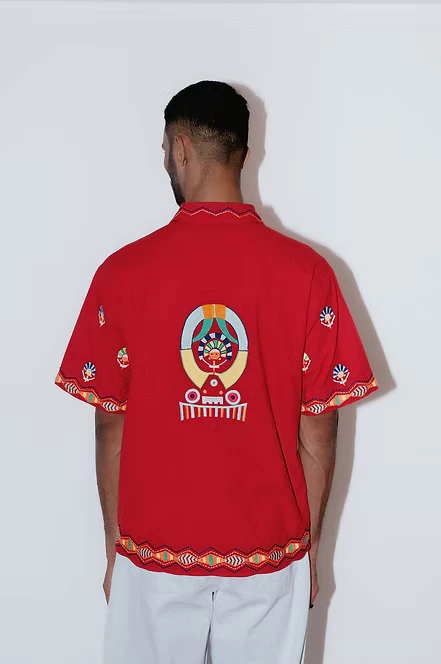
Over the years, Otsü has grown from simply creating clothing inspired by Naga roots into something much larger. Today, Otsü is not just a fashion label but a cultural platform. Alongside its ready-to-wear collections, it has built Otsüverse, bringing together fashion, food, music, design, art, and storytelling to create meaningful conversations around Northeast India. Its first edition was supported by Jameson Connects in collaboration with Azadi Records. Otsü won the Grazia Young Fashion Award in 2020, the same year it was launched. She also stated, “But if I had to choose what means the most, it would be the relationships I've built with artisans across Nagaland. Spending time with them, learning directly from their knowledge, understanding their processes, and building those connections has shaped not only Otsü but also me as a designer and as a person. Those relationships remind me why Otsü exists in the first place.”
For Asenla, there was no single defining moment in her fashion career. Rather, it has been a journey. Writing about fashion from a young age, experimenting with styling, studying at NIFT, and constantly finding herself drawn back to identity and culture made her realise that fashion was not just something she loved, but the language through which she wanted to tell stories. Born and brought up in Jorhat, Assam, much of her knowledge and understanding of her own heritage came from her curiosity rather than everyday experience. As she grew older, her longing to learn about her history, textiles, craftsmanship, and stories deepened, and the journey of reconnecting with her roots became one of the biggest reasons behind Otsü.
Looking toward the future, Asenla hopes that Otsü will leave behind not just a brand, but also contribute to changing the narrative around Northeast India. She wants people to see Naga culture as dynamic, innovative, and constantly evolving, rather than something confined to tradition. “I hope Otsü inspires younger creatives to embrace their own identities without feeling the need to fit into someone else's definition of fashion,” stated Asenla. She hopes Otsü will create opportunities for artisans, encourage cultural conversations, and help preserve our stories for future generations.
When asked how she wants her customers to feel when they wear her clothes, Asenla stated, “I hope they feel a sense of connection, to the story behind the garment, to the craftsmanship that went into making it, and perhaps even to a culture they may not have known before. Above all, I hope they feel confident wearing something that carries meaning. Fashion is most powerful when it makes you feel like yourself, while also connecting you to something bigger.”
The writer is currently a B.Mass IV semester student in the Department of Mass Communication at Patkai Christian College (Autonomous), Chümoukedima. This report is part of his one-month internship at The Morung Express.