

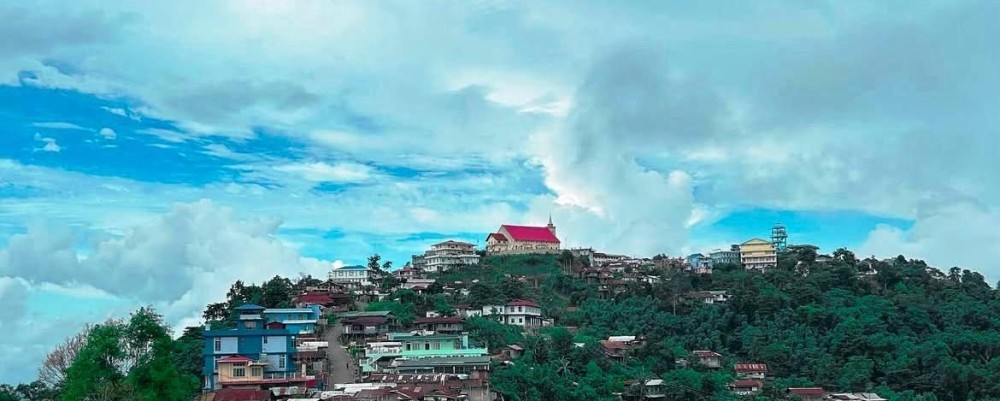
Meyu Changkiri
Why does a village still remain when history reminds us how easily communities can disappear?
This question is not raised to claim distinction, nor to compare one village with another. It is asked in quiet humility, because the honest answer does not point to human strength, foresight, or deserving, but to the grace and patience of God.
On January 10 and 11, 2026, Baptist Church Changki will commemorate 125 years of the coming of the Gospel of Jesus Christ to the people of Changki. This remembrance is not a celebration of achievement or progress. It is an act of thanksgiving - an acknowledgment that had God not intervened in mercy, Changki would have quietly disappeared into history. The purpose of this article is simple: to confess that Changki still stands only because God has been gracious.
Changki at a Fragile Moment in History
Village history is preserved not only in written records, but also in stories carried by elders and guarded in collective memory. When these memories are read alongside historical sources, they reveal not a story of perfection, but of preservation amid vulnerability.
According to William Carlson Smith, in his book The Ao Naga Tribe of Assam, the first official census of the Ao Nagas in 1901 recorded a population of 28,135 (13,393 males and 14,742 females). This census was taken during the closing phase of the headhunting era - a period marked not only by headhunting, but also by inter-village warfare, internal feuds, and inherited cycles of retaliation. In such a context, the survival of any village was never guaranteed.
The greatest danger was not one particular practice, but the continuation of unchecked violence. History teaches us that communities often disappear not through a single dramatic event, but through prolonged internal destruction. Had such patterns continued, there could have been no assurance that villages like Changki - or even the Ao Naga people as a whole - would endure across time.
It was into this fragile and uncertain world that the Gospel of Jesus Christ came to Changki in 1901. This was not a reward for readiness or goodness. It was an act of grace. The Gospel restrained revenge, affirmed the value of human life, and slowly reshaped relationships. Changki did not turn to God because it was better than others; God turned toward Changki in mercy.
Grace at Work Through Its Own Sons
It is important to state this with clarity and gratitude: the Gospel did not come to Changki through visiting American missionaries preaching in the village. There is no record of such direct evangelistic work in Changki. Instead, God chose a quieter and more personal way.
The Gospel reached Changki through its own sons - men who first encountered Christ outside the village and then returned, compelled not by authority or position, but by grace. Among the earliest were Tzüdiong and Odangba. Having experienced the transforming power of the Gospel themselves, they returned to share the Good News with relatives, families, and neighbours.
Faith entered Changki not as an imposed message, but through relationships of trust - sons speaking to fathers, relatives to relatives, neighbours to neighbours. Even this must not be credited to human initiative. These were ordinary men upon whom God’s grace had acted first. Through them, God quietly reached Changki.
Grace Carried Beyond Changki
Around 1897, Odangba left Changki to work as a cook at the mission centre in Impur. What began as ordinary work became a turning point shaped by grace.
At Impur, Odangba encountered the Gospel and a new way of life. He also met Rongsentula from Molungyimsen, a woman known for her deep interest in Scripture. When Odangba proposed marriage, her response reflected the transforming demands of faith: he must accept Christ, overcome his drinking habit, and learn to live with discipline.
Sustained by grace, Odangba responded. After a period of instruction, he was baptised on October 1, 1899, by Rev. S. A. Perrine, becoming the first baptised Christian from Changki. He married Rongsentula on October 17, 1900.
In the early years of the twentieth century, Odangba and Rongsentula responded to God’s call to serve beyond their own village. Odangba became the first pastor of Chungliyimsen, carrying with him the grace first received in Changki.
The first baptism at Chungliyimsen took place on January 4, 1903. The first baptised believers were Lolenkaba, Kilemsüngba, Imchenchang, and others. Their close friend Jinluen, from the Jamir clan, did not accept Christ at first.
During a prolonged and painful childbirth endured by his wife, Jinluen was urged by his Christian friends - not with pressure, but with prayer - to trust God. He accepted Christ, and village memory recalls that his wife was relieved and later gave birth to a son. In the years that followed, their family grew to four daughters and four sons.
This story is remembered not as a formula or guarantee, but as a testimony that faith was born when human strength failed. Through Odangba’s quiet pastoral faithfulness, a new Christian community was formed - again, not through human strategy, but through grace at work in ordinary lives.
Grace That Crossed Boundaries
The grace of God that took root in Changki did not remain confined within the village. Almost from the beginning, it moved outward - quietly and without any sense of importance.
In 1910, a small Gospel team from Changki, led by Nikensosang, travelled to Changpang, in the Lotha area. Through their witness, three families accepted Christ, and this small beginning led to the establishment of the Changpang Baptist Church in 1911.
This was not an isolated effort. Over time, Changki believers shared the Gospel with other Ao villages and with villages beyond their own tribe, often travelling on foot and at personal cost. Long before the emergence of the Naga political movement, Changki had already sent out more than forty pastors, teachers, and evangelists to serve in other villages and among different tribes. They went without recognition or security, sustained not by confidence, but by grace.
Grace and Responsibility Beyond the Church
Within Changki, the memory of Dangtimeren, the son of Lanuteka Amri and Talinangchetla Changkiri, is remembered as one marked by conscious sacrifice rather than necessity. When he decided to enter the Naga political movement in 1963, Dangtimeren was already serving in government as a technical officer, a position that offered stability, security, and a clear professional future.
He was known for his ability to read maps and use a compass - skills that were rare and highly valued in those days. His decision was therefore not driven by lack of opportunity. By stepping away from a secure government post, he knowingly surrendered personal safety, professional prospects, and material security. Because of his technical knowledge, he was entrusted with leading a group that travelled as far as China, a responsibility that carried considerable risk.
Elders would later say that Dangtimeren joined the movement to demonstrate that the people of Changki also cared deeply for the Naga people and their collective destiny. This is remembered here not to glorify a political cause, but to acknowledge a moment when a Changki son chose conscience over comfort - seeking, in his own limited and human way, to stand with his people during a difficult chapter of history.
Grace Alone, Then and Now
Changki has never been free from weakness, conflict, or human limitation. The village stands not because it was good, wise, or deserving, but because God has been patient and gracious. If Changki has endured, served, or remained intact, it is not proof of human worthiness, but evidence of divine mercy.
As Changki marks 125 years of the Gospel, this story is remembered not to claim credit, but to give thanks. It is not a record of what Changki has done for God, but of what God has repeatedly done for Changki - preserving life, restraining destruction, and sustaining a fragile community through grace.
That is why Changki still stands.
To the glory of God alone.

