

Dr Kiyasetuo Vizo
Tsieramia of L Khel, Kohima Village, Kohima
Kohima is historically, geo-politically and socio-culturally a strategic place of immense importance. Today, Kohima, being the seat, the crown and the power centre of governance, her majestic relevance to the people of Nagaland state cannot be under estimated in any measure or under any circumstance. Kohima is the name of the State Capital, the name of a district, the name of a district headquater and the name of a village. Inspite of attaining such a place of prominence sadly, however, the word “Kohima” literarily does not carry any tangible meaning in any known language or literature. Every identity, whether a living or a non-living, is identified with a specific name normally with a specific meaning attached to it. So then there is no logic or sense to continue using “Kohima” to designate our State Capital, District and our Village.
Kohima is said to have being derived from the name of the village, now officially known as “Kohima Village” by the Britishers when they conquered and annexed the Naga Hills. As told by Tsieramia elders, when the British first came and asked the name of the Kohima Village from a man from Jotsoma Village, it was said that he pronounced the name as Kowhima but the Britishers wrote “Kohima”. From then on “Kohima” was used until today. This is, however, not the actual name of the Village. The original name or rather the correct name of the village as given by the village founder is “Kewhira” but there is no harm in naming the village as “Kewhima since most of the Angami Village names are now suffixes with “Ma” instead of “Ra”.
Historically, the founder and the person who named the village now called Kohima Village was Tsiera who migrated directly from Khezakenoma, Phek District, who migrated on account of a conflict over the ownership of the mythical spirited stone where a basket of paddy when let dry for a day on collection get multiplied three folds. The Tsiera who is here referred as the founder of Kohima Village is the direct ancestor of the five clans of L.Khel of Kohima Village who are still collectively called Tsieramia namely Dzüvichü clan, Mepfhü-o clan, Tseikha clan, Vizo clan and Yhome clan.
It was said, since Tsiera was not in good term with his two elder brothers, he decided to migrate to another place to establish his own village where his two brothers and their children could see from their native village, Khezakenoma. One day he climbed up to the summit of Kabvünyho hill of Khezakenoma to look for a place of his dream. There he saw a beautiful landscape, which appeared to be a vast stretch of flat land, and made up his mind to establish his village there.
Having decided, he came in search of the beautiful site. To make sure that the place he found was the place he saw from Kabvünyho Hill, he made round stake of tree branches and leaves (Kenhou-Kechü) and put it on top of a tall trimmed tree and went home to see it, but it could not be seen from Kabvünyho hill. Next he came and made wooden shingles out of a white wooded tree (Zomhou) and placed it on a prominent place. But this too could not be seen. Lastly he came and made lattice out of split bamboo crossings from Menyithorzie, a place in the present site of D.Khel of Kohima Village and placed it on a pollarded sycamore tree at Ketsiezou, presently inhabited by D.Khel. That time the lattice was twinkling from the same place where he wanted to establish his village. Having found the right place, he came and established his village which now officially called Kohima Village. Ketsiezou happened to be the most vintage site where Tsiera established his home with his first wife with whom he migrated to Kohima Village directly from Khezakenoma. The actual site of the home set up by the village founder is presently occupied by the sons of Pelevilie Khezhie of D.Khel at Ketsiezou which could be clearly seen from the courtyard of the Tsiera, the founder of the now called “Kohima Village”, at Khezakenoma.
When Tsiera came to establish his village, a man asked him what he would call his village. Tsiera answered him back that he would welcome everyone who wants to come and settle with him and so his village would be called Kewhira. Henceforth the village is called Kewhira and her people are called Kewhimia. “Kewhi” can mean a place or a person to where or to whom everyone wants to come or join hands and “Ra” means village. So Kewhira means village that welcomes everyone who wants to come and settle. In other words, Tsiera who founded the village decided to accept any person who wants to come and settle with him. Thus the village he found was named, “Kewhira”.
Since every willing person was welcomed to Kewhira, as the name suggests, and settle with the founder, soon people from different directions, far and near migrated to Kewhira which rapidly grew in size and population. The person who asked Tsiera the name of his village was the first person to join Tsiera in establishing the Village. His descendants are today known as Mere clan of P.Khel. Special bonds of friendship still exists between Tsieramia and Mere clan until today. The living proof of such a bond of friendship is that the stone monolith erected in honour of the feast of merit hosted by Mesei-ü, second wife of the village founder and her eldest son, Viyielie still stand on the land owned by a member of the Mere clan of P Khel.
As a sign of respect and honour to the founder, his descendents known as Tsieramia of the village were given esteem positions in the performance of socio-cultural and religious activities. As for instance, the first priest of Kewhimia Village known as “Zievo-u” of the pagans also known as, “Phichüu” was Kelhou Yhome from Tsieramia and the first Head Gaon Bura (GB) of Kewhimia Village, Zeyunyü Yhome was from the descendent of Tsiera, the founder of Kewhira Village. Further, after his first wife died and he married his second wife Mesei-ü at old age, Tsiera did not live long to start the First Village Feast. However the entire village requested someone from the village founder’s household to start the first village feast of merit and the entire village extended their blessings to Mesei-ü the second wife of Tsiera and her eldest son Viyielie to start the first village feast of merit. For others it might be just a coincidence but the Tsieramia of Kewhimia certainly considered it an honour and blessing to the founder of Kewhira and his descendents as the first Kewhimia elected member of the legislative assembly (MLA) from the Kohima constituency to the erstwhile Assam State was Mr. Satso-o Yhome who was also a Tsieramia. He was elected to the Assam State Assembly from Kohima in the year 1957 and later became one of the first interim members when Nagaland was formed.
For those who are interested to know more about Kewhira and her history, the details are well documented and written in Tenyidie by the Tsieramia of Kewhira entitled “Tsieramia Kewhimia Phepfhü”, published in the year 2022 as recorded on 19th January 1978 during the General Meeting of the Tsieramia of Kewhira and those migrated from Kewhira to nearby villages and published in the monthly Journal “Rüna Nu Dielie” of the “Students Efficiency Drive”, Kohima Village in the issues of the months of May, June, July, August and September 1979 which were widely circulated mainly in the Angami Region but also available in the Tenyimia areas. This book only refers to the history of Tsiera and his descendents who migrated directly from Khezakenoma to Kewhira and some of the Tsieramia who then migrated to nearby villages from Kewhira. More details of the Tsieramia as a whole, that is, all those who migrated from Khezakenoma to different directions and established their own villages and belonging to different tribes such as Angamis, Chakhesangs, Zeliangs, Rengmas, Lothas, Semas, Aos etc are available in the book entitled, “The Legacy and Chronicle of the Tsiera Lineage” written by Dr. Kiyasetuo Dzüvichü and published in the year 2025. This book is available in English and Tenyidie free of cost.
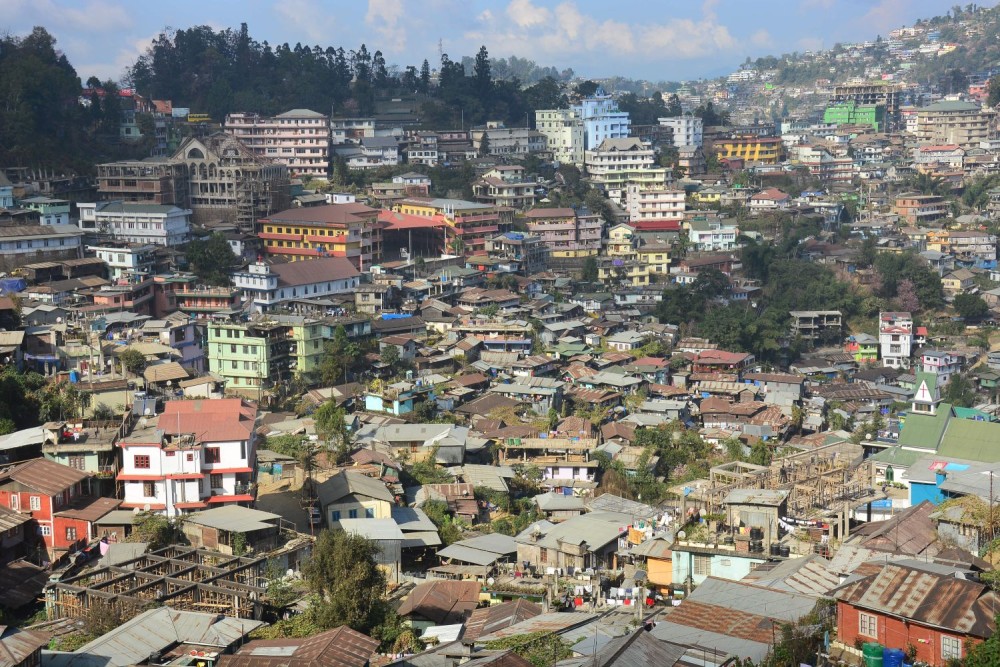
From what the name of the village signifies, one could visualise what a dynamic, down to earth, far sighted, open hearted and a visionary man, the village founder must be. The founding father might have fully visualised the potential of the area on which he established his village as the village name aptly suggests. The flatland he discovered from Khezakenoma those bygone days has developed and flourished into the biggest village in Nagaland State and said to be the second biggest village in Asia continent and now hosting the Capital City of the State.
As welcome by the founder, the capital city of the state is now home to all tribes from across the state and many more from the Country belonging to different communities, all living in peace and harmony. Amongst them, certainly some of the Tsiera Angamis, the Tsiera Chakhesangs, the Tsiera Zeliangs, the Tsiera Rengmas, the Tsiera Lothas, the Tsiera Semas, the Tsiera Aos etc are well settled in the Capital City. Then, why not decolonise Kohima to Kewhira or Kewhima, to promote her as a symbol of unity, peace and harmony and honour the legacy of the founding father and realising his vision to the full. The question that arises then is, Are there any takers to decolonise Kohima to Kewhira or Kewhima.

