New Delhi: Trinamool Congress (TMC) Chairperson and former West Bengal chief minister Mamata Banerjee during a press conference following a meeting of the INDIA bloc at the Constitution Club in New Delhi on Monday, June 8, 2026. (Photo: IANS/Deepak Kumar)
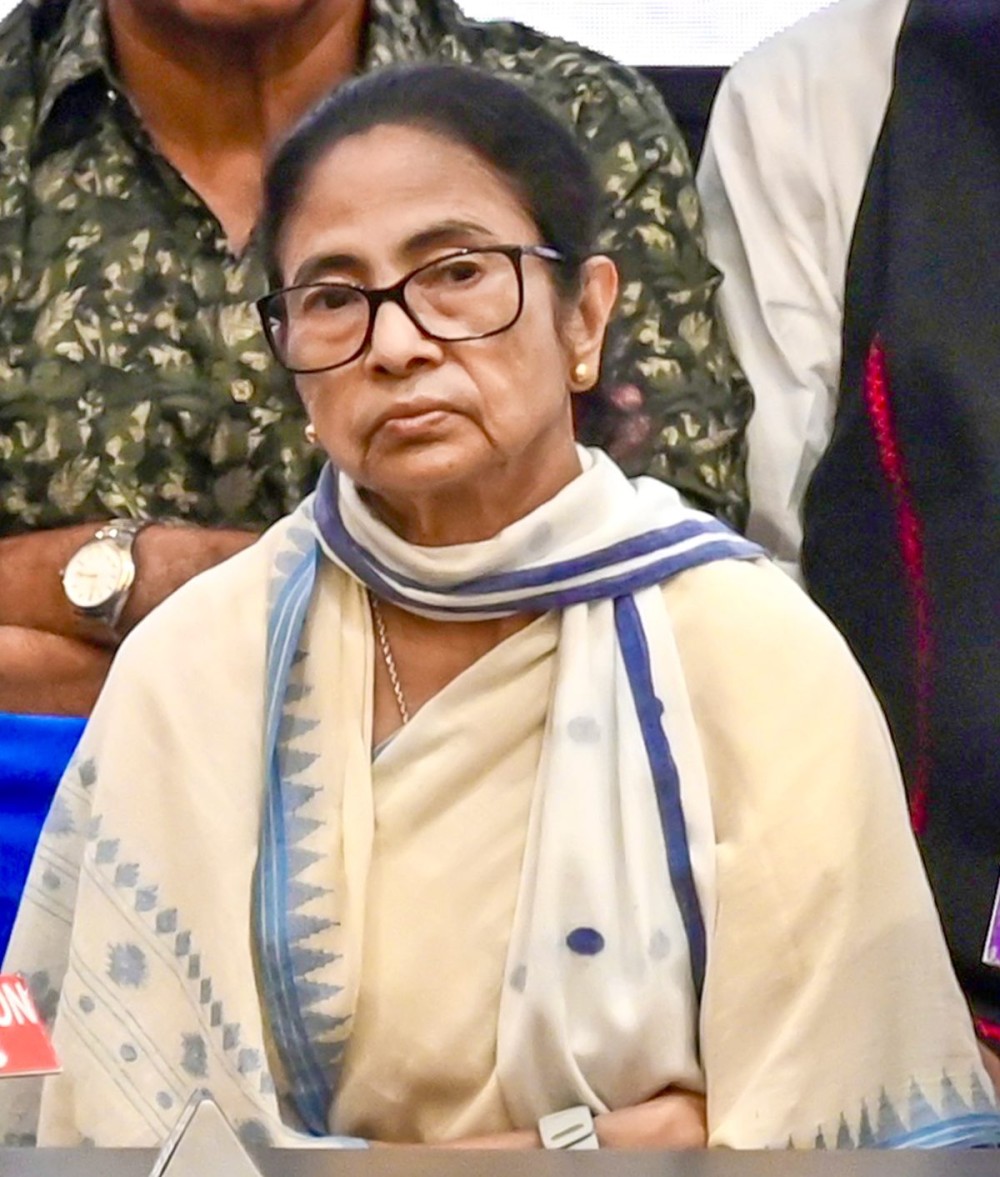
New Delhi, June 9 (IANS) As West Bengal’s former Chief Minister Mamata Banerjee urged cohesion and coordination among the opposition INDIA bloc partners on Monday in New Delhi, a few leaders may have been sitting uncertain.
Almost at the same time, less than two kilometres away, most of her Trinamool Congress MPs were negotiating an alliance with the ruling National Democratic Alliance (NDA).
Till the time came for a public announcement by the bloc, Banerjee was staring at a possible loss of the twin floret election symbol as 20 of her 28 Lok Sabha MPs decided to break away.
Earlier, some 58 of the party’s 80 MLAs in the West Bengal Assembly had done the same in Kolkata.
Despite her high-profile presence and oratory in and around the INDIA platform since its inception in Patna in 2023, Banerjee has either rejected teaming up in West Bengal or offered seats that would immediately render an alliance infructuous.
Her bid at an alliance now is said to be more often dismissed as for garnering support for herself than a symbiotic relationship, where historically, she has alternately hopped in or off coalitions according to poll equations rather than political dharma.
Banerjee has been an astute politician who would disrupt politics time and again, showing resilience and volatility. She has travelled long from her Congress roots that remained strong till the Rajiv Gandhi era to the founding of the Trinamool in 1998. But on the way, she has been aligning and breaking ties with both the Bharatiya Janata Party (BJP) and the Congress.
Now she stands facing the gravest crisis of her career as the Trinamool stands on the brink of imploding under rebellion and defections.
Throughout this time, Banerjee has evolved as an unpredictable, impulsive, and emotional leader who even many leaders in her own party find difficult to understand at times.
Not one to take kindly to criticisms, she allegedly kept herself surrounded by a group of people who are said to speak only good words, sometimes clouding her perception and judgment. On the streets, she used to be the ideal activist, where her rise in Congress was marked by the picture of a fiery youth leader, famously climbing Jayaprakash Narayan’s car in protest ahead of the 1977 election.
While she rose under the patronage of Rajiv Gandhi and later maintained a working relationship with Sonia Gandhi, she was never reported to have maintained cordiality with Rahul Gandhi, even dismissing his leadership as politically immature.
After founding the Trinamool in 1998, she aligned with the BJP-led NDA, serving as Railway Minister, but broke ties later. She formally left the NDA in 2001, citing corruption and governance failures, only to return briefly in 2004, contesting Lok Sabha elections in alliance with the BJP.
Hers was the only seat Trinamool won, losing the other seven seats it had won earlier; she again severed ties.
This episode set the tone for her politics – aligning when strategically useful, breaking away when it hurt her image in West Bengal.
Some observers say that she was aware that her alliance with the BJP would not be welcomed in West Bengal despite the party’s roots in the state. She aligned with the Congress-led United Progressive Alliance (UPA) between 2009 and 2012, forming her government in 2011. Once comfortably seated in power, she chose to chart an independent course.
Her sudden shifts – supporting BJP at times, then attacking them, cosying up to Congress, but undermining Rahul Gandhi – have made INDIA bloc partners wary.
It has only been Samajwadi Party (SP) chief Akhilesh Yadav and Aam Aadmi Party (AAP) supremo Arvind Kejriwal with whom she still shares a rapport. However, the AAP has since exited the Opposition bloc.
The 2026 Bengal Assembly election result dealt her a setback with the BJP sweeping the state, and she herself lost her home bastion of Bhabanipur.
Staring at the probable end to a 28-year path she treaded at the head of the Trinamool, she is trying to reach out to allies.
Banerjee’s career has been defined by her ability to reinvent herself. Yet, with defections mounting and the INDIA bloc allies wary of her unpredictability, the Trinamool faces an existential crisis.
Whether she can reinvent herself as a leader for all seasons, even as she walks the septuagenarian calendar of her life, will remain the defining question of her political future.