Participants during the programme on sustainable food systems organised by Nagaland University at Rajiv Gandhi Park, Lumami, on November 4, as part of BRICS Sustainable Lifestyle Week 2026. (Photo Courtesy: NU)
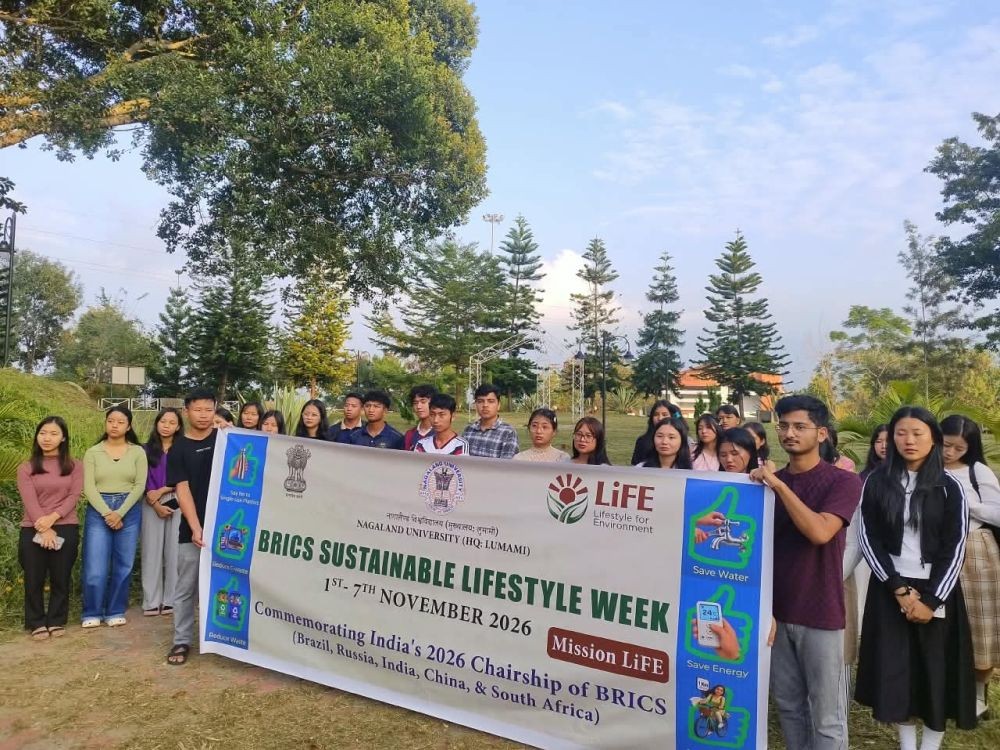
Lumami, November 4 (MExN): Nagaland University (NU) has promoted kitchen-waste composting as a practical way to reduce waste, improve soil health and curb greenhouse gas emissions under the BRICS Sustainable Lifestyle Week 2026.
A programme on the theme “Adopt Sustainable Food Systems” was held at Rajiv Gandhi Park, Lumami, on November 4 as part of the week-long observance from November 1 to 7.
According to a press release from NU, Dr Lirikum of the Department of Zoology, Multi-Disciplinary Research Centre (MDRC), NU, demonstrated how kitchen scraps can be converted into nutrient-rich compost for growing plants and vegetables, reducing dependence on commercial fertilisers.
He highlighted the environmental costs of dumping food waste in landfills, where its decomposition releases methane, a potent greenhouse gas. Composting, he said, can help reduce emissions, prevent foul odours and maintain cleaner surroundings.
Dr Lirikum also outlined practical composting techniques, including ensuring adequate aeration, turning and mixing compost every four to five days, shredding kitchen scraps to accelerate decomposition and monitoring acidity to support microbial activity.
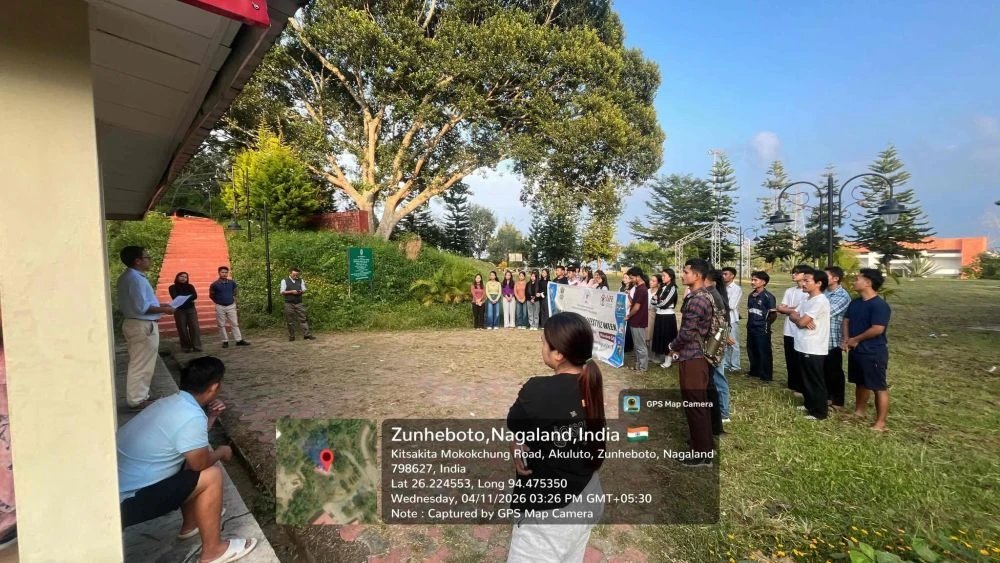
Chairing the programme, Dr Lobeno Mozhui, Assistant Professor in the Department of Zoology, NU, highlighted the links between traditional diets, agricultural health and environmental sustainability. She encouraged the consumption of nutrient-rich local dishes such as galho, a preparation of rice and vegetables, and cautioned against excessive dependence on standard commercial food products.
Mozhui also called for kitchen waste to be viewed as a resource rather than rubbish, noting that converting food scraps into organic compost can enrich soil and help restore local ecosystems.
Peter Ki, Public Relations Officer, NU, introduced the programme in the context of India’s 2026 BRICS Chairship and its theme, “Building for Resilience, Innovation, Cooperation and Sustainability”. He said the Sustainable Lifestyle Week aligns with Mission LiFE by encouraging individuals, communities and young people to adopt environmentally responsible practices.
He also urged students and youth to take the Mission LiFE pledge through the dedicated online portal available from November 1 to 7.
The BRICS Sustainable Lifestyle Week is being observed at NU through outreach and public engagement activities focused on sustainable food systems, avoiding single-use plastics and reducing waste, including electronic waste, the release added.
Among others, Dr Tovishe Phucho, Chairperson of Mission LiFE, faculty members of the MDRC, university staff, research scholars, students and service providers from Toti-La Café, established under the Women Technology Park Incubation Hub attended the event.