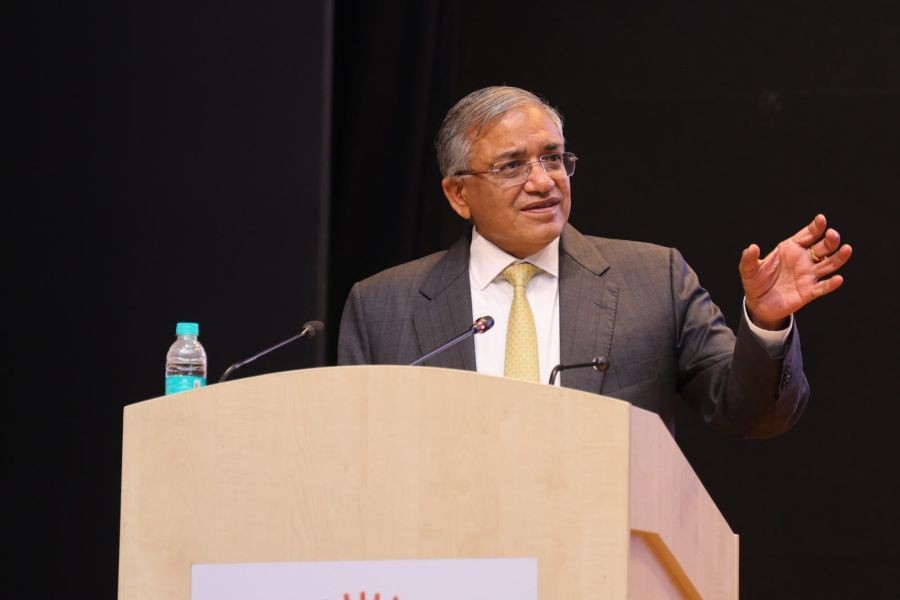
CEC Gyanesh Kumar addresses the gathering during the All India Media Conference 2026 held at IIIDEM, Dwarka in New Delhi on July 17. (Photo Courtesy: ECI)
Urges media to counter ‘wrong narratives’ on electoral rolls
Morung Express News
Dwarka (New Delhi) | July 18
Chief Election Commissioner (CEC) Gyanesh Kumar on July 17 asserted that every election in India is conducted strictly in accordance with the Constitution, electoral laws and the Election Commission’s instructions, while describing the media as one of the Commission’s most important stakeholders and calling for greater engagement to strengthen democracy.
Addressing the All India Media Conference 2026 at the India International Institute of Democracy and Election Management (IIIDEM) in Dwarka under the theme “Connecting Stakeholders, Strengthening Democracy: The Role of Media in Elections”, Kumar said the Commission had identified 28 stakeholders in the electoral process and had interacted with all of them, adding that the media was being brought into the ECI “family” through the conference.
Repeating that elections are held only as per the Constitution, electoral laws and the Commission’s instructions, he said the principle should be “engrained in the DNA” of every member of the Election Commission and stressed that every procedure and instruction is available on the ECI website.
Kumar said that during Lok Sabha elections, the Election Commission becomes the world’s largest organisational body, involving around 1.8 crore personnel, making written procedures and transparent communication essential. He said the Commission serves nearly 95 crore electors, with electoral rolls changing by about eight per cent annually due to additions, deletions and migration.
Highlighting technology initiatives, the CEC said the ECINet mobile application, launched globally on January 22 this year, had crossed 11.5 crore downloads, nearly five times the number of users on X (formerly Twitter) in India. He said all information that can legally be shared is uploaded on the platform in the interest of transparency.
Defending the preparation of electoral rolls, Kumar said they are continuously audited by booth level officers (BLOs), booth level agents of political parties and electors themselves. He said around 12 lakh BLOs and over 15 lakh booth level agents are engaged in updating electoral rolls, making the chances of errors very low though not impossible. He also noted that six national and 65 state political parties are part of the concurrent audit process through their booth level agents.
The CEC also detailed safeguards during polling and counting, including mock polls, certification by polling agents, Form 17C records, sealing of EVMs and verification of votes during counting in the presence of counting agents. He described India’s electoral process as one of the world’s most transparent and said representatives from around 40 of the world’s 97 democracies visit India for training in election management. India is also chairing the International Institute for Democracy and Electoral Assistance (International IDEA), a grouping of 35 democracies, during 2026, he said.
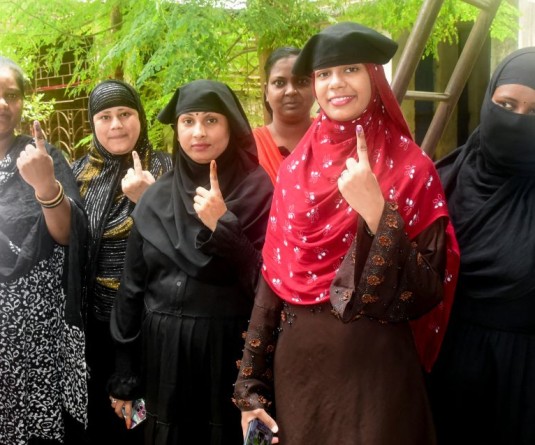
Referring to recent Assembly elections, Kumar said several states recorded historic voter turnouts despite voting and voter registration being voluntary in India. He cited polling percentages of 67.25 per cent in Bihar, 79.5 per cent in Kerala, 86.03 per cent in Tamil Nadu, 86.33 per cent in Assam, 91.19 per cent in Puducherry and 93.7 per cent in West Bengal, comparing them with countries where voting is compulsory. He said these states recorded their highest turnout since Independence and also saw higher votes polled than in the 2024 Lok Sabha elections.
On the Special Intensive Revision (SIR) of electoral rolls, Kumar said the exercise was aimed only at removing names of absent, shifted, dead, duplicate and foreign electors while ensuring all eligible citizens aged 18 years and above remained enrolled. He acknowledged that mistakes could occur but said there were adequate mechanisms for claims, objections and appeals.
Explaining the verification process, he said citizenship is determined in accordance with Article 326 of the Constitution and the Citizenship Act, 1955. According to him, over 80 per cent of electors in the SIR exercise could be verified through “mapping” with earlier electoral rolls without requiring additional documents. Around 60 crore electors had already been covered under the exercise, while the remaining 35 crore would be completed by September, he added.
Kumar urged journalists not to be influenced by “wrong narratives” about electoral processes, saying the Commission had organised the conference to familiarise the media with election procedures and legal provisions. Greater dialogue between the Election Commission and the media would help strengthen public understanding of elections, he said.