Storytellers and representatives from the community during the world premiere of documentary film “A Sacred Place” hosted at Asufii Christian Institute in Mao on April 18.
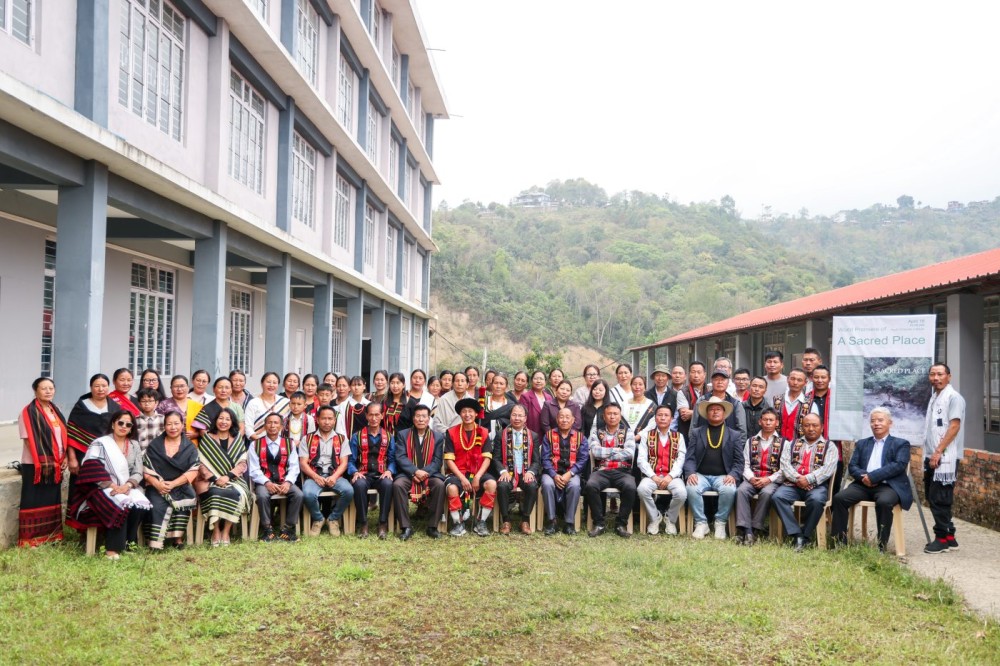
Mao, April 18 (MExN): Asufii Christian Institute (ACI) in Mao hosted the world premiere of documentary film “A Sacred Place,” directed and produced by Naga anthropologist Dolly Kikon, on April 18.
The documentary tells the story of stones, spirits, and salt springs of Makhel, known as Makhrai Rabu in the Mao Naga language, meaning “a sacred place.” The site holds deep historical significance for many Naga communities as a site from which lineage and migration across the Naga Homeland are often traced.
The documentary brings critical focus on intergenerational storytellers and their relationship with the land, integrating visual ethnography, oral tradition and geological features of Makhel. It foregrounds Indigenous pedagogy, community history, and ecological knowledge, while also portraying everyday village life alongside ongoing developmental projects, highlighting the ecological challenges emerging in the context of India’s vision of Viksit Bharat.
Kikon, a Professor of Anthropology at the University of California, Santa Cruz, is also known for her earlier works “Abundance: Living with a Forest” and “Seasons of Life”. The US premiere of “A Sacred Place” is scheduled for April 21, 2026.
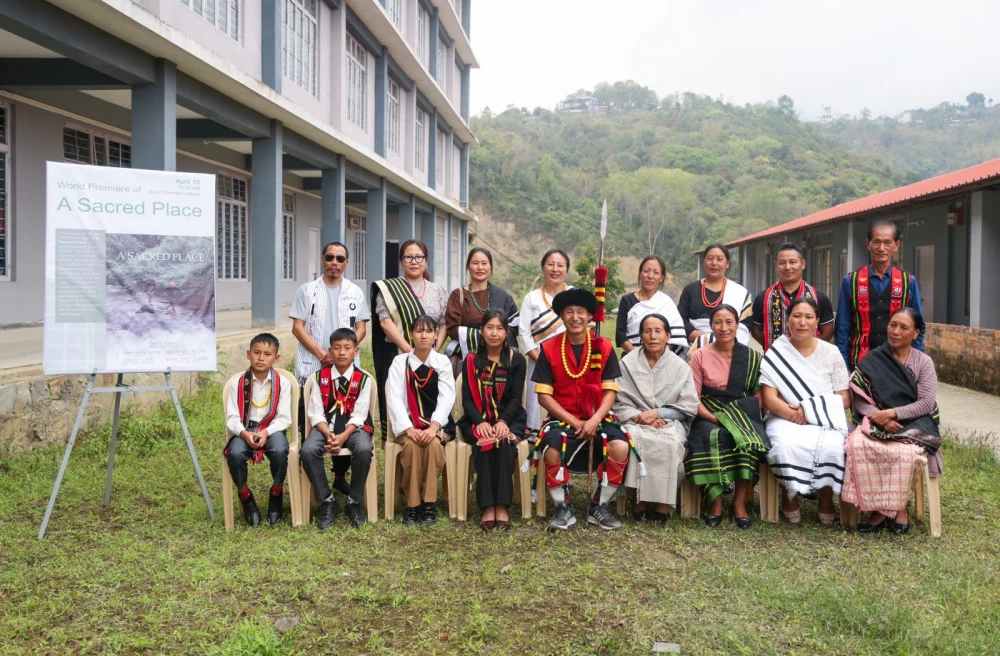
The premiere was held in Mao to honour the invaluable contributions of local storytellers and custodians of land and tradition, underscoring the importance of ethical research and local sensibilities.
The event brought together members of the Mao Naga community across generations to reflect on and celebrate their cultural heritage and traditional knowledge amid rapid socio-economic and ecological change. The attendees included storytellers from Makhel village and representatives from Mao Council, Mao Naga Women Association, Mao Students Union, Makhel Village Council, Makhel Women Society, Robvena Union, Robvena Women Society, Punanamei Village Council, Punanamei Women Society, Punanamei Youth & Students, Chowainu Village Council, Chowainu Youth & Students and Chowainu Women Society.
The program opened with an introduction by Kaini Lokho, assistant professor in the Department of Political Science at ACI, followed by a traditional blessing from Makhel Chief S Pfokreni.
The post-screening discussion was led by Kaisa Pfoze, an award-winning Mao Naga filmmaker recognized for her work “Sunset Years.” Pfoze situated the film within the broader framework of indigenous storytelling, visual ethnography and community memory.
Following a brief session of commentaries, audience members expressed appreciation to the director for her exceptional work, acknowledging the film’s cultural depth, emotional impact and significance for future generations. Dr Daili Neli, Principal of ACI, delivered the vote of thanks.