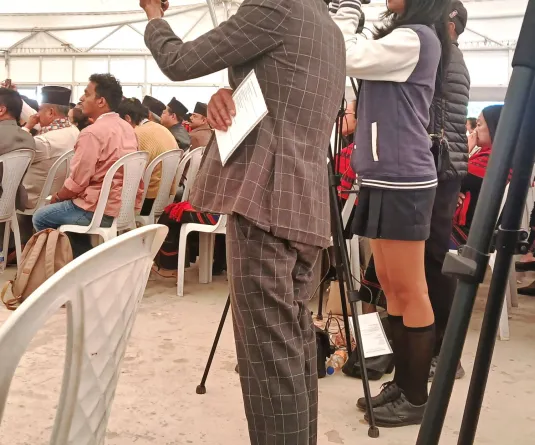
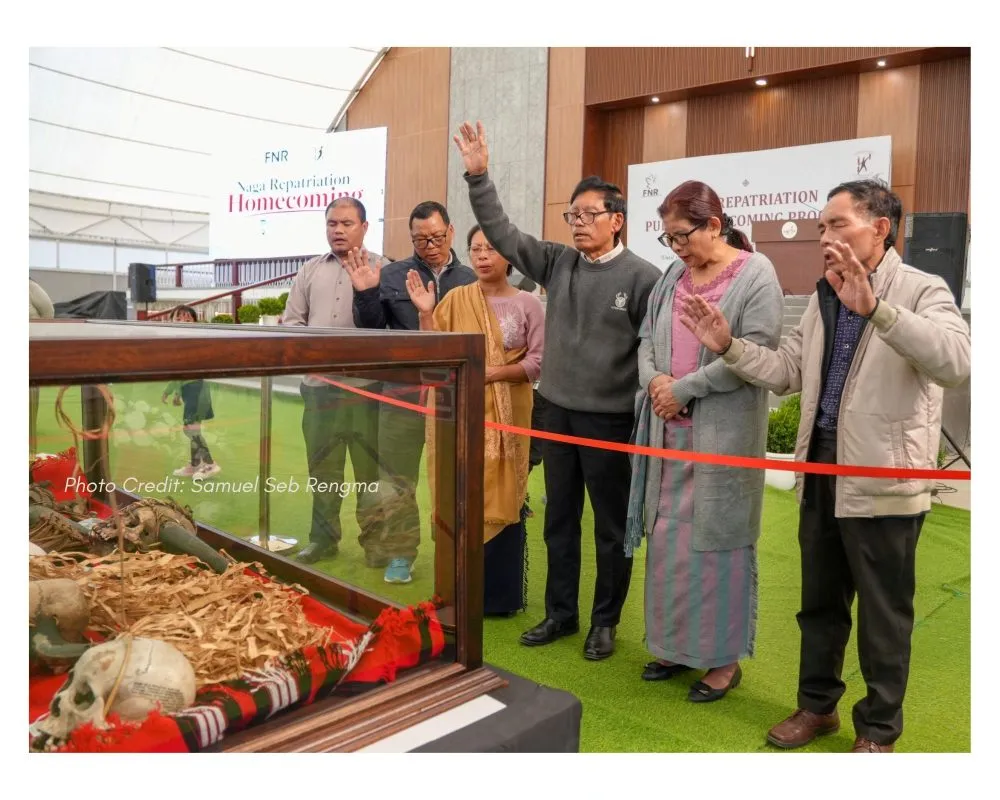
People praying during the public viewing of the 39 Naga Ancestral Human Remains on Sunday, a day after the Public Homecoming Ceremony, at the NBCC Convention Hall, Kohima on November 28. The burial ceremony is scheduled for November 30 at 2:00 pm at the Naga Solidarity Park, Kohima. (Photo Courtesy: Samuel Seb Rengma)
Naga ancestors return with questions for the living
Akangjungla
Dimapur | November 29
The boxes were not large, but what it held had travelled farther than any map can measure - the ancestral remains of Naga people, carried back home after nearly a century in glass cases at Oxford, England.
On November 28 at the NBCC Convention Centre in Kohima, Nagaland’s capital, pallets were unsealed in a cordoned area, and the living came to meet the dead.
For Tiatoshi Jamir, an archaeology professor at Nagaland University who led the team of archaeologists and anthropologists alongside the Recover, Restore and Decolonise (RRaD) initiative of the Forum for Naga Reconciliation (FNR), the moment carried a weight artifacts cannot.
“The repatriation of human remains evokes a certain different feeling,” he said after Friday’s public homecoming ceremony. “A feeling of empathy… And also a feeling of seeing our ancestors coming back to our land.”
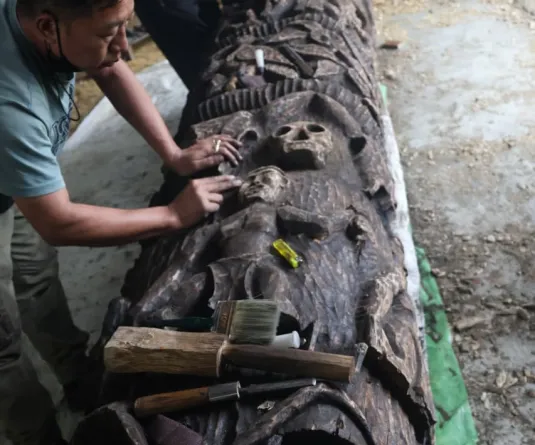
The remains were taken from Naga communities during the colonial era and held for decades at the University of Oxford’s Pitt Rivers Museum.
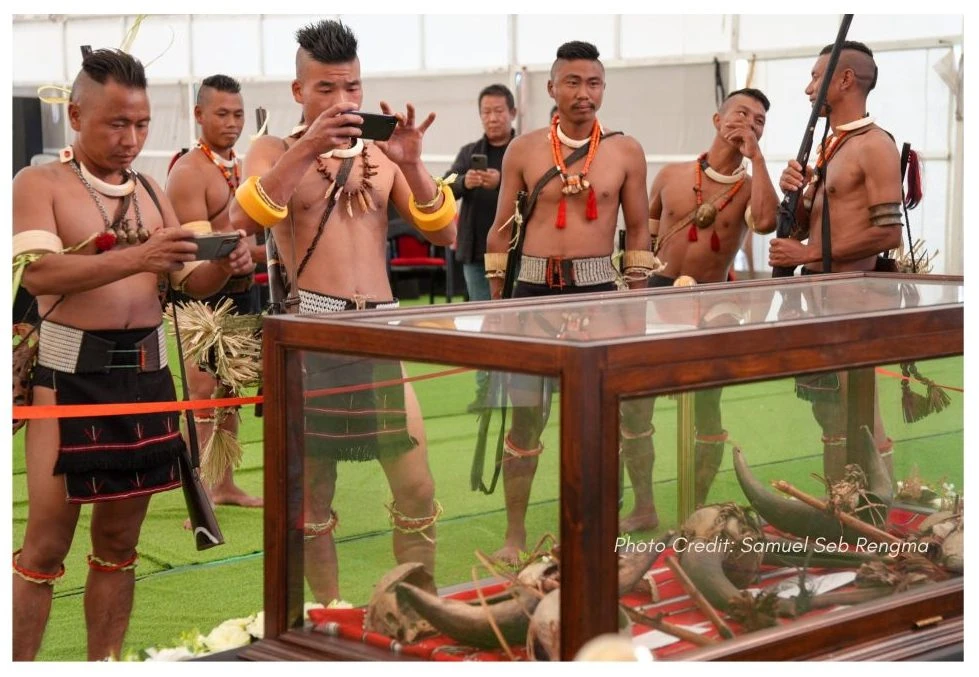
The journey took six years of quiet, painstaking work. The FNR, long dedicated to peace among Naga communities, facilitated the process, while RRaD, a voluntary research group, traveled to villages and urban centers to speak with elders and students about what the remains meant and what should be done. The process had to be built from scratch, community by community.
For Jamir, the academic significance is inseparable from the personal. He has advocated for repatriation at conferences abroad, raising what he called “little voices and individual voices.” He said, “This is also not the end of the journey. This is the beginning, and I think the future generation would take this forward.”
Santu Thapa came to pay respects not only as a Gorkha but as a witness to shared history. “When we attend this programme, we think of our ancestors who were together with our Naga ancestors two hundred years ago,” he said.
The Gorkhas of Nagaland are now in their fourth generation in the state, he noted, and their forefathers contributed alongside Naga forefathers when the British arrived. “To be part of this event,” he said, “we feel very privileged.”
A Gorkha elder spoke of the improbability of the return. “Any kind of repatriation or homecoming is always a joyous occasion,” he said. “To learn that the ancestral remains were in a foreign land for almost a hundred years, and are coming back now, is a privilege for us.” He thanked the Naga people “for letting us come and pay our respects.”
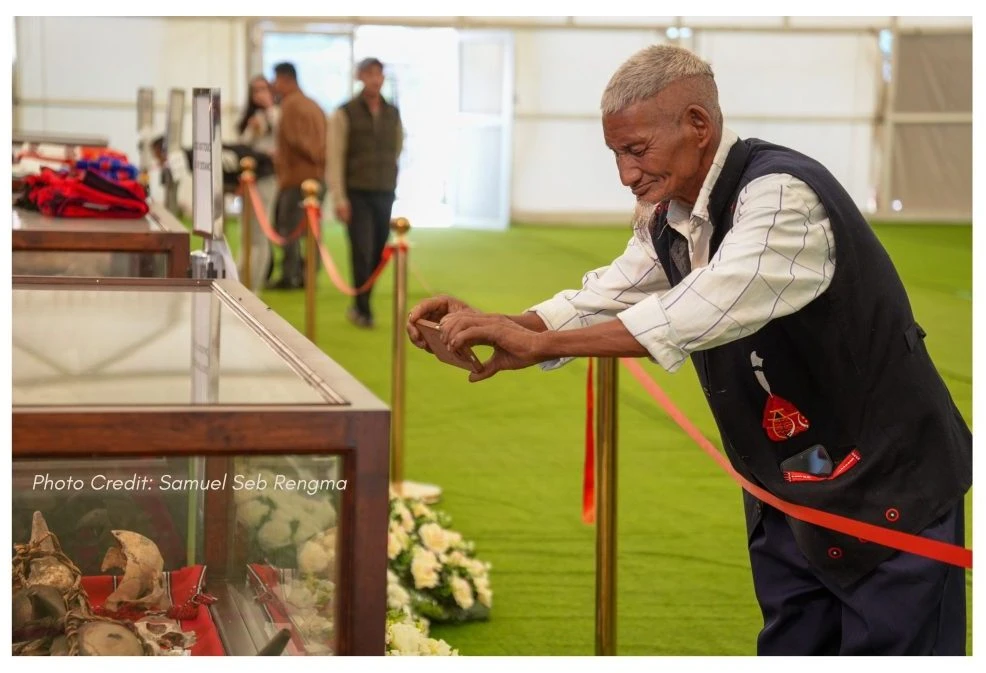
Not everyone spoke in tones of closure. Repakaba Tzudir, a PhD scholar in sociology at Nagaland University, offered gratitude to the unnamed and the named that made the return possible and then an apology. “I owe an apology to our ancestors who are here for us, taking so much time to bring them here,” Tzudir said. The delay, the bureaucratic and diplomatic slowness, felt to him like a failure of care.
He also proposed a shift in language. “We should address them as ancestors rather than remains,” he said, “for they have gained an identity after coming back here.”
Then he posed a question, “Will our ancestors that have already come be happy about the current state of Nagaland? Would they be happy if they see the current state of Nagaland?”
A Tetso College student described the homecoming as more than the recovery of objects. “It is not merely about bringing back things that once belonged to us,” he said. “It is an honour and a tribute to our ancestors who once walked these hills and lived among our forefathers.”
For the student, the return was also a declaration that through this, “we are conveying a message to the colonial past that no matter where our remains are scattered, they are our belongings. One day they will come back to us.”
Another student spoke of identity as fractured and diluted by encounters with “different kinds of races.” The return of the ancestors, she said, allowed the living to “profoundly declare our identity with the people even more.”
What remains?
The 39 ancestors will be buried on November 30 at Naga Solidarity Park, Kohima, in a ceremony combining Christian and traditional practices.
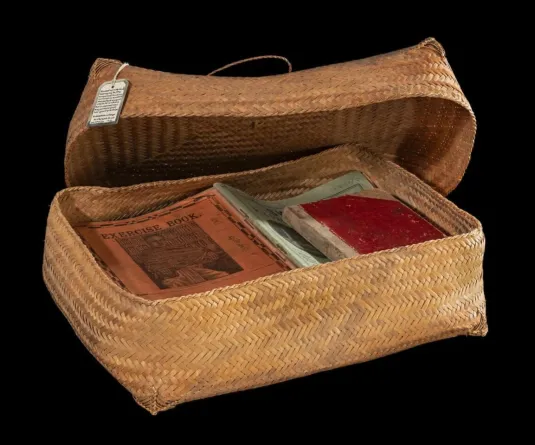
However, the museum still holds approximately 178 objects containing or possibly containing human hair, along with some 6,500 Naga objects in total.
Jamir, the archaeologist, acknowledged the significance of the achievement for a discipline that has often treated human remains as specimens rather than relatives. “As far as the human remains are concerned,” he said, “I think the Naga human remains are so far the only human remains repatriated to Indian soil and to Nagaland.”
He added, “We look forward to many other repatriation initiatives from other Naga groups and institutions across Nagaland.”
For now, the ancestors are home. The question Tzudir asked, whether they would recognize the land they left, remains for the living to answer.