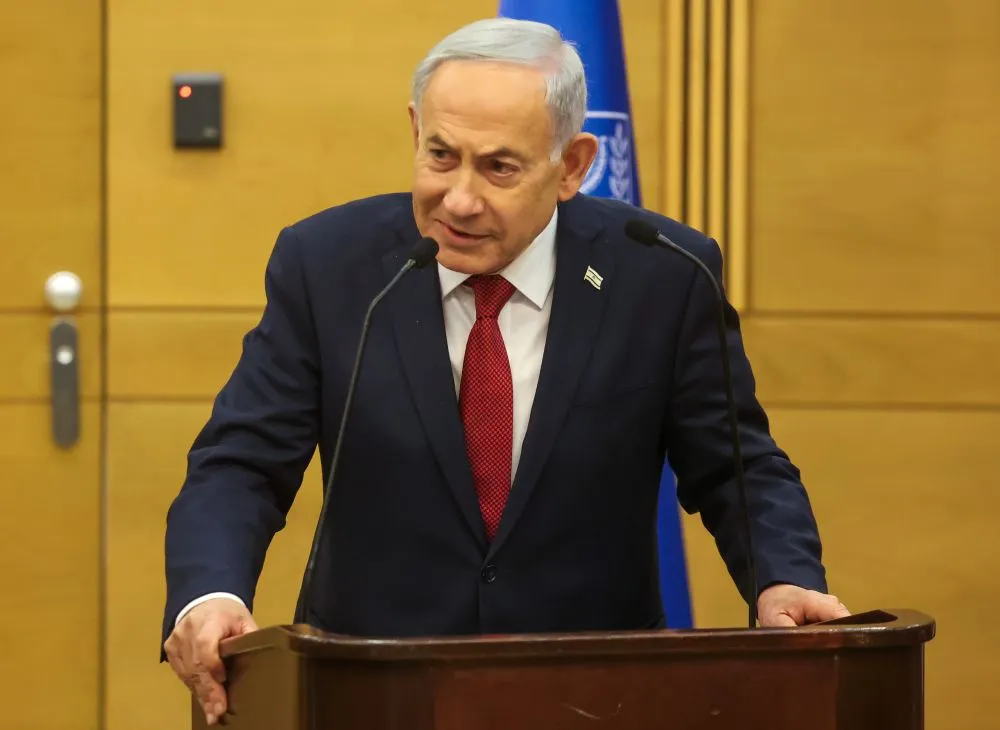
Outgoing Israeli Prime Minister Benjamin Netanyahu speaks during a Likud faction meeting at the Knesset in Jerusalem, Nov. 23, 2026. (Photo: Xinhua via IANS)
Jerusalem, November 29 (IANS): Israel's caretaker Prime Minister Benjamin Netanyahu and his main rival Gadi Eisenkot met on Sunday to try to bridge their differences over a possible unity government, their parties said.
"The meeting between Netanyahu and Eisenkot took place in a businesslike atmosphere, in an attempt to bridge the wide gaps that remain," Netanyahu's Likud and Eisenkot's Yashar party said in a joint statement.
Israel's public broadcaster Kan reported that Eisenkot's bloc believed it was moving toward forming a minority government after the meeting, Xinhua News Agency reported.
The talks yielded no significant progress on any issue, and the parties set no date for another meeting, Kan said, citing members of Eisenkot's party.
On Saturday, Netanyahu publicly offered to let Eisenkot serve first as prime minister under a rotation agreement, with Netanyahu initially serving as alternate prime minister. Eisenkot said he had sent Netanyahu a detailed proposal the previous Sunday through a confidential channel set up at Netanyahu's request and was still awaiting a response on the substantive issues it raised.
President Isaac Herzog tasked Eisenkot with forming a government on November 8 after Netanyahu's bloc fell short of a parliamentary majority in the October election.
Earlier, Eisenkot said that he intends to form a new government within the eight days remaining in his mandate, accusing Netanyahu's Likud party of conducting unity negotiations without any genuine intention of reaching an agreement.
In a social media post, Eisenkot said that the two sides had held five meetings over two weeks, but Likud allegedly refused to make concrete proposals or compromise on key issues, including removing far-right parties from the government, establishing a state commission of inquiry into the October 7, 2023 attack, and passing legislation requiring broader military service.
Eisenkot accused Likud of deliberately delaying negotiations to divide the opposition and force another election.
He said his bloc had offered significant compromises on judicial reform and the proposed inquiry.