Nijwm Basumatary, Assistant Professor, Department of Environmental Science, St John College, Dimapur.
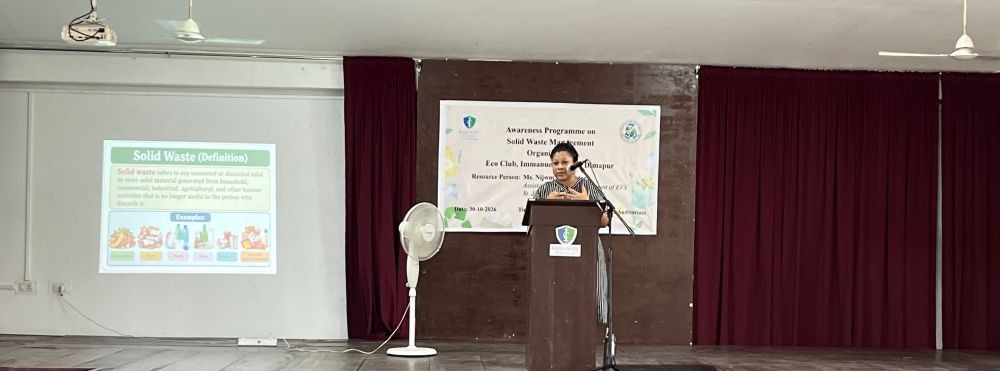
Dimapur, October 30 (MExN): Immanuel College Eco Club on October 30 organised an awareness programme on Solid Waste Management at the College Auditorium, with Nijwm Basumatary, Assistant Professor, Department of Environmental Science, St John College, Dimapur, as the resource person.
Speaking on the topic, the resource person highlighted different types of solid waste, including municipal solid waste, industrial waste, hazardous waste, agricultural waste, electronic waste among others. She also drew attention to the adverse impacts of improper solid waste management, which include environmental pollution, harm living organisms, the spread of diseases, greenhouse gas emissions, the loss of aesthetic value, economic implications and the long-term effects it causes to the environment.
The resource person emphasised the need for effective waste management, describing it as a systematic process involving collecting, segregating, transporting, treating, recycling and disposing in a safe, healthy and environmentally friendly manner. She further discussed various management methods such as source reduction, reuse, recycle, composting, vermicomposting, incineration, sanitary landfilling, anaerobic digestion, pyrolysis etc. She also stressed the importance of proper waste management in maintaining a clean, healthy and sustainable environment, protecting wildlife and ecosystem, and conserving natural resources.
Highlighting that India generates approximately 1,78,600 tonnes of solid waste per day, she reminded the gathering of the importance of managing individual waste responsibly and participating in clean-up drives, spread awareness, and follow regulations. She also encouraged the students to practise responsible waste management and take an active role in creating awareness through social media, conduct debates and quizzes, organize cleanliness drives, and observance of special environment days.
Furthermore, she highlighted that a proper cycle of waste management can generate energy, produce compost, and recover raw materials. Such practices contribute to a circular economy. In her concluding remarks, she cited that collective efforts from individuals, industries, and governments are essential to building a sustainable future.
A press release said that the programme was chaired by Abeni Mozhui, Assistant Professor, Head of Department. It commenced with an invocation spoken by Eloni, Assistant Professor, Department of English followed by the welcome address by Dr Imchanochetla Changkija, Vice Principal. A special performance was presented by Remichon Angkang, while the vote of thanks was proposed by Dr Merensenla Co-Convenor of the Eco Club.