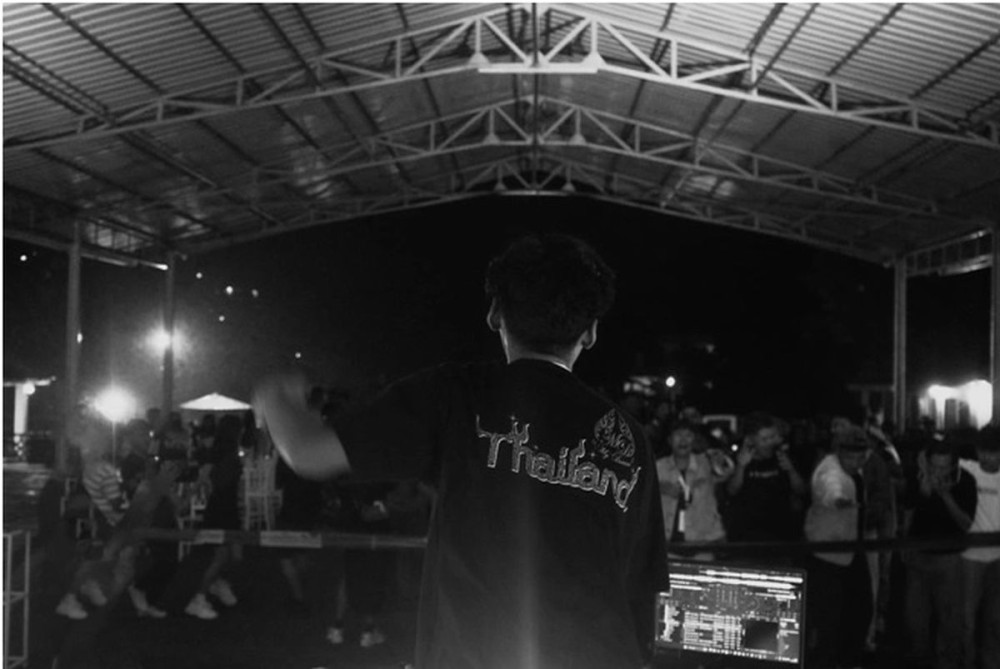
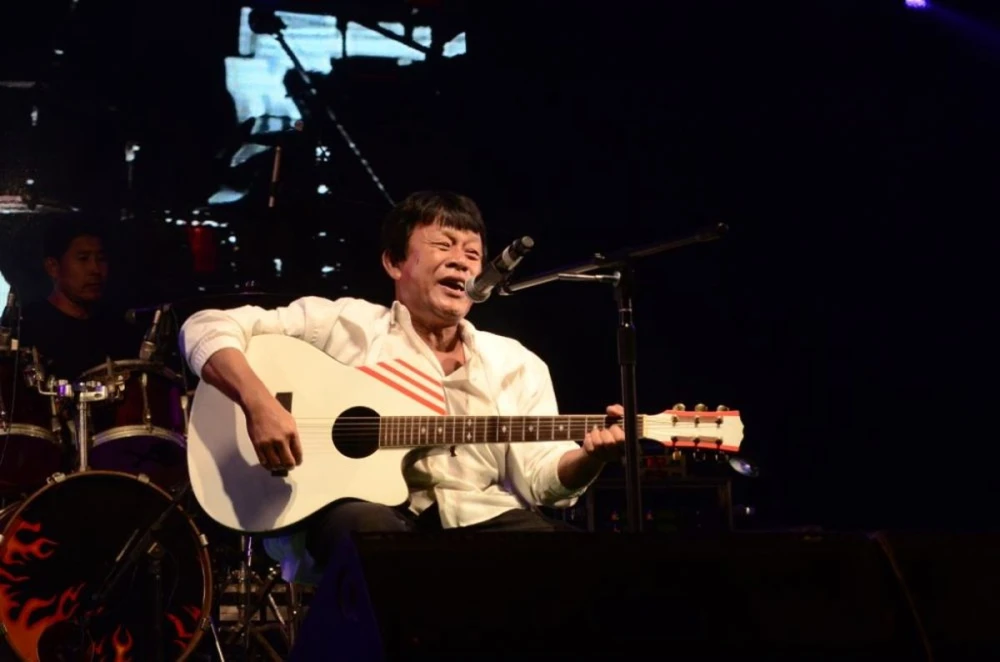
Toshi Changkiri, known by his stage name TC, performs at TT Garden, Mokokchung, during the Tsüngremmong Festival in August 2025. Diversification is seen as a sustainable career pathway for many musicians and professional in Nagaland. (File Photo/TC)
Moarula Pongen
Dimapur | August 23
Nagaland’s expanding music ecosystem offers several career pathways, including performance, education, production, sound engineering, church music, private tuition and event-related work.
While churches have been among the most important spaces where Nagas learn, practise and perform music, the music ecosystem extends beyond the church into education, independent performance, production, sound engineering, private tuition, events and digital platforms.
The second and concluding part of the series examines whether these pathways can provide musicians with a sustainable livelihood over an entire working life.
Church music: career or service?
Church music remains an important starting point for musicians in Nagaland, providing opportunities to learn, perform and develop skills.
Churches help young people develop skills in singing, instrumental performance, live sound and music production, Associate Pastor (Music) at Kumlong Baptist Church, Mokokchung, noted.
“Most of the Christian musicians in Nagaland serve the church voluntarily,” he added.
At the same time, it is not exclusively voluntary with many churches now employing regular music directors and other music personnel, creating more structured opportunities, although the nature and extent of such employment vary.
Besides, earlier music recordings in Nagaland were largely centred on gospel and church music. Groups such as Samaro and Devine Connection were among the popular bands while artists like David Konyak and Chongphe Khiamnuingan are also finding new audience through digital platforms.
Over time, the recording scene has expanded beyond the church.
Teaching: the more accessible route
Teaching appears to offer one of the more accessible pathways to a regular livelihood.
N Shelao Konyak, music department faculty at Tetso College, Chümoukedima, said opportunities are increasing through schools, colleges, churches, music academies, studios and cultural organisations, although many graduates also seek opportunities outside Nagaland.
There is a good and stable income, depending on how individuals navigate their careers, she noted.
Louise Shishak, a music teacher at Patkai Christian Higher Secondary School and adjunct faculty at Margaret Shishak School of Music (MSSM), Patkai Christian College (Autonomous), identified teaching as the most accessible career path for music graduates.
However, she said opportunities in performance, recording and sound remain comparatively limited.
Private music institutes offer another pathway. Samteina Ndang, proprietor of Polyphonic Music School, Mokokchung, said they can provide a good livelihood with proper planning, marketing and pricing.
Group classes, certificate courses and workshops can help create steadier income, she added.
“Being a music teacher has been helpful in paying off bills,” Moatoshi Jamir, an independent artist from Mokokchung, contending that music alone does not necessarily cover all expenses and with recording, equipment and production often requiring self-investment.
Studio and other avenues
Among the different music-related fields, studio and sound work may offer comparatively more consistent opportunities.
Wangching Konyak, proprietor of Audio Craft Studio, Dimapur, said studio charges generally start at around Rs 10,000-Rs 15,000, with some work costing around Rs 5,000.
At the same time, bargaining and limited budgets among artists can make it difficult for producers to recover costs.
DJ and music producer Toshi Changkiri, known as TC, cited around Rs 10,000 per set for DJs, depending on the event, duration and requirements.
However, he noted that diversification is part of the reality of working as a producer, with income coming not only from recording but also from DJ performances, mixing, mastering, beat production, live sound and freelance projects
For independent artists, income from live performances, weddings and other events varies. Jamir said there is no fixed rate, with charges depending on the occasion.
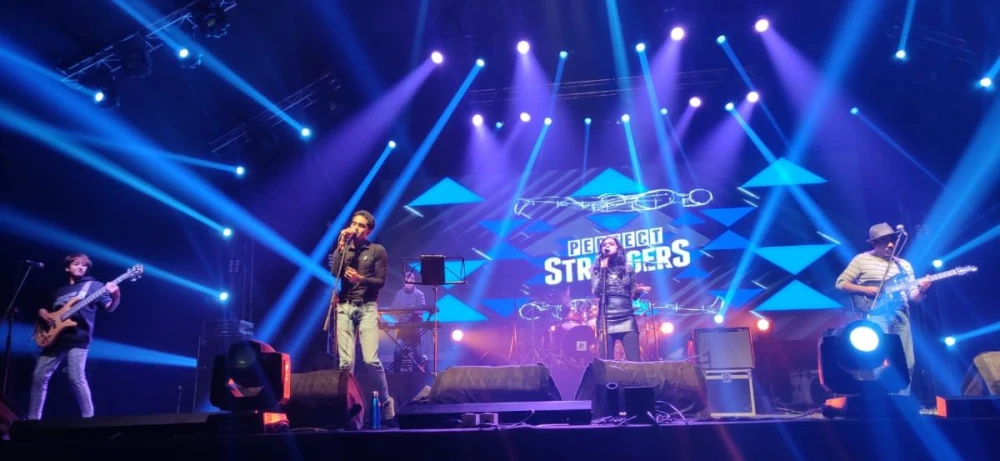
However, consistency remains a challenge. Arenlong Longkumer, Director of Soundscape Enterprise, Mokokchung, described Nagaland’s live music scene as “fairly sporadic” and said fair compensation remains a challenge for many local musicians.
What the industry needs
Those working in the field identify several areas requiring development: more consistent live opportunities, professional infrastructure, funding, industry partnerships, exposure and market access.
Shelao has called for more professional studios, recording labels, music companies, festivals and funding initiatives. TC has pointed to funding, events, improved studio infrastructure and greater digital promotion of Naga music.
Longkumer has emphasised consistent gigs and workshops, while Wangching has called for more initiatives and associations to develop the sector.
Louise advocated focusing on continuous development rather than producing performers for competitions alone, arguing that a stronger foundation would give young musicians the skills and confidence to pursue music in different forms.
She pointed to a shortage of suitable concert venues and exposure to professional musicians, besides calling for stronger access to instruments and resources, and greater emphasis on workshops and long-term training.
Visibility and digital opportunities
Social media and digital platforms have opened new avenues for musicians to build audiences and gain recognition.
Jamir said social media helps musicians build connections and reach wider audiences. “From room to performing live on stages, I’ve seen artists grow,” he said.
YouTube, streaming and social media also offer potential income opportunities, although the interviews do not establish the scale or consistency of digital earnings in Nagaland.
For several artists, however, social media has helped transcend local barriers within the State while also reaching wider audiences outside Nagaland, creating greater visibility and potential opportunities for performances, collaborations and other forms of engagement.
Can it last a lifetime?
The experiences suggest music can become a lifelong career in Nagaland, but often by combining performance, teaching, production, church work, sound or composition.
For young musicians, Louise stressed that a career requires commitment, hard work and continuous learning, describing sharing music with others as “a privilege and worth working” for.
Nagaland has also produced musicians who have sustained careers beyond the local circuit. Methaneilie Jütakhrie Solo remains a household name, while Alobo Naga, the Tetseo Sisters, Nise Meruno and earlier acts such as Abiogenesis have established lasting niches through original music and performance.
With the growth of digital platforms, artists such as Abdon Mech, Moko Koza and Trance Affect have further expanded their reach beyond the State.
The erstwhile Music Task Force (MTF) was rechristened Task Force for Music and Arts (TaFMA) in 2019, with the stated vision of “Propelling, Progressing and Powering Nagaland’s Music & Arts ecosystem.” However, a comprehensive assessment of its achievements and impact is not readily available in the public domain.
Nagaland, thus, has the musical talent and an expanding ecosystem but whether it can offer sufficiently regular, diverse and professional opportunities for musicians to build sustainable careers remains the larger question.
Moarula Pongen is a fifth-semester B.A. student in the Department of Mass Communication, Tetso College, Chümoukedima. This report was produced as part of her one-month internship at The Morung Express.