Morung Express News
Kohima | November 28
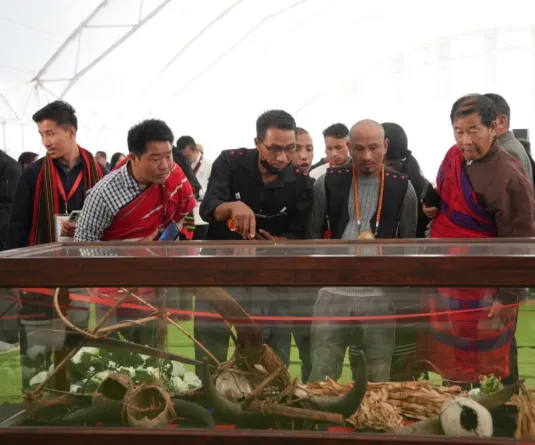
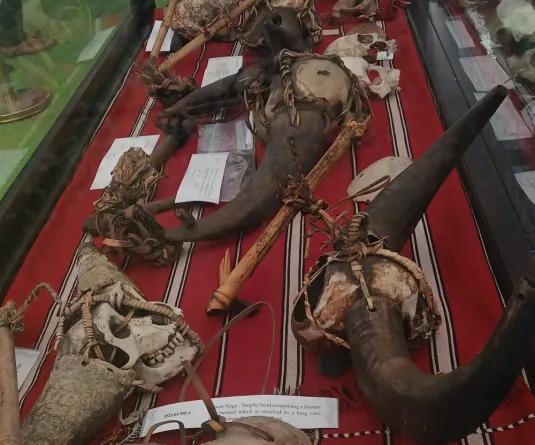
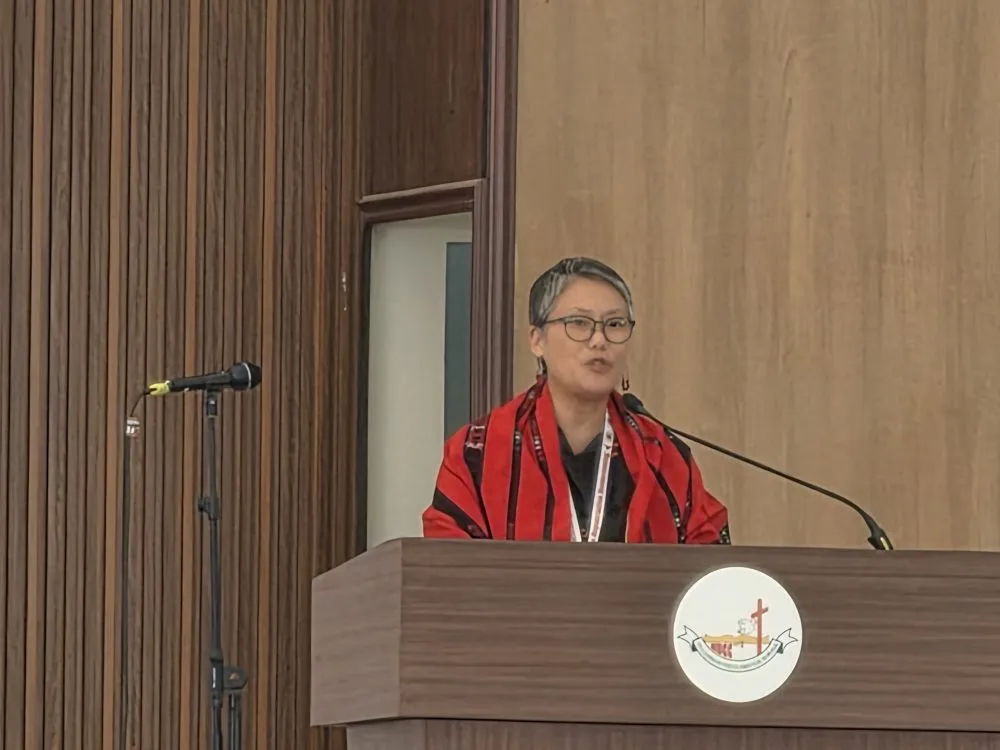
"Today, we are not looking at mere skeletal remains. Before us lies a period of Naga history—one where our forebears were killed and their homelands raided by colonialists", remarked Professor Dr. Dolly Kikon, Member, Recover, Restore and Decolonise (RRaD) at the Naga Repatriation Homecoming Public Ceremony at the NBCC Convention Centre, Kohima on November 28.
She affirmed that,’ for the first time in Naga history, “we have unpacked, touched, documented, and laid before our Naga people our ancestors that were treated as objects and as specimens of primitive people in a foreign museum." She said that the Naga repatriation process was a path home that continued despite different human decisions, leading to the homecoming of the 39 Naga ancestral remains.
She recalled how the repatriation journey brought many Naga people together while acknowledging the difference between academic knowledge and wisdom. Wisdom, she underlined, "requires the work of integrating our academic knowledge, experiences, our spiritual practice, including hardships and life experiences, as the foundation of our learning."
She however, also maintained that an odyssey does not end with a return home, but instead, "it forces us to confront and see the reality around us, and to start the work to regain our integrity and dignity as a people." "The return of our ancestors today is our moment in the 21st century to come together and unite as one people for our land and our nation," she stated.
A testimony of the Naga repatriation, she stated, "should be the beginning of another journey—where our descendants who are here today, and those yet to be born, will remember this day as a time when the Naga people—the living, the dead, the leaders, the youth, mothers, journalists, researchers, and peace warriors—came together to acknowledge our ancestors. That the ancestors live with us and through us."
As Naga people witness and participate in the historic moment, she urged them to listen to their hearts by asking, "What is the Spirit telling you today? How many seeds of peace and justice do you have in your palm today? How will you sow them? What is your vision to work for healing and reconciliation that will bring us together as one people and teach us to love one another?"
'Objects to Human Dignity'
"Go and make known what you have heard from the other side of silence." This was an inscription on a monolith that Naga delegates would ceremoniously pull from the Kohima Local Ground to the present Solidarity Park at the end of the celebration of the Naga Week that saw the participation of Nagas from all over the Naga homeland, cutting across artificial and geographical boundaries, way back in 1993.
"Perhaps these 39 small pieces of mortal remains of our ancestors are a small portion of that other side of silence", noted Neingulo Krome, Secretary General, Naga Peoples' Movement for Human Rights. "In a way, it is tragically sad that this homecoming of our ancestors' mortal remains brutally reminds us of how our ancestors were viewed: illiterate, uncivilized, just mere human beings."
Speaking on the topic, ‘Objects to Human Dignity,’ he said it is "saddening to think that they were objects, not human beings—meant to be viewed by tourists, travelers, or citizens of the United Kingdom as rare specimens for anthropological purposes." While the remains of Naga ancestors' are now lying before us, Krome felt that "the scar of history, which can never be erased, still remains."
He said that these 39 mortal remains have to be given their human dignity in all forms.
'Move forward with hope'
As 39 Naga ancestral remains return home to the land of their birth, Rev. Dr. Wati Aier, Convenor, Forum for Naga Reconciliation, said, "after generations of absence, they have come back to the mountains, valleys, and villages from which they were taken." He said this event is the restoration of dignity and recognition that every human life bears an identity, a story, and a worth that must never be forgotten.
While these ancestors were separated from their homeland and from their descendants; memories, he noted that, "today, all those individual identities, preserved through time, are reconciled within a greater whole-the Naga belonging." "Their return reminds us that while history may scatter us, our common humanity ultimately calls us back to one another."
Terming the act as more than completing a historical task, he said, "we participate in an act of healing. We acknowledge the wounds of a painful past and offer a measure of closure to a people whose history has often been marked by dislocation, violence, and loss."
This homecoming, he stated helps heal the brokenness of the land; releases burden of unresolved grief; and liberates the Naga spirit from the lingering trauma of the past. “Healing does not erase history, but it allows us to face history truthfully and move forward with hope," he asserted.
He also called the occassion a redemptive memory, and stated that Nagas should not allow the wounds of the past to define the future. "We say no to the violence that accompanied colonial encounters. We say no to the violence that has scarred our own recent history. We choose instead a memory that heals, reconciles, and guides us toward peace," he declared
Redemptive memory, he said, does not forget, but that it remembers in a way that transforms suffering into healing. "It invites us to honor our ancestors not by reliving old conflicts, but by building a future worthy of their dignity and sacrifice", he added.
He maintained that this journey home is also a theological moment while claiming that the story of the Naga people has always contained a spiritual longing, and "our ancestral traditions, our stories, our reverence for the land, and our understanding of the unseen world testify to humanity's universal search for meaning and for God."
He further hope that this homecoming would inspire Nagas to become a people of healing and not division, reconciliation and not revenge, and hope rather than fear. "May the return of our ancestors remind us that no journey is complete until dignity is restored, truth is acknowledged, and peace is embraced.