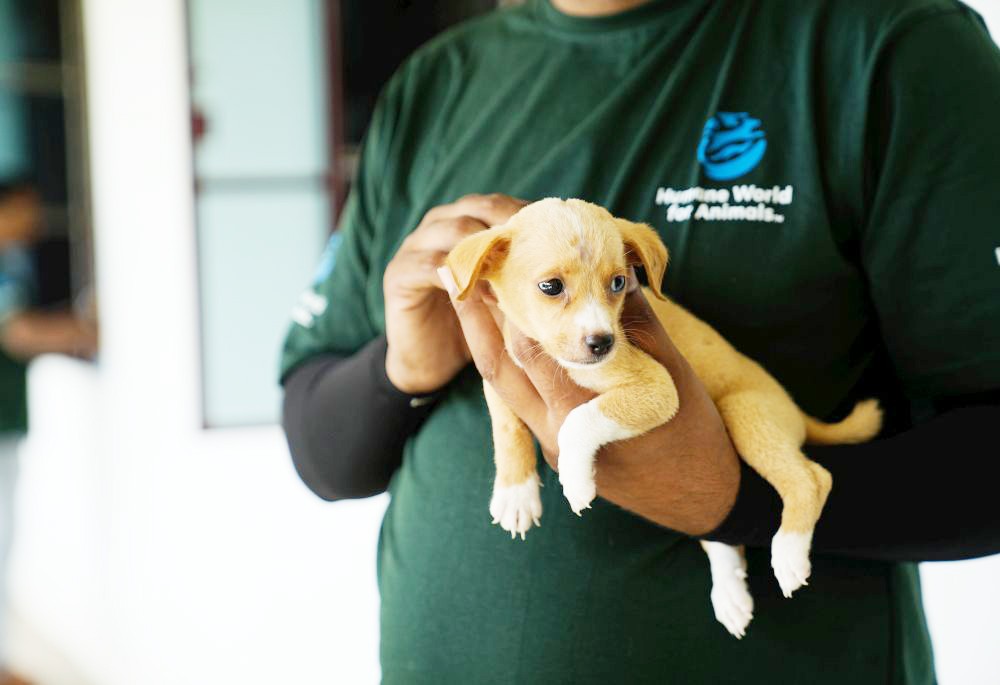
An official of Humane World For Animals comforts a dog in Dimapur on July 6, 2025. (Photo Courtesy: Surajit Sharma/AP Images for Humane World for Animals)
Dimapur, July 8 (MExN): After more than two decades of "supplying dogs for slaughter and consumption," three longtime wholesalers in Nagaland have permanently exited the dog meat trade, marking a major breakthrough in efforts to end the practice. They have opted instead for sustainable alternative livelihoods in mushroom farming and pickle making. The wholesalers, who were “key distributors” within the trade, had been buying large numbers of dogs and supplying them to markets in Dimapur and Mokokchung districts, as well as in Manipur.
The development comes through the Models for Change livelihood transition programme, launched in Nagaland in 2025 by Pro Rural, a grassroots development NGO, and supported by Humane World for Animals India (formerly called Humane Society International/India). The programme specifically addresses the needs of dog meat vendors in the region, many of whom have never been offered an alternative livelihood option.
So far, 30 dog meat vendors, all of them female, have fully transitioned out of the trade, with a further 30 set to join them soon, stated an update issued by the Humane World for Animals India.
18 rescued dogs rehomed
The three wholesalers voluntarily surrendered the surviving 18 dogs in their possession, “the last animals they had purchased before deciding to leave the trade for good.” Many of the dogs were adopted on the spot by Samaritans from Nagaland committed to giving them safe homes.
All the rescued dogs received immediate veterinary attention from Humane World for Animals India. Each dog was thoroughly examined, treated as needed, vaccinated and microchipped before being transported to animal shelters in Assam for further rehabilitation, socialisation and eventual adoption. Their exit from the trade, which relies on a network of traffickers, wholesalers and vendors, promises to disrupt the flow of dogs into markets across Nagaland, it said.
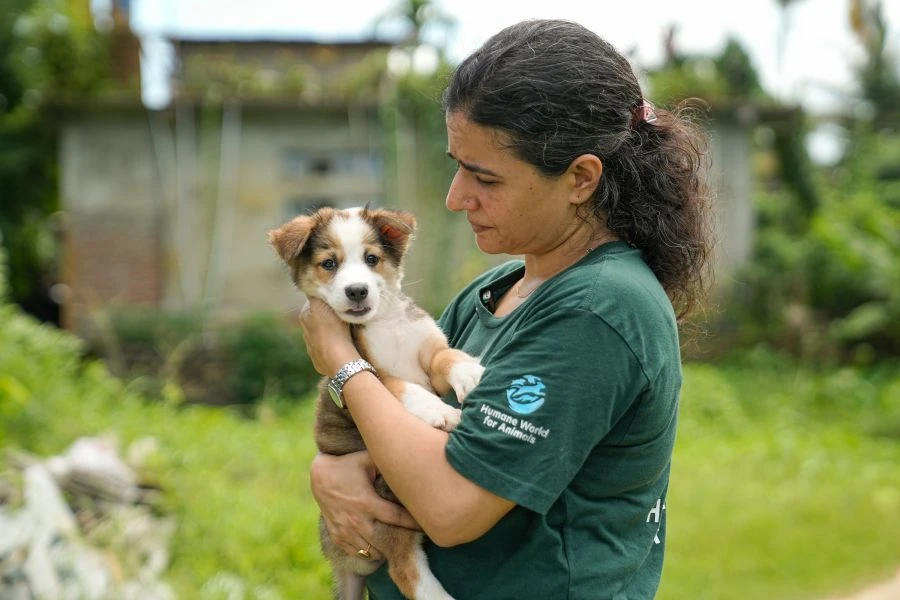
Livelihood Transition prog
Speaking about the initiative, Keren Nazareth, Senior Director of Companion Animals and Engagement at Humane World for Animals India, said, “The dog meat trade exploits people in vulnerable socio-economic situations. Changing that isn’t just about rescuing dogs, although we are of course hugely relieved these animals are now safe. It’s also about disrupting a system that exposes women to physical and financial risk, and communities to entirely preventable health risks like rabies.”
“That’s why local, community-led solutions matter so much; they address the whole picture, not just one part of it,” she added. “We are very grateful to these three wholesalers for making the courageous choice to leave the dog meat trade, and to the many loving families who have chosen to adopt the dogs, and we invite other sellers who may be considering a similar transition to join us.”
Wangshikokla Jamir, Project Coordinator at Pro Rural, said, “The training is inspiring women in the trade to choose a livelihood that will give them a better life. We have found that the trade does not offer stable incomes, has aspects that impact women’s well-being and many of them do not want these as a future for their children.”
“We are finding more women reaching out to join the programme. When we hear about the dog meat trade it often focuses on animal suffering, but that tells only half the story. The other half is of the people who are caught up in this trade. Our programme exists to change that equation entirely,” she said.
“It doesn’t ask women to give something up without offering them something better in return. It gives them the training, the mentoring and the practical support to build a livelihood that is safe, humane, scalable and sustainable,” Jamir added.
‘More humane businesses exist’
Speaking about the livelihood transition programme, one of the former wholesalers said, “Naga women are hardworking and are inclined towards learning new things, but there was a lack of opportunities. I got trained in making pickles in May of this year, and within a couple of months I exited the trade; the decision was not sudden, as I was thinking about making the switch for a long time.”
“Apart from making pickles, I have also started a small shop, and I would also be learning mushroom cultivation and baking. To others who are already part of the trade, I would like to tell them that there are more humane businesses out there,” she added.
Following training, the three former wholesalers will now begin building businesses in pickle making and mushroom farming.
Dogs are routinely stolen or caught from communities across neighbouring states before being transported into Nagaland, Mizoram and Manipur. Humane World for Animals India is working with local organisations, communities and law enforcement agencies to implement solutions that prioritise and affirm both human and animal well-being.
The organisation works across Asia to end the dog and cat meat trade, pursuing lasting change through legislation, community engagement, animal rescue, rabies vaccination and livelihood transition programmes in India, South Korea, Vietnam, Indonesia and China.