Morung Express News
Dimapur | September 6
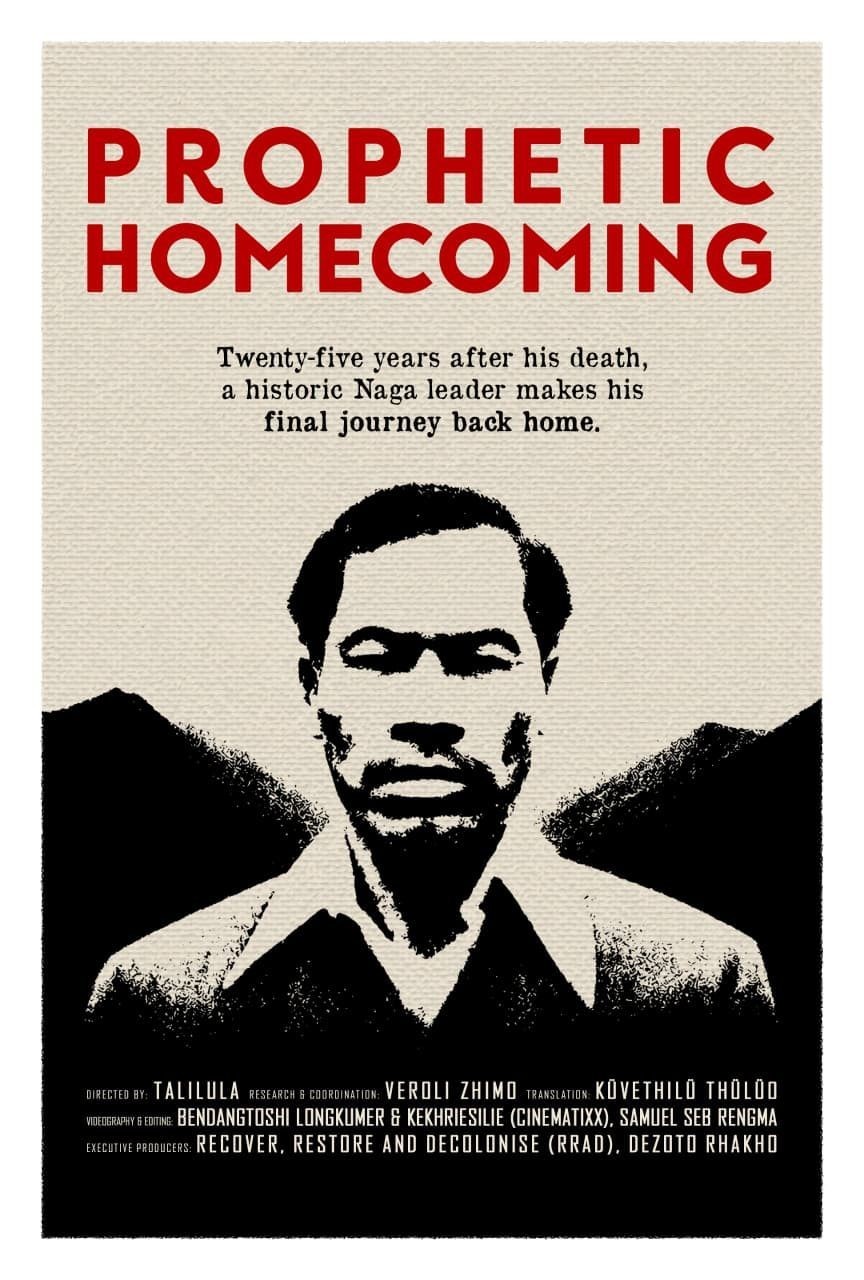
The repatriation of the mortal remains of late Naga political leader and Naga National Council (NNC) Tatar Venyiyi Rhakho, alongside his family's long journey toward reconciliation, took center stage at the premiere of the documentary film Prophetic Homecoming here on Saturday.
The film was screened during the September Dialogue organised by the Forum for Naga Reconciliation–Recover, Restore and Decolonise (RRaD) at The Lighthouse Church, Dimapur.
Rhakho, who represented the Naga leadership at the 1975 Shillong Accord negotiations but refused to sign the pact, was assassinated in 1979. His mortal remains were eventually repatriated to his native village in 2004, a quarter of a century after his death.
Directed by Dr. Talilula, the documentary traces the 25-year journey of Rhakho's homecoming and captures how a family and community charted paths toward healing, reconciliation, and forgiveness amid decades of trauma and grief.
The screening was followed by a panel discussion chaired by Küvethilü Thülüo, featuring Dr. Talilula, Venyiyi Rhakho’s son Dezoto Rhakho, and Murhenyi Rhakho.
Sharing the background of the project, Dr. Talilula said the film grew out of research into Naga repatriation stories that began in 2022 following reports on the return of Phushe Venuh's mortal remains. Subsequent archival work uncovered the earlier repatriations of Venyiyi Rhakho in 2004 and Mayang Ao in 2009.
She noted that beyond its political and historical significance, Rhakho’s story stood out for its trajectory of peace and forgiveness. Emphasizing that the repatriations were entirely community-led, organized, and self-funded, she said these efforts demonstrate the innate strength of local communities and offer valuable lessons for the wider Naga repatriation movement.
Dr. Talilula added that the documentary challenges the notion that repatriation is a foreign or externally driven concept, pointing out that consultations with elders confirmed that bringing ancestors home for burial remains deeply embedded in Naga tradition.
Reflecting on his personal journey during the panel, Dezoto Rhakho shared his family's prolonged struggle with pain, anger, and gradual forgiveness. While raised in a Christian home where forgiveness was taught early, he noted that losing his father under such circumstances was extraordinarily difficult, adding that forgiveness "certainly did not happen overnight."
Dezoto recounted that the initiative to bring his father’s remains home was first guided by a prophecy in 1986 that carried a call for forgiveness. Though challenging at first, the family resolved not to stand in the way of a mission rooted in genuine reconciliation.
"For me, forgiveness does not mean what happened was okay, or that we forget," Dezoto said, explaining that it meant actively choosing not to carry hatred. He added that having his mother present to witness her husband’s return after 25 years brought the family profound peace. "We cannot change the past, but we can choose what we carry forward... faith, forgiveness, compassion, and hope for reconciliation."
The documentary was produced by Recover, Restore and Decolonise (RRaD) alongside Dezoto Rhakho. Research and coordination were handled by Veroli Zhimo, with Chokri translation by Küvethilü Thülüo. Videography and editing were completed by Bendangtoshi Longkumer, Samuel Seb Rengma, and Kekhriesilie of Cinematixx Production, with poster artwork by Arien Jamir.
Speaking on the sidelines of the event, Dezoto appealed to families still awaiting the return of departed loved ones to remain steadfast in faith and embrace forgiveness for the collective good, calling the resolution in his own family "nothing short of a miracle."
Addressing the broader Naga society, Dezoto stressed that reconciliation remains the only viable path forward. "For our fathers, mothers, brothers, sisters, and all our loved ones who laid down their lives believing in that one dream and one goal, let us honour them by choosing reconciliation," he said.