Key contention over Schedule II of the Nagaland Land Resources Development (Services) Rules, 2008
Morung Express News
Dimapur | November 5
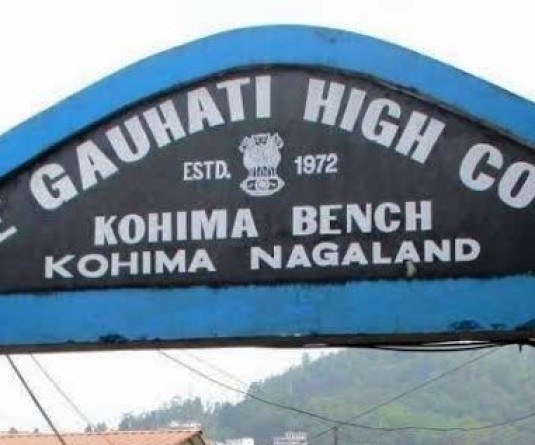
A dispute over promotion eligibility in Nagaland’s Department of Land Resources Development (LRD) has reached the Supreme Court, which has listed for December 1 a petition challenging a Gauhati High Court judgment upholding the technical qualification criteria for promotion to senior posts in the department.
The matter came up for admission on November 3 before a Bench of Justice Prashant Kumar Mishra and Justice Shree Chandrashekhar, which directed that it be listed on December 1.
The Special Leave Petition (Civil) was filed by four department officers challenging the September 15, 2026 judgment of the Gauhati High Court (GHC) in Writ Petition (C) No. 1790/2023.
Case background
As per the September 5 judgment, the petitioners had challenged Schedule II of the Nagaland Land Resources Development (Services) Rules, 2008, which prescribes specific technical qualifications for promotion to the posts of Deputy Director, Joint Director and Director.
They also contested communications dated March 9 and March 25, 2022, concerning the proposed promotion of two other officers to the next higher grade under the 2008 Rules.
Under the rules, the department is divided into the Technical Wing and the Extension Wing, with separate entry-level qualifications and promotional channels at the lower and middle levels.
Although the two wings converge at the District Project Officer/Project Officer level, specific technical qualifications are prescribed for promotion to higher posts, beginning with Deputy Director.
Promotion to Deputy Director requires at least three years of continuous service as a District Project Officer or Project Officer, along with a degree in BSc Agriculture, BSc Horticulture, BSc Forestry or BE Agriculture. The same categories of technical qualifications apply to promotion to Joint Director and Director.
The petitioners, who serve in the Extension Wing, argued that the two wings have overlapping functions and that personnel have been transferred between them. They also pointed to common pay scales at corresponding levels, contending that the distinction in promotion eligibility denied Extension Wing personnel equal opportunities for career advancement.
They argued that excluding Extension Wing personnel from further promotion was discriminatory and violated Articles 14 and 16 of the Constitution, which guarantee equality before the law and equality of opportunity in public employment.
The petitioners also referred to writ petitions filed in 2019 and 2020, which they said had been withdrawn following a tripartite agreement between the State government and associations representing the two wings. They submitted that the agreement assured amendments to the 2008 Rules to create promotional avenues for the Extension Wing, but that the State government had not fulfilled the assurance.
The State government, in response, maintained that the two wings were distinct service streams under the 2008 Rules, with separate qualification requirements and promotional channels, and that specialised technical qualifications were justified for higher posts.
It argued that common pay scales, overlapping duties and transfers did not establish legal equivalence between the wings. The State also disputed the legal force of the tripartite agreement, contending that it could not override statutory service rules and had not been executed by an authorised or competent authority.
High Court upheld technical criteria
In its September 15 judgment, the GHC Division Bench of Chief Justice Ashutosh Kumar and Justice Arun Dev Choudhury held that the classification based on prescribed educational qualifications had an “intelligible basis” and that the qualifications bore a “rational nexus” with the specialised knowledge and competence required for higher posts.
The court ruled that the convergence of the two wings at the District Project Officer/Project Officer level, their overlapping functions and transfers between them did not render the qualification requirements constitutionally impermissible.
It also rejected the argument that the rules were discriminatory because they left Extension Wing officers ineligible for further promotion. The court observed that employees have a right to be considered for promotion under the applicable rules, but no vested right to claim promotion outside the prescribed eligibility criteria.
The judgment further held that a writ court exercising judicial review could not substitute its opinion for that of the rule-making authority on the qualifications required for higher posts.
Finding that the petitioners had failed to establish that the criteria were “manifestly arbitrary, irrational or wholly unrelated” to the nature of the posts, the court declined to interfere with Schedule II of the 2008 Rules. It accordingly dismissed the writ petition, holding that the challenged provisions did not violate Articles 14 and 16 of the Constitution.
The judgment may have implications for similar promotion disputes in other government departments, particularly where employees seek parity between wings or cadres based on overlapping duties, common pay scales or transfers.
However, the matter is yet to attain finality, with the Supreme Court having listed the challenge to the September 15 judgment for December 1, 2026.